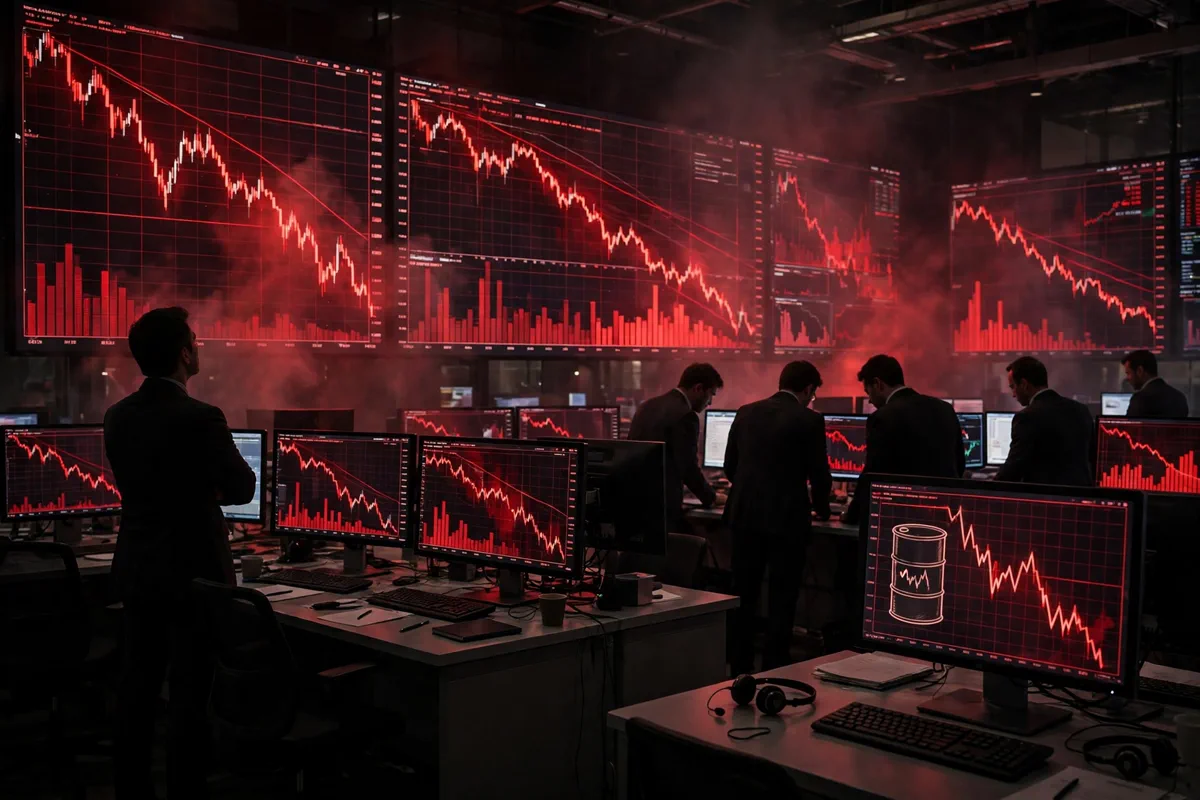
Dow Plunges 700 Points as Oil Hits $113: Friday’s Selloff Isn’t About AI Anymore
By mid-morning Friday, Wall Street had a new problem. It wasn’t Meta. It wasn’t Nvidia. It wasn’t the AI trade that had bled all week. It was oil, Iran, and the realization that the one place investors thought was safe wasn’t safe at all.
The Dow Jones Industrial Average shed roughly 700 points, falling about 1.4 percent in morning trading. The S&P 500 dropped half a percent. The Nasdaq, coming off its worst session since June, barely held on. And Brent crude, the global oil benchmark, pushed above $113 a barrel, up nearly 8 percent on the week, as threats out of the Middle East rattled the one market everyone had been watching with one eye.
If Thursday was the day the AI trade broke, Friday is the day the damage went broad. Even the hiding spots sold off. And that is what has Wall Street genuinely nervous heading into the weekend.
Thursday Was AI’s Worst Day Since June. Friday Belongs to Oil.
Start with what set the tone. On Thursday, the Nasdaq Composite plunged 2.6 percent, its ugliest session since June. The S&P 500 fell 1.2 percent, its worst day since July. Chip and memory stocks were the epicenter of the pain: the Roundhill Memory ETF (DRAM) cratered 7 percent, dragged down by Micron, Sandisk, Seagate, and Western Digital. The broader iShares Semiconductor ETF (SOXX) dropped about 6.5 percent, with AMD, Intel, and Nvidia among the casualties.
Meta was Thursday’s poster child for the new Wall Street mood. The company reported quarterly results that, in a different era, would have thrilled everyone, revenue of $64.6 billion, up 26 percent, ahead of expectations. Instead, the stock sank nearly 7 percent. Investors fixated on the other line of the earnings report: a $2-for-1 stock split announcement, and free cash flow that had swung negative for the first time since the company’s 2012 IPO, as AI infrastructure spending devoured $35 billion in a single quarter. You can read the full breakdown of Meta’s cash-burn quarter in our analysis of the Meta earnings call.
Tesla, which also reported mid-week, whipsawed as investors weighed lower 2026 capital spending against a bigger bill in 2027 and 2028 for Optimus, Cybercab, and the Terafab chip project. SpaceX, which had surged 8 percent on merger-committee news with Tesla, gave back most of the gain, closing down 9 percent.
And then came the scramble for safety, the kind of move that tells you real fear entered the building. Investors piled into U.S. Treasury bonds, sending the 10-year yield down 19.3 basis points to 4.952 percent on Thursday. That was the largest single-day drop in the yield since March 10, 2023, back in the days of the Silicon Valley Bank collapse.
The Iran Headline That Sent Crude Flying
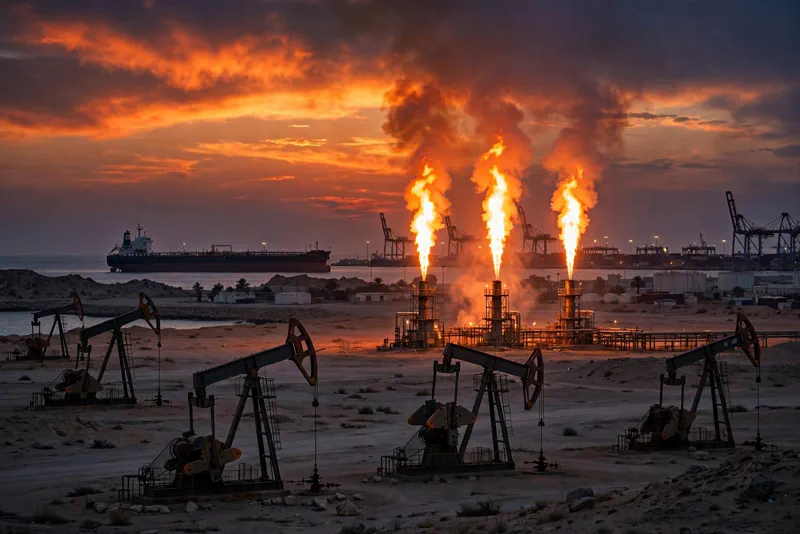
Friday’s story, though, is oil. West Texas Intermediate crude climbed nearly 3 percent in the morning session to around $102 a barrel, back in triple digits, and Brent crude pushed above $113, on pace for its biggest weekly gain in months.
The trigger came from a Wall Street Journal report: Iran warned that renewed strikes by the United States and Israel would set off a wider response targeting airports, oil pipelines, and other infrastructure across the Persian Gulf. The message landed like a match in a dry room. Persian Gulf infrastructure is the world’s oil chokepoint, and traders started pricing in a real risk premium for a region that moves roughly a fifth of the world’s petroleum.
That has rekindled the one fear Wall Street thought it was done with: inflation. Surging crude is a tax on everything that moves, and it keeps interest rates higher for longer, which is exactly what growth-stock valuations do not need. The 10-year Treasury yield edged back up toward 5 percent on Friday as the bond safety trade from Thursday unwound a little, but the message of the week stands: the Fed meeting on October 27-28 is now the single most important calendar event for the market, and rate-hold odds sit around 72 percent.
The Pain Is Spreading to the Hiding Spots
Here is the part of Friday’s session that should concern you most. On Thursday, the Dow barely budged, down 0.02 percent, because defensive sectors held the line. Consumer staples, healthcare, and utilities were the lifeboats. On Friday, the lifeboats started taking on water.
Consumer staples fell 1.4 percent in the morning. Utilities dropped 0.9 percent. Healthcare slid 1.4 percent. When defensive stocks join the selloff, the market is telling you something important: this is no longer a rotation from expensive AI names into cheap safe ones. This is a broad risk-off move, the kind where the bid just goes missing for a while.
Zoom out and the picture gets uglier than the index levels suggest. According to FactSet data reported this week, roughly 40 percent of individual stocks inside the S&P 500 are trading 20 percent or more below their 52-week highs. The index itself is nowhere near a bear market, but a huge slice of the market underneath it already is. Last week’s edition of the great AI rotation showed the same fault lines forming; Friday is just the next chapter.
Beats Are Still Not Enough
Buried in Friday’s tape is a theme that has defined this entire earnings season: the bar for stocks has gotten brutally high.
Comfort Systems, a $45 billion company that makes cooling systems for data centers, reported a 69 percent surge in quarterly profit and a 54 percent jump in revenue, raised its dividend, and the stock collapsed 12 percent anyway. After plunging 16 percent last week, the shares are down another 21 percent this week. Read that again: profits up 69 percent, stock down 12 percent. That is what a market with no forgiveness looks like.
SpaceX was one of the rare bright spots, rebounding more than 1 percent in the Nasdaq-100 on news it is in talks with cellular infrastructure firms to secure access to 80,000 cell towers for a nationwide wireless carrier program. Crown Castle jumped nearly 12 percent on the news, and American Tower surged 6 percent. After SpaceX’s 9 percent drubbing on Thursday, the AI-infrastructure story still has its believers, just at lower prices.
Bitcoin Is Holding On, Barely
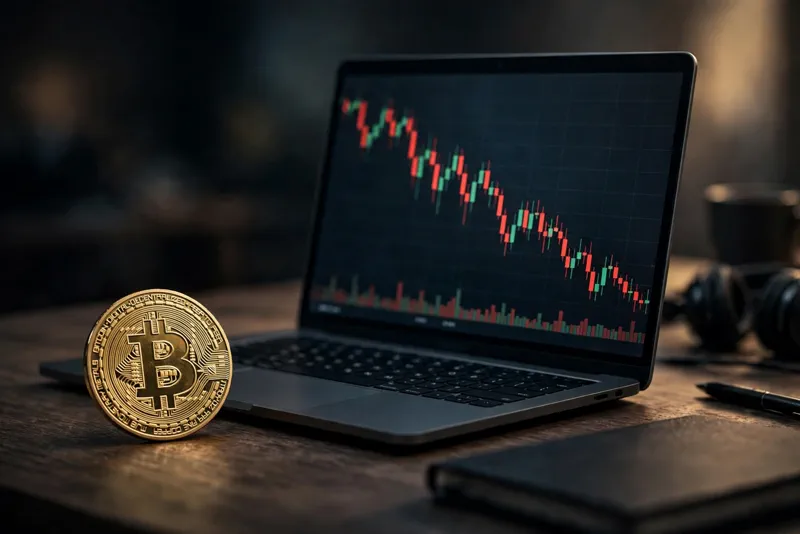
Crypto spent the week chained to the stock market’s mood, and Friday was no exception. Bitcoin hovered around $81,700, broadly flat, making a modest recovery from Thursday’s lows near $81,000. That is still about 35 percent below the all-time high of $126,080 set on October 6, 2025.
The institutional picture turned sour on Thursday. U.S. spot Bitcoin ETFs recorded a net outflow of about $635.5 million, the first outflow after three days of inflows, with BlackRock’s IBIT shedding roughly $254 million and Fidelity’s FBTC about $217 million. Roughly $771 million in leveraged crypto positions were liquidated on Thursday, most of them longs. The $81,500 level is roughly the estimated cost basis of the U.S. spot Bitcoin ETF crowd, and traders are watching it like a tripwire. A decisive break below it could open the door to a much deeper move.
What to Watch as the Week Closes
- The close: the Dow is on pace for a third straight weekly gain even after Friday’s drop, while the Nasdaq is staring at a 2.5 percent weekly loss. That divergence tells the whole story of this market.
- Western Digital earnings: the memory giant reports after the closing bell Friday. After DRAM’s 7 percent plunge and 3.5 percent Friday rebound, its numbers will set the tone for the whole chip complex.
- Oil over the weekend: Brent at $113 with Iran threats in play means weekend headlines could move the Monday open sharply in either direction.
- The Fed: the central bank meets October 27-28, in full blackout now. Third-quarter GDP and September PCE inflation land on the 29th.
- Gold: the other safe haven held near multi-thousand-dollar highs this week as real fear returned to markets.
What Friday Really Means
Every selloff tells you something about what investors were wrong about. Last week they were wrong about how much AI spending discipline they could take for granted, and Meta paid the price. This Friday, the market is admitting it was wrong about something bigger: that the rally could keep marching while oil screamed higher and the Middle East heated up.
The honest read on this week is that Wall Street is being repriced on two fronts at once. Growth stocks must justify their multiples without the AI halo, and the whole market must reckon with an oil price that acts like a slow-motion rate hike. Both of those forces are still in play.
The dip buyers who showed up on Monday looked clever for about three days. Now the ball is in the weekend’s court, and the weekend, as always, is brought to you by oil, Iran, and a pipeline region the market just remembered it cannot live without.