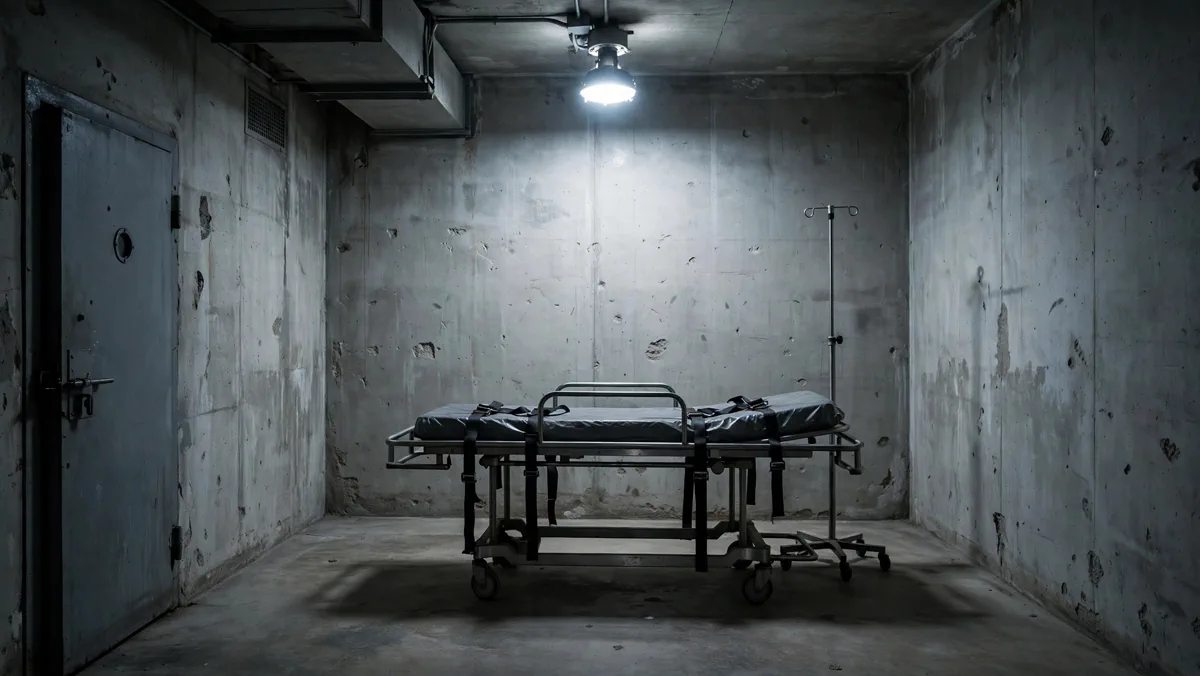
There is a sentence the state of Tennessee never expected to say out loud: the execution did not work.
On Wednesday, Sept. 30, Christa Pike lay strapped to a gurney inside the death chamber at Riverbend Maximum Security Institution outside Nashville. She had spent nearly 30 years on death row and was about to become the first woman executed in Tennessee in more than 200 years. Before the procedure began, she gave her final statement. “I’m leaving the world with love,” she said. “I’m ready to be free. This is a happy day.”
Then the drugs went in. Two full doses of pentobarbital, one of the most powerful sedatives on earth. And Christa Pike did not die.
She is alive right now, unconscious and on a ventilator in a Nashville hospital, with both arms swollen, burned and blistered from the drugs that were supposed to kill her. Her lawyers say she may never fully recover. The head of Tennessee’s prison system has resigned. The governor has halted every execution in the state for the rest of the year. And the legal system is now staring at a question it has never had to answer: what do you do with a woman the state tried to kill and couldn’t?
What Went Wrong Inside the Death Chamber
The execution had been scheduled for 10 a.m. An hour beforehand, a federal appeals court intervened and halted it. The ruling was rapidly overturned by the U.S. Supreme Court, and the procedure moved forward that evening.
The full picture will come from the independent review Gov. Bill Lee has ordered. But here is what court filings, media witnesses and Pike’s lawyers have established so far:
- Prison officials injected Pike with pentobarbital, the state’s lethal injection drug. When she did not die, they prepared a backup set of syringes and administered a second full dose.
- Media witnesses, who could hear Pike from behind a curtain, reported hearing her cry out: “My arm feels like it’s about to burst open.”
- One of her lawyers, Randall Spivey, who witnessed the execution, said her right arm turned purple and her skin blistered at the injection sites.
- Instead of dying, Pike fell into a strange state: snoring, unconscious, but still breathing while strapped to the gurney.
- In a court filing, her lawyers said the ordeal may have spanned more than two hours, during which officials struggled to find a vein and punctured her with several needles.
Her legal team’s theory, laid out in an emergency motion filed Oct. 2, is that the IV lines were never correctly placed: the veins blew, the pentobarbital flowed into her body tissue instead of her bloodstream, and nobody on the execution team realized it. Rather than fixing the problem, the motion says, the state simply mixed a second lethal dose and gave that one too.
Botched lethal injections are not rare, according to the Death Penalty Information Center, which tracks capital punishment in Washington. But they almost always fail at the first step: getting the IV lines in. Pike’s case is something else entirely. The drugs went in. She is, as far as anyone can tell, the first person in American history to survive that.
Who Christa Pike Is, and Why This Execution Mattered
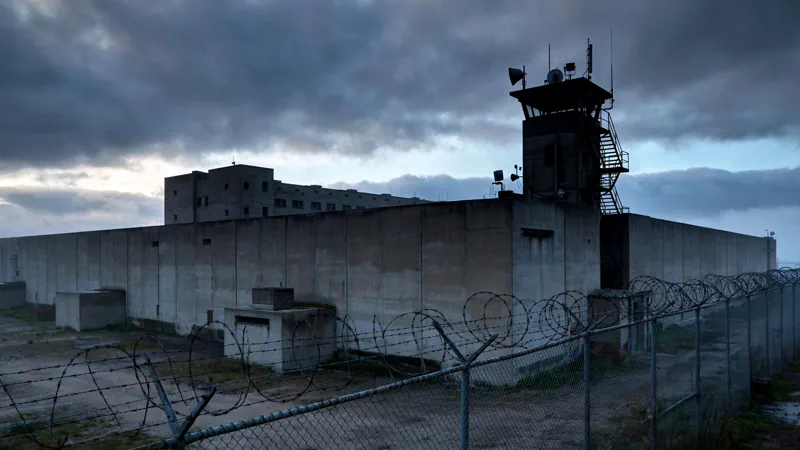
Christa Pike was 18 in 1995 when she and her boyfriend tortured and killed her 19-year-old classmate, Colleen Slemmer. In 1996 she was sentenced to death, making her one of the youngest women ever sent to death row in America. She has been there ever since: nearly 30 years, growing from a teenager into a 50-year-old woman behind bars.
She was supposed to be a footnote: the first woman Tennessee had executed in more than two centuries. Instead, she became the center of one of the strangest chapters in the history of capital punishment.
In their court filings, her lawyers compared pentobarbital to bleach and Drano: “It is caustic and highly alkaline and burns upon contact, including skin, tissue, and veins.” When Pike arrived at the hospital, both arms were swollen, burned and blistered. Hospital staff are now working to save her life and clear the drug from her system. Doctors are working to save the life of a woman the state spent the evening trying to end.
The Fallout Came Fast
The morning after, Pike’s lawyer Randall Spivey stood before reporters with an update that sounded unreal. “Christa is alive right now,” he said. “We don’t have a sense of her prognosis or much update on her health at the moment, but we do know that she is alive right now.” She was critically ill, receiving what her lawyers called “life-saving medical care,” according to court documents reviewed by USA Today.
By Friday, her legal team had filed an emergency motion asking the court to preserve every piece of evidence, from the syringes to the surveillance footage. They described the state’s actions as “incompetent and reckless.” Those are their words; the state strongly disagrees. The Tennessee Department of Correction said it “followed every step of the state’s lawful, established execution protocol,” that the chemical “has consistently been effective,” and that the protocol “does not allow for additional procedures beyond what was carried out.”
Then came Saturday. Gov. Bill Lee, who had previously denied Pike clemency, announced that Department of Correction Commissioner Frank Strada would resign this month. “Commissioner Strada has served with integrity,” Lee said, “and I appreciate his willingness to put the interests of Tennesseans first during this difficult moment.” Strada said stepping down was “in the best interest of Tennesseans as the independent review moves forward.”
The resignation did not come out of nowhere. The Nashville Tennessean reported that Strada had been a top prison official in Arizona during three lethal injection executions criticized for serious problems. And this was Tennessee’s second botched execution this year: back in May, the state halted one after medical staff failed to find a vein in a prisoner’s arm.
Lee also ordered an independent review of what went wrong and halted all executions in Tennessee for the rest of 2026.
The Question Nobody Can Answer
Her lawyers are not being subtle about what they want: they have repeated their calls for Pike’s sentence to be commuted to life in prison, describing what she endured as “chemical torture.” On Sunday, her attorney Stephen Ferrell went on CNN and painted a grim picture. She has not regained consciousness. She has not said a word. She remains in a heavily guarded hospital room, and Ferrell said plainly that she may never fully recover.
“We don’t know right now, and we may never know, what sort of torture she endured during that process,” Ferrell told Jake Tapper. “We don’t really know the prognosis yet and may not know for several days.” He added that there may be questions about her competence going forward. “We just don’t know any of this,” he said.
The state’s position has not changed. The protocol was lawful, officials say, and the drug has worked every other time. From that view, this was a medical malfunction, not a legal one, and the sentence still stands.
Legal scholars will argue about this for years. The Constitution bans cruel and unusual punishment, and Pike’s lawyers will almost certainly argue that strapping a woman to a gurney, injecting her twice with a caustic drug, and leaving her burned and unconscious crosses that line. But courts have been reluctant to throw out death sentences because the method failed. There is simply no roadmap here. No American has ever survived this before.
What Happens Next
The governor’s independent review is underway. The court filings over the preserved evidence are ongoing. Pike’s medical prognosis is unknown, and if she does recover, her competence to face further proceedings is an open question. Every execution in Tennessee is frozen through the end of the year.
On Wednesday, Christa Pike walked into the death chamber expecting to die. She told the witnesses she was ready, that it was a happy day. Four days later she is alive in a hospital bed under guard, the man who ran the state’s prisons has resigned, and the state that tried to kill her is now trying to figure out what it is allowed to do next.
Whatever comes next, one thing is already certain. The night the execution failed will be studied, litigated and argued about for decades. Because for the first time in American history, the state flipped the switch, and the switch did not work.
Read more in our US News section, including the case of the U.S. Marine arrested in Okinawa.