Sometimes a story starts small enough that you almost miss it. A broken test tube. A lab assistant in a Siberian town most Americans have never heard of. Then she is dead within days, two hundred people are in quarantine, hospitals are locked down, the Russian government is suddenly very quiet, and the White House is “monitoring the outbreak and assessing options.” That is not a small story anymore. That is the kind of story that makes epidemiologists pick up the phone.
Here is what we know, what is still unconfirmed, and why this one is genuinely worth your attention.
A broken test tube on September 25
The woman was Daria Shipilova, a 28-year-old laboratory technician at the Irkutsk Anti-Plague Research Institute of Siberia and the Far East, in the town of Shelekhov in eastern Siberia. She was exactly the kind of person you would assume knows how to handle dangerous material: this is an institute that exists to study plague and other rare infectious diseases.
According to colleagues cited by the independent outlet People of Baikal, Shipilova broke a test tube containing the pneumonic plague pathogen while collecting samples on September 25. She reportedly told hospital staff the same thing herself. Two days later she fell ill. On September 29 she was admitted to a hospital in Shelekhov with symptoms of severe pneumonia and placed on a ventilator. She died overnight between October 1 and October 2. Doctors initially assumed she had coronavirus.
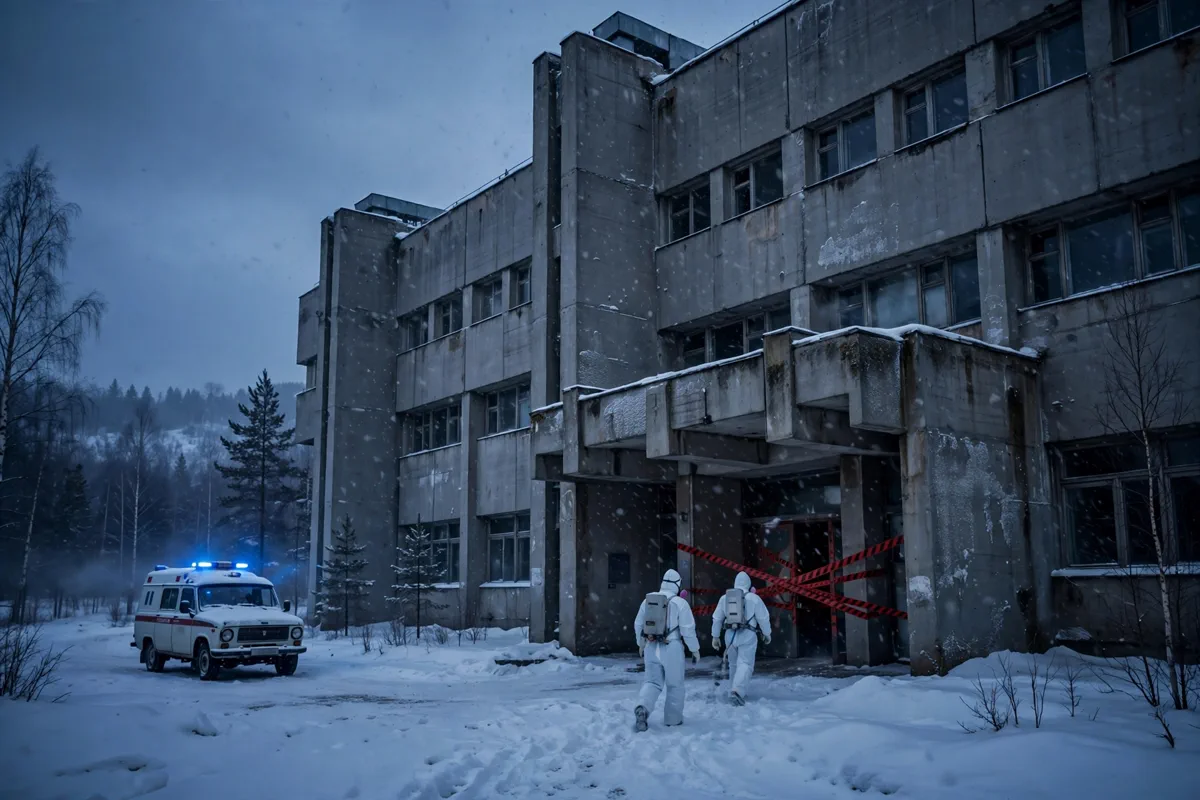
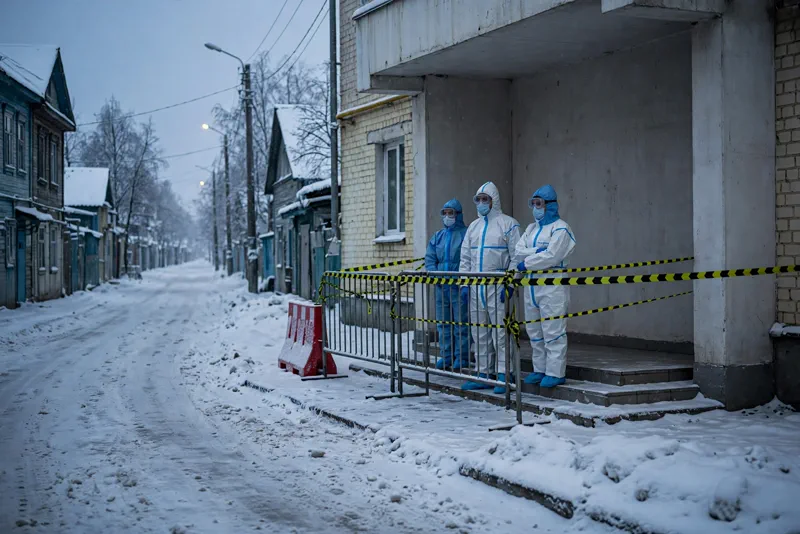
Then the doors started closing. Authorities placed nearly 200 people who had contact with Shipilova under medical observation, 189 of them hospitalized for monitoring, split across three facilities. At least 60 institute employees were quarantined at the facility itself. Hospitals and maternity wards in the region were locked down for three weeks. A colleague said Shipilova may have come into contact with as many as 300 people. Locals reported seeing people in full protective suits, masks being handed out in nurseries, and mask mandates for workers at Irkutsk’s aluminium factory.
Regional governor Igor Kobzev declined to name the illness, calling it only “a particularly dangerous infection” and then “a dangerous infectious disease,” and he canceled all public events in the region. Russia’s health watchdog, Rospotrebnadzor, opened what it called a full set of anti-epidemic measures, and its head, Anna Popova, traveled to Irkutsk on Friday for an emergency meeting of the regional anti-epidemic commission.

The story Moscow does not want to tell
If all of this were a routine public health response, the official story would be boring and transparent. It is neither.
Alexey Tsydenov, the head of neighboring Buryatia, first wrote publicly that Shipilova had died of plague, then edited his post to say she “may have died” of it. Rospotrebnadzor has played down any link between her death and her work, asserting that no microorganisms associated with her professional duties were detected in her samples and that the regional epidemiological situation was “stable.” No agency issued a formal notice of her death at all.
Then there is the alternate account. Meduza, citing regional media, reported one claim that Shipilova fell ill after a trip to Thailand rather than from any lab accident, an assertion that conveniently moves the whole affair out of the laboratory. Authorities have also opened a criminal case into possible safety violations resulting in a death, which is an odd thing to do if nothing happened at the lab.
Epidemiologist Alex Washburne publicly doubted the official version, noting that a single broken test tube at a facility staffed by roughly 90 scientists would not normally force 200 people into quarantine. He has a point. You do not lock down maternity wards for three weeks over a coronavirus case.
Local anger is rising. People of Baikal quoted locals saying doctors in Irkutsk are “already speaking openly about the plague” and that “people are outraged that they aren’t being told anything.” In a country with little free press, the silence itself is the loudest part of the story.
Why pneumonic plague is the one you do not want to hear about
Most people hear “plague” and think of medieval history, rats, and something antibiotics solved centuries ago. That is true for the bubonic form, mostly. Pneumonic plague is different, and it is the reason every official involved is speaking so carefully.
Here is the uncomfortable summary:
- Pneumonic plague infects the lungs directly and is almost always fatal if not treated quickly with common antibiotics.
- Unlike bubonic plague, it spreads from human to human through respiratory droplets. Someone coughing near you is enough.
- It moves fast. Symptoms can appear within hours to a few days of exposure, and without prompt treatment the infection can kill within a day or two of onset.
- The good news is also real: it responds to standard antibiotics when caught early, and the quarantined contacts in Siberia have so far shown no symptoms and tested negative, according to Governor Kobzev.
This is why the broken test tube matters so much. A lab accident involving a live, aerosol-capable pathogen is a genuinely different risk profile from a farmworker finding a sick animal. And it is why the scale of the quarantine, 200 people from one worker, tells you more than the official statements do.
Washington is watching, closely
The Trump administration is not pretending this is a local Russian problem. A White House official told Axios the administration “is aware, monitoring the outbreak, and assessing options.” The State Department has implored Moscow to “share accurate information quickly and openly” about the potential pestilence.
President Trump addressed it himself on Monday afternoon, calling it a “big problem for Russia” and offering US help. In comments that were pure Trump, he said of the pathogen: “The microbes and the germs have gotten stronger.” He added, “We’re looking at it very strongly, we just heard about it. We’ll help them, we’ll help them as much as we can.” He said he had not yet spoken with Vladimir Putin about it.
Secretary of State Marco Rubio struck a calmer note as he left Washington for Europe on Monday: “I don’t think it’s cause for alarm, but it is cause for focus and a cause to just keep an eye on it.” He noted there is very limited travel between the US and Russia, but added the obvious: “something like that gets out, it could certainly spread.”
Kazakhstan, which borders Siberia, is not waiting for anyone’s reassurances. It has ordered increased vigilance at its border crossing points, with sanitary and quarantine controls in place.

Should Americans be worried?
Let us be honest about where this stands. The Russian government has not confirmed the illness was plague. The contacts under observation have no symptoms and negative tests so far. There is very little direct travel between Siberia and the United States, and pneumonic plague, while terrifying, is treatable and well understood by modern medicine.
But the unknowns are what make this worth watching. We do not know exactly what she was exposed to. We do not know whether the full contact chain has been found, because the Russian authorities are not sharing accurate information openly, as the State Department had to say out loud. And we do not know why a “stable” situation required locking down hospitals for three weeks and canceling every public event in the region.
What is confirmed: a young lab worker is dead after a reported lab accident involving one of the most dangerous pathogens on earth, 200 people are quarantined, and governments from Moscow to Washington to Astana are treating it as a serious event. That is already a lot. The rest is a waiting game, and it is one we should all be paying attention to.
Developing story. This article will be updated as official information becomes available.
Sources: CNN; New York Post