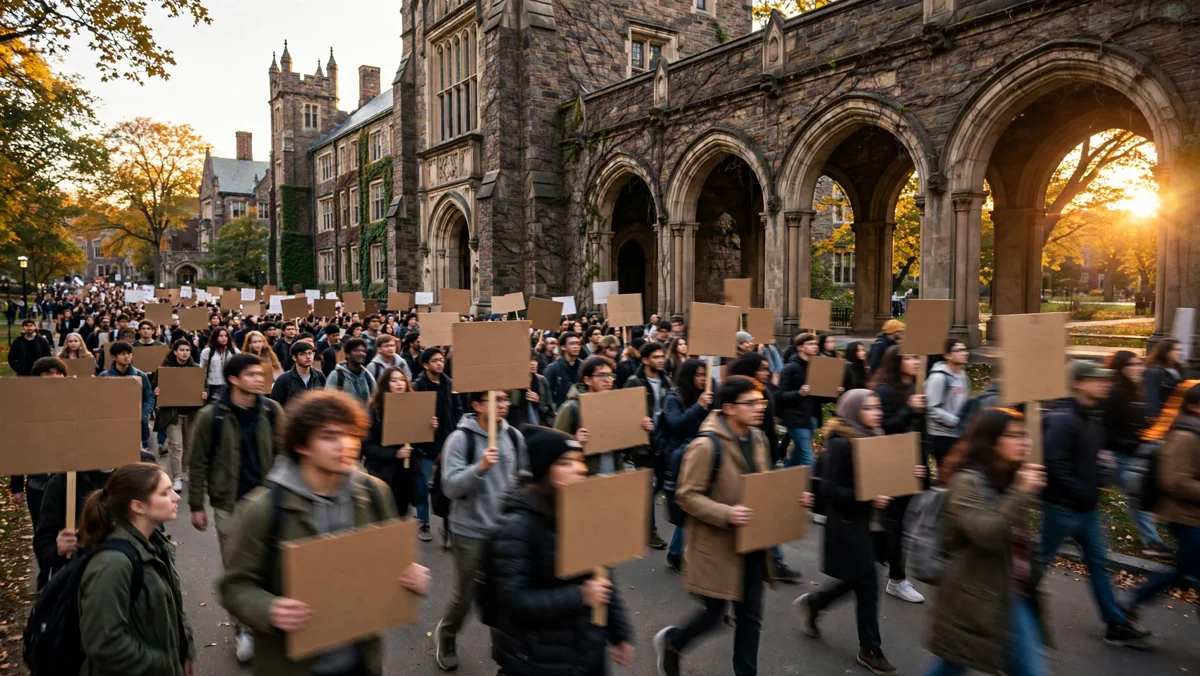
Right now, in more than 40 states, students are walking out of class. They are carrying signs, chanting outside administration buildings, and gathering in town squares. It is all happening today, October 8, and it started with one lawsuit from one young woman against one of the most famous universities in America.
The organizers are calling it the #StopSexualViolence: From the Frat House to the White House National Day of Action. More than 150 events are expected across the country, with students on more than 50 college campuses walking out of class in protest. If even half of that materializes, this will be one of the largest coordinated student demonstrations in years. And at the center of it all is Cornell University, where thousands of students marched through the Ithaca, New York campus just three days ago demanding their president resign.
To understand why this exploded now, you have to go back to October 2024.
What happened at Cornell, according to the lawsuit
A former Cornell student, known in court papers only as Jane Doe, filed a civil lawsuit on September 16 alleging she was gang-raped on October 19, 2024, by seven members of the university’s Chi Phi fraternity. She says she was pressured into taking ketamine, became too intoxicated to consent, and was assaulted over the course of the night. She was 20 years old at the time.
The lawsuit names the seven former fraternity members, the Chi Phi chapter, a local bar, her own sorority, and Cornell University itself. All seven of the accused men have denied wrongdoing during the university’s investigation. Some said the sexual activity was consensual; others disputed that they participated at all.
Here is where the case got complicated, and where the outrage really comes from. Jane Doe reported the alleged assault to police several weeks after it happened. That led to both an internal university investigation and a law enforcement probe. But the local prosecutor declined to bring criminal charges. Cornell responded in its own way: it shut down the Chi Phi chapter and disciplined the members involved, including expulsions and other sanctions.
The lawsuit, though, paints a damning picture of that discipline. It alleges the university gave some of the accused men a chance to mitigate their penalties by writing essays. That one detail, that alleged perpetrators of a gang rape could write their way to a lighter punishment, has become a rallying cry on campus. At Monday’s rally, signs read “We want sentences, not essays.”
None of the accused has been criminally charged. That fact sits at the heart of everything that has followed.
The week Cornell lost control of the story
Details of the case first broke into national headlines in mid-September. On campus, students had known about it vaguely for a while. But when the specifics went public, the reaction was immediate and furious.
Then came the weekend that changed everything.
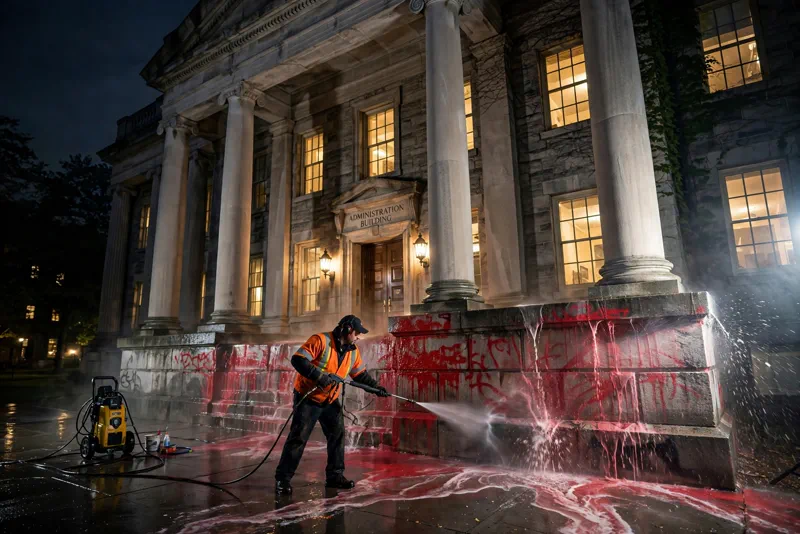
Around 3 a.m. on Monday, October 5, someone smashed the glass door at the entrance of Day Hall, the building that houses the university president’s office. Red paint appeared on the facade: “SMASH THE PATRIARCHY” and “AT CORNELL RAPISTS ARE PROTECTED PROTESTORS ARE EXPELLED.” A security camera above one of the messages was painted over. The activists responsible told the student newspaper they were protesting what they called the larger systems of power that allowed the alleged assault to happen.
By the afternoon, the paint had been washed away and the broken door boarded up. But the fury was not going anywhere.
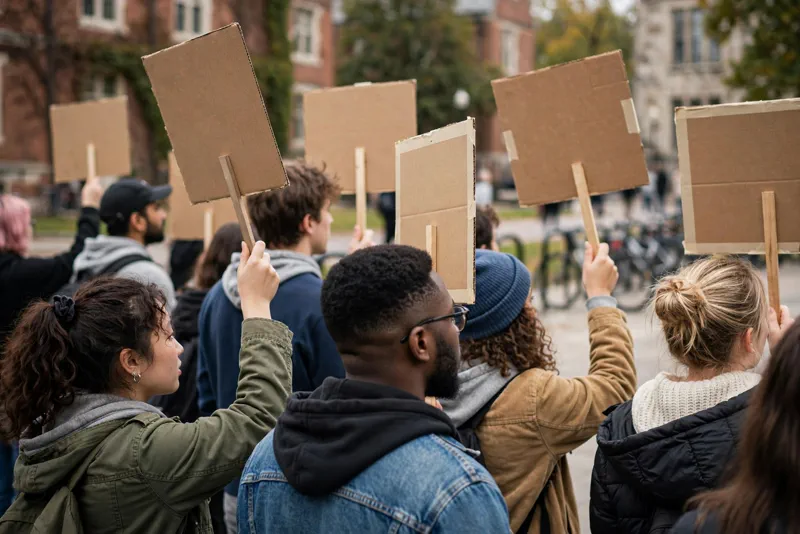
That same afternoon, thousands of students, faculty members, and supporters filled an outdoor plaza on campus for what organizers called the “Justice for Survivors” rally. One sign said “We are all Jane Doe.” Another read “At Cornell, rapists are safer than women.” The crowd chanted “Kotlikoff, resign!” referring to Cornell president Michael Kotlikoff, and “Ban the frats.”
The demands were sweeping: remove fraternities from campus entirely, expel the accused students who are still enrolled, revoke the diplomas of those who have already graduated, and overhaul how the university handles sexual assault cases. One organizer told the crowd that Cornell was known as a “rape school” but didn’t have to be, urging students to lead a nationwide reform movement.
Kotlikoff has called the assault allegations “deeply disturbing” and “a defining moment” in Cornell’s history. A university spokesperson condemned the vandalism while acknowledging the anger on campus. And on October 6, Cornell announced it had hired Sally Yates, the former acting U.S. attorney general, to review its sexual assault policies and procedures.
For many protesters, though, that was too little and far too late.
Why today is national
Today’s demonstrations were organized in days, not months. According to Women’s March executive director Rachel O’Leary Carmona, the rapid-response planning began after survivors and activists across the country demanded that something happen immediately.
The coalition behind the day of action is heavyweight: Women’s March, Feminist, Feminist Generation, and me too International. Their goal goes beyond Cornell. Carmona told reporters she hopes this becomes a “break-glass moment” for American society to confront what she described as the spreading sexual violence, domestic violence, and gender-based violence that women are experiencing in increasing numbers.
Here is what is planned today:
- Walkouts and rallies on more than 50 college campuses across the country
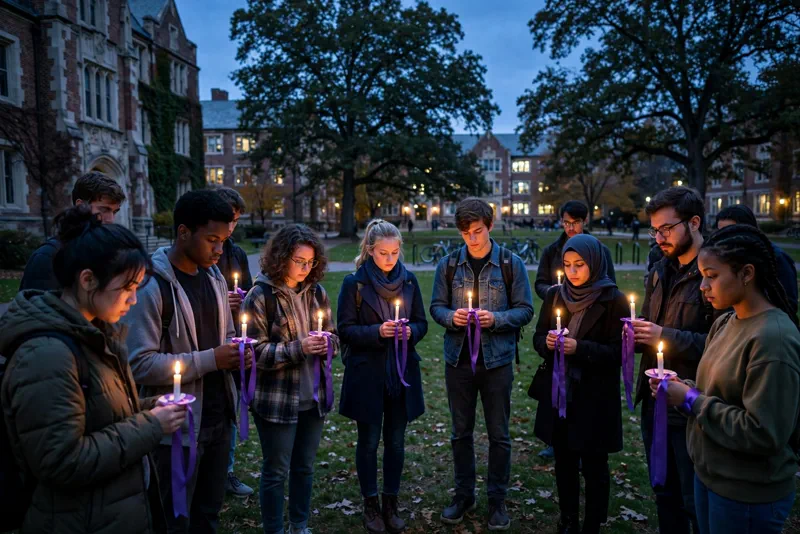
- More than 150 total events in over 40 states, including vigils, marches, and demonstrations
- Large gatherings expected in New York City’s Foley Square and outside the New York State Supreme Court
- A major presence in Ithaca, New York, where it all started
The actions are also drawing in other cases. USA Today reports the protests will spotlight the case of a Louisiana State University student who alleged on TikTok that she was raped by an LSU football player in October 2025, claiming the university protects its athletes. The East Baton Rouge District Attorney’s Office opened a criminal investigation last month, and LSU’s president says the school is cooperating with police. The accused player has maintained his innocence.
The scope is what makes this different from a campus controversy. This is being framed as a national referendum on how American institutions handle sexual assault allegations, and the organizers chose the name deliberately: from the frat house to the White House.
The bigger picture this story is tapping into
It is worth stepping back for a second, because stories like this don’t ignite on their own. They catch fire when they land on ground that is already dry.
Cornell is not the first prestigious university to face these questions. Campus sexual assault has been a national flashpoint for more than a decade, and fraternity culture has been in the crosshairs for much of that time. What makes this moment feel different is the speed. A lawsuit filed in mid-September, a campus explosion by early October, and a national day of action before the month is out.
There is also the question of what “justice” looks like when the criminal system declines to act. No criminal charges were filed in the Cornell case. The university’s internal process handed down its own punishments. But for the protesters, a process that let some of the accused soften their punishment by writing essays was never going to be enough. That disconnect between institutional process and public expectation is the fault line running under all of this.
Similar stories keep surfacing across the country. The arrest of a U.S. Marine in Okinawa on suspicion of murder drew the same kind of outrage this week when questions emerged about how the military handles crimes by service members abroad. Different circumstances, same underlying question: do the institutions we trust actually hold their own accountable?
What happens next
The honest answer is that nobody knows. Sally Yates’s review of Cornell’s policies is now underway, and the university will be under intense pressure to show that it is more than a public relations move. The lawsuit itself will grind through the courts, and it is entirely possible it takes years to resolve.
The protesters have been clear about what they want: the expulsion of the accused students still on campus, the revocation of degrees for those who graduated, the removal of fraternities from Cornell, and Kotlikoff’s resignation. Some of that is within the university’s power. Some of it, like criminal charges, is not.
Today’s national day of action will be the clearest signal yet of whether this stays a Cornell story or becomes something bigger. If students in 40 states walk out, if Foley Square fills up, if the vigils go late into the night, then the conversation about campus sexual violence in America is about to get a lot louder.
And Jane Doe, whose name the public still does not know, will have started it all with one lawsuit.
For more on the biggest stories shaping America right now, see our US News section. Also read: She Survived Her Own Execution. Now Tennessee Has No Idea What to Do With Her.
Sources: USA Today; Reuters; New York Post