
If you use Google Gemini without paying for it, today’s the day things change. Starting Friday, October 9, anyone on the free tier loses access to two of the chatbot’s three models, Gemini Flash and Gemini Pro. What you’re left with is the cheapest, least capable one Google makes: Flash-Lite. And Google didn’t exactly hold a press conference about it. The change was tucked into an updated support document titled “Changes to Gemini model access and limits,” which 9to5Google spotted and reported on October 3.
This isn’t a rumor or a leaked test. Google’s own help page spells it out. Free users keep Flash-Lite. That’s it. The model picker that let you switch between Flash-Lite, Flash, and Pro goes away for anyone without a paid Google AI plan. If you’ve been running your side hustle, your homework, your coding experiments, or your late-night research rabbit holes on the free tier, you’re about to find out what the budget model feels like.
What actually changes, plan by plan
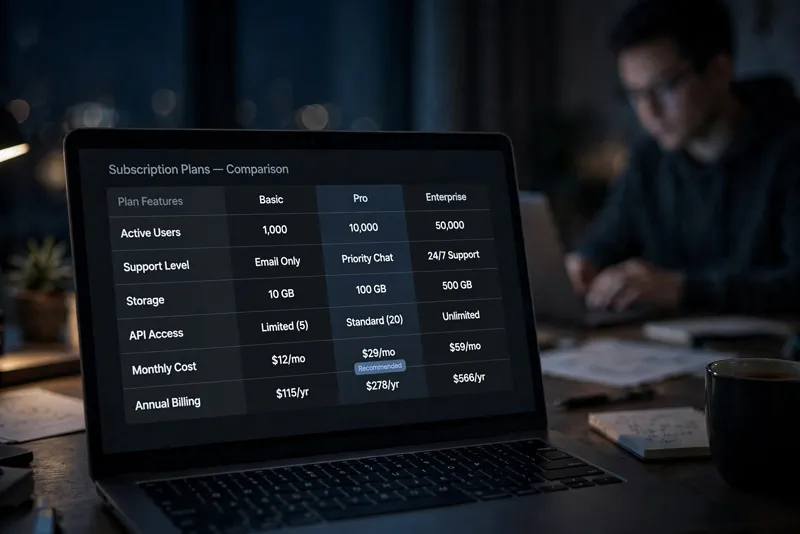
Google is redrawing the whole Gemini lineup, and the free tier is just the headline. Here’s the full breakdown for personal Google accounts, based on the updated support documentation:
- Free ($0): Flash-Lite only. Loses Gemini 3.6 Flash and Gemini 3.1 Pro starting October 9.
- Google AI Plus ($4.99/month): Keeps Flash-Lite and Flash, but loses Pro. Google says Plus subscribers will get an email explaining exactly when the change takes effect for their account, so it’s not a single fixed cutover date.
- Google AI Pro ($19.99/month): Keeps all three models and gains Deep Think, a parallel reasoning mode for hard problems that used to be exclusive to the top Ultra tier.
- Google AI Ultra ($99.99 or $199.99/month): No reduction. Everything stays, including Deep Think and eventual access to Gemini 4 Argon.
The sting in the middle tier is worth a second look. Anyone who wants Gemini Pro after this change can’t just pay $4.99 anymore. The cheapest path to Pro is now Google AI Pro at $19.99 a month, a $15-a-month jump from the plan that used to include it. That’s not an accident. Google is clearly pushing serious users up the price ladder.
Effort settings: the other quiet change
Alongside the model cuts, every tier is getting new effort settings: low, medium, and high. Higher effort means more thorough answers, but Google warns it will also burn through more of your usage limit. Gemini has used compute-based limits since May, where complex questions and longer conversations eat more of your allowance. Usage refreshes every five hours up to a weekly cap. So free users now face two squeezes at once: a weaker model and less room to make it work harder to compensate.
What does Flash-Lite actually cost you in practice?
Here’s the honest part that most coverage skips: if you didn’t know which model you were using, you’re probably fine. Flash-Lite handles everyday questions, casual writing, quick summaries, and simple Q and A without breaking a sweat. For a lot of people, this change will be invisible.
But there are real workflows where the drop will hurt, and you know if you’re one of them. Long document analysis is the big one. If you’ve been feeding Gemini 40-page PDFs, contracts, or research papers and asking sharp questions, Flash-Lite’s smaller context handling and reasoning will feel noticeably weaker. Coding help is another. Pro users lean on the stronger model for debugging tricky code and explaining unfamiliar codebases. Multi-step research, the kind where you ask a question, get a partial answer, and drill deeper five times, will also degrade.
Google’s own advice, relayed through coverage of the support document, is blunt about this: if you have important work that needs Pro, finish it before October 9. That tells you everything about how confident they are that free users will notice.

Why Google is doing this now
This didn’t come out of nowhere. The move follows the launch of Gemini 4 Argon, the flagship model Google unveiled at the end of September and described as its most capable yet. Argon access is currently limited to governments and trusted partners through a program called Fairwind, with Ultra subscribers promised access once it goes general. So Google is building a clear staircase: a thin free tier at the bottom, and increasingly powerful paid tiers at the top.
There’s also an industry-wide context. Anthropic made a similar move in September, keeping its strongest model for paying customers. Compute costs real money, and the AI companies are all converging on the same playbook: hook people on the free version, then make the good stuff cost something. OpenAI’s week has been its own spectacle, with its revenue falling short of expectations and $20 billion vanishing from its annualized figures, which is why Wall Street just had its roughest afternoon of AI trade panic. Everyone in this space is under pressure to show the numbers work.

Is paying actually worth it?
That depends entirely on what you use Gemini for. Here’s a practical way to think about it.
Stay free if you use Gemini casually: quick answers, casual writing help, simple summaries, brainstorming. Flash-Lite will cover you, and you can always toggle effort to high on the occasional hard question. You’ll burn through your limit faster, but for light use it should still be fine.
Consider AI Plus at $4.99 if you liked Flash and miss it, or if you use Gemini for work-adjacent tasks like drafting proposals and outlining projects. It’s the cheapest way to keep a mid-tier model. Just know Pro is gone from this tier, so if Pro was your workhorse, Plus won’t save you.
Go AI Pro at $19.99 if Gemini is part of how you earn a living: coding, research, document analysis, client deliverables. Pro plus Deep Think is the real toolkit now, and for people whose output quality translates directly into money, it’s a straightforward business expense.
One note: these changes apply to Gemini used with personal Google accounts. Google hasn’t announced equivalent restrictions for managed work or school Workspace accounts, so check with your admin before assuming anything.
What to do before the end of the day
If you think you’ll be affected, do three quick things today. First, check which model you’ve actually been using: if you’ve never touched the model picker, you’ve been on whatever Google defaulted you to, and the drop may be milder than you fear. Second, if you have Pro-dependent work in progress, finish or export it now. Third, try your recurring tasks on Flash-Lite for a day before deciding to pay. Some people will discover their workflow survives the downgrade just fine, and there’s no reason to hand Google $19.99 a month for problems you don’t have.
And keep an eye on that model picker if you’re a Plus subscriber. Google says your individual downgrade date is coming by email, not all at once. The free tier changes today. Everyone else’s clock is ticking.
For more on how the AI industry is reshaping itself this week, see our breakdown of the latest technology stories and the fallout from the AI whistleblower hearings that have Washington asking hard questions about all of this.