
Millions of Student Loan Borrowers Get Shoved Onto a New Plan This Month. A 1% Interest Cut Expires Soon After.
If you have federal student loans, October is not a month to ignore your inbox. Two deadlines are converging at once, and together they will decide how much you pay for years. First, millions of borrowers are being forced off the now-defunct SAVE repayment plan, and anyone who has not chosen a new plan by the end of October gets placed on one automatically. Second, the Education Department will knock a full percentage point off your interest rate if you sign up for autopay by December 31. Nearly 2 million borrowers already grabbed the discount. Here is what is happening, what the government is not spelling out clearly, and the exact moves to make this week.

The SAVE plan is dead, and the clock runs out in October
Let us start with the uncomfortable part. The SAVE plan, the income-driven repayment program that had millions of borrowers in forbearance for more than two years, was struck down by a court ruling in March. Since then, the Department of Education has been pushing borrowers off it one notification at a time.
Servicers started sending 90-day notices on July 1, telling SAVE borrowers to pick their next repayment plan. Some borrowers got a final 30-day notice last week, and the Department of Education confirmed to Investopedia that for many borrowers, this is the final notice to leave on their own terms. The key detail: borrowers who do not choose their own plan, whether that is an income-driven plan or an extended plan, will automatically be placed in a standard plan at the end of October, and repayment restarts after more than two years of forbearance.
For a lot of people that is going to be a shock. You have not paid in years, and suddenly a bill shows up on a plan you never chose. Sonia Lewis, CEO of the Student Loan Doctor, told Investopedia that the standard plan can be hundreds of dollars more a month than an income-driven plan for some borrowers, while for others with lower balances or higher incomes it can actually be cheaper. The worst move is doing nothing and hoping the forbearance keeps things frozen. It will not.
The trap hidden inside the automatic switch
Here is the part the official notices gloss over. If you log into studentaid.gov, you will probably see that you will land in the 10-year standard plan or a tiered standard plan when your deadline arrives. But a portion of SAVE borrowers will instead be placed on something called the alternative repayment plan, a little-known option that has mostly been used for borrowers who missed their income recertification deadlines.
The problem, as Lewis points out, is that time spent on the alternative repayment plan does not count toward loan forgiveness. So a public service worker could check their account, see an official-sounding plan name, and assume everything is fine, while the months quietly do not count toward the 120 payments needed for Public Service Loan Forgiveness. That is a devastating thing to discover years from now.
Some borrowers will be shoved into the alternative plan because of the math. Take someone who has been paying for 9 years and 11 months but still owes $10,000. A 10-year standard plan cannot fit them, so they get placed on an alternative timeline instead. The Department of Education did not even answer Investopedia when asked how many borrowers will be affected. The fix is simple: choose your own plan before the deadline, and you never land on the mystery plan at all.
The 1% autopay discount that barely got any attention
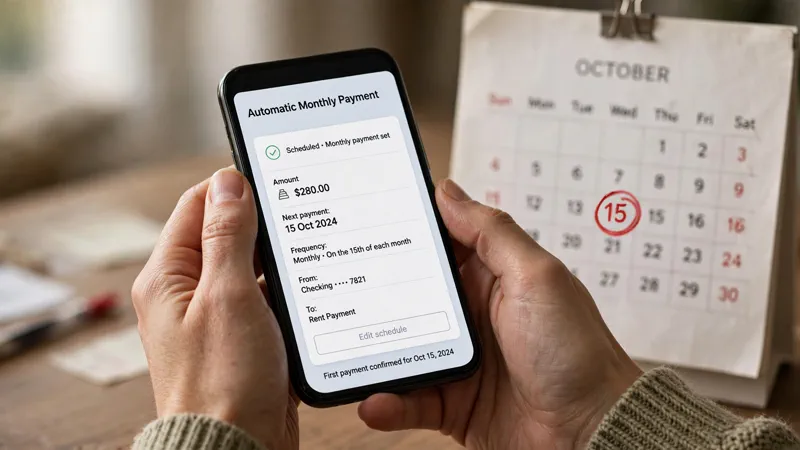
Now the good news, and it is genuinely good. The Education Department is offering a temporary interest rate reduction of a full percentage point to any borrower who enrolls in autopay. The program was announced this summer with an original deadline of September 30, but it proved so popular, with nearly 2 million borrowers signing up, that the deadline was extended to December 31, 2026. The discount lasts through June 2028.
To put this in perspective: borrowers who use autopay normally get a 0.25% rate cut. This offer quadruples that. Lesley J. Turner, a public policy professor at the University of Chicago, told the Associated Press it is a pretty big benefit, especially for borrowers who have large balances. The average interest rate on federal student loans sits at about 6.54%, according to higher education analyst Mark Kantrowitz, so dropping a full point is real money on a five-figure balance.
Eligibility is straightforward. You need Direct Loans disbursed on or after July 1, 2012, and they need to be in good standing. About 42 million Americans carry student loan debt totaling more than $1.7 trillion, and roughly 9 million were in default as of June, according to the Education Department, so check where you stand before assuming you are covered.
What to actually do this week
Cut through the noise. These are the concrete steps, in order of urgency:
- Log into your servicer account today and check your plan status. Find out whether you are on SAVE, what notices you received, and what your 90-day deadline is. Some servicers finished notifying everyone by August; others are still sending notices through the end of 2026, so do not assume silence means you are safe.
- Pick your repayment plan before October ends. If you were on SAVE and got a final notice, do not wait for the automatic switch. Run the numbers on the new Repayment Assistance Plan, which went into effect July 1, against the income-driven options and the standard plan. For lower-income borrowers, RAP can waive unpaid interest so the balance never grows, and the government matches principal reductions up to $50 a month.
- Enroll in autopay by December 31. Do it through your servicer website with your bank routing and account numbers. Borrowers already on autopay when the program was announced in July had the rate cut applied automatically, so check your statement: you might already have it. (If your savings account barely pays anything, read how some banks now pay 5% on savings while yours probably pays 0.38%.)
- If you are in default, consolidate first. You can still get the 1% reduction, but you need to consolidate eligible loans through studentaid.gov, which takes about 60 days, so start now. Involuntary collections are currently on hold, but default starts at 270 days behind, and hundreds of thousands of borrowers are at risk of default this year. Debt is compounding everywhere right now: personal loan debt just hit a 20-year high as Americans borrow to pay off other borrowing.
- Keep paying manually until autopay confirms. Both the AP and the New York Post flag this: keep making payments by hand until you get the confirmation email or notice, or you could accidentally miss one during the transition. A single missed payment can trigger interest capitalization, and under RAP it can knock you off track for forgiveness programs that require on-time payments.

The bigger picture: why the government is suddenly generous
It is worth being a little skeptical, in a healthy way. Under Secretary of Education Nicholas Kent said the autopay program is driving up repayment rates and improving the health of the federal student loan portfolio. Translation: the government wants your payments on time and automated, because millions of borrowers returning to repayment after years of forbearance is an administrative nightmare. The 1% discount is the carrot; the automatic SAVE transfers are the stick.
None of that changes the math in your favor. An extra percentage point off for 18 months is free money the government is handing out, and it pairs with RAP protections that guarantee your balance shrinks with every payment instead of growing through negative amortization. If you qualify, taking both deals is the easiest money you will make this year. More money stories live in the Money section.
The people who get hurt here are the ones who treat student loan mail like junk mail. October ends the SAVE era whether you participate or not. The plan you end up on, and the rate you pay on it, is up to you only if you act before the defaults kick in.