For the past eighteen months, the No Kings movement has been the loudest thing on American streets. Millions of people, thousands of cities, signs about democracy and kings that America supposedly does not have. This Saturday, the signs are going back in the closet. The marchers are still showing up, all three thousand plus of them across all fifty states, but this time they are bringing something different: a plan to vote.
Saturday, October 17, is what organizers are calling No Kings: Vote Early. And if you only remember one thing about it, make it this: the movement that once measured success in crowd sizes now wants to measure it in ballots.
The fourth act nobody saw coming
The No Kings protests did not start small, and they did not stay small. According to organizer estimates backed by reporting from Britannica, the first national day of action on June 14, 2025, drew around five million people to about 2,100 events. The second, on October 18, 2025, pulled in more than seven million across 2,700 locations. The third, on March 28, 2026, reached roughly eight million people at about 3,330 sites, with some events happening outside the United States as well.
Those are organizer numbers, not official headcounts, and it is worth saying that plainly. Independent verification of crowds that size is practically impossible. But even the critics have stopped arguing that the movement is small. It has grown, march after march, for a year and a half. And now it is doing something its own leaders call a deliberate pivot.
“No Kings One, Two, and Three were designed to send a message that the American people were not simply going to sacrifice their constitutional rights,” Ezra Levin, the cofounder of Indivisible and one of the movement’s national leaders, told States Newsroom. The message, in his words, was well sent. What comes next is different: not the constitutional right to be heard, but the constitutional right to vote.
What Saturday actually looks like
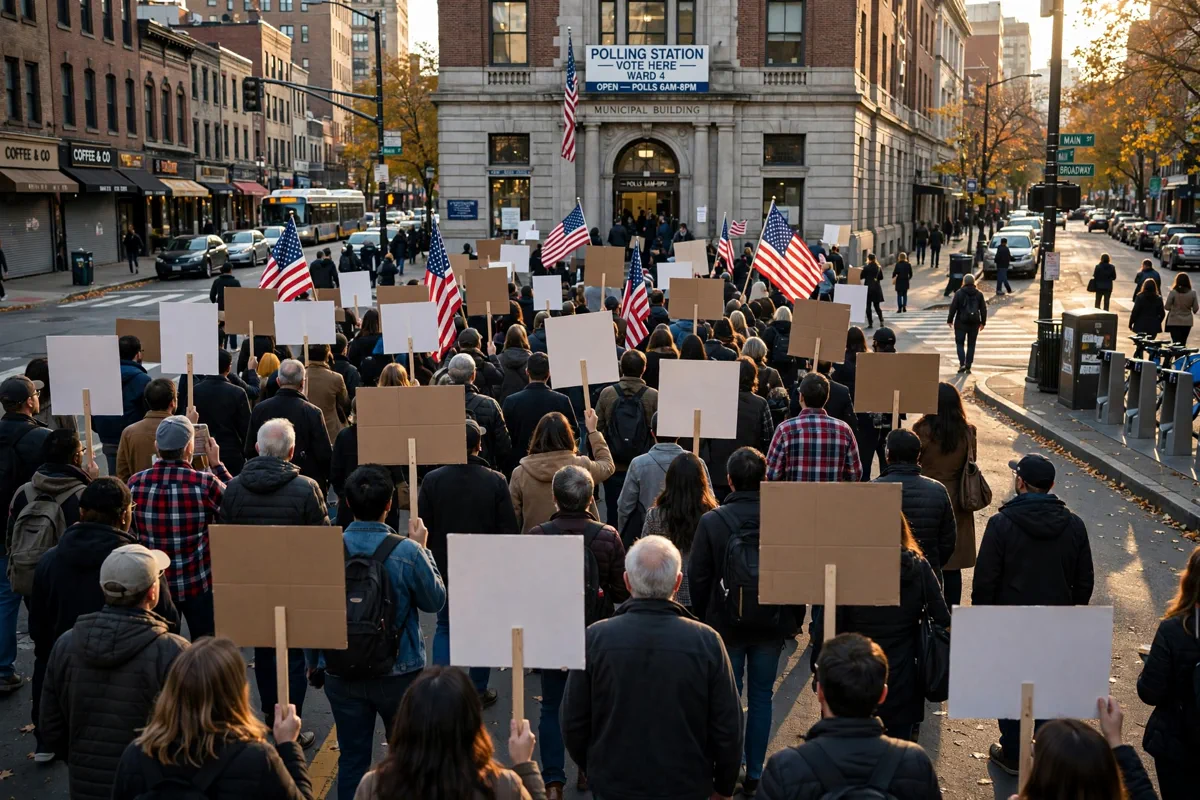
This is not a march on Washington. That is the whole point. Organizers say more than 3,000 actions are planned in every state and the District of Columbia, and most of them are local on purpose. The strategy, built since the April 2025 Hands Off protests, is to meet people where they actually live and vote instead of asking them to travel to a big city for a rally.
Some of the events sound more like block parties than protests:
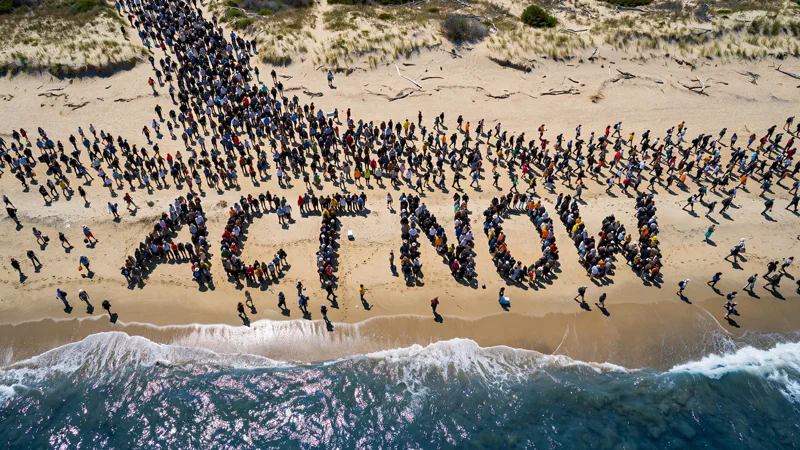
- St. Petersburg, Florida: about 1,000 people plan to gather on the beach and spell out “Go Vote” with their bodies, aerial-photo style.
- Dubuque, Iowa: speakers, music, games, and informational booths, followed by a march to a nearby polling location to vote.
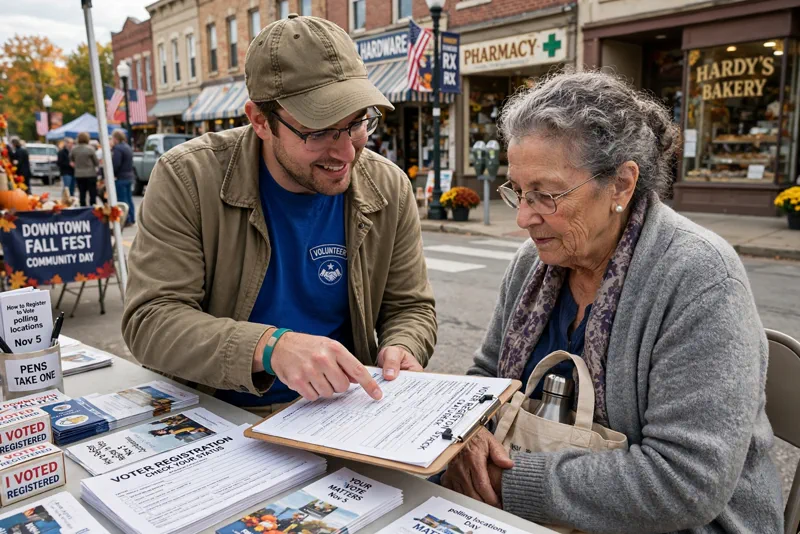
- Livingston, Montana: volunteers will talk about why voting matters while others help people check their voter registration.
- Alpine, Texas: a march from city hall to the courthouse.
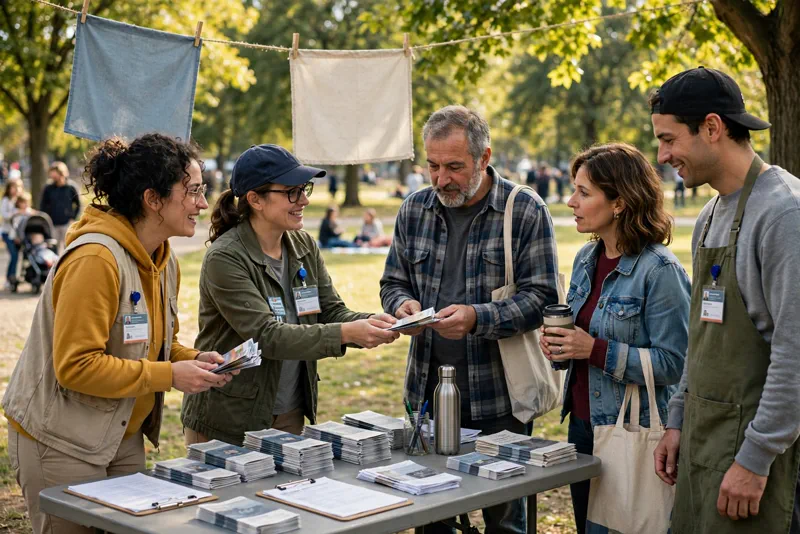
- Omaha, Nebraska: booths in Gallagher Park to hand out voting information and help people find rides to the polls.
It is not just protesting, it is participating
That line belongs to Kate McDonnell, 67, an Omaha MoveOn organizer quoted by USA Today. Her group sends postcards encouraging people to vote, waves signs at protests, and also collects supplies for local food banks and clothes for homeless people. The new formula, as she puts it, is participation, not just protest. “We can help people find rides. We can educate people about their options. We are not going to be telling people how to vote. That is a personal decision. It is private,” she said.
The ACLU is training thousands of volunteers to stand by at the polls, helping voters understand their rights and what to do if they run into problems casting a ballot. The organizers say the day is open to everyone, and they describe it as a nonpartisan voter participation effort, not affiliated with any candidate or party.
Why organizers think ballots beat bullhorns now
The stated reasoning is blunt. Levin has said the October date was chosen because organizers believed the Trump administration was signaling, again and again, an intent to interfere with the November midterm elections. The response they have chosen is not another march with signs. It is turnout so large that it would be hard for anyone to claim the results were faked.
That is the bet: that early voting is both a practical shield and a political statement. Vote early, organizers argue, in case anything goes wrong on Election Day, whether that means long lines, broken machines, or something worse. Alma Couverthie, a senior organizer with Common Cause, put it to a crowd in front of the Supreme Court this week in plain language: do not trust the way you voted before, check your registration again, and know where you are going, how you are getting there, and who you are bringing with you.
The White House is not buying it
For all the talk of nonpartisanship, the White House responded to the announcement the way it has responded to every No Kings day before it: with dismissal. Spokeswoman Lauren Bis told USA Today that the organizers should change their name, since this November Americans face a choice between Trump’s commonsense policies and what she called the extreme Democrats’ radical socialist, open-border policies.
That tension is not going away. The movement’s name comes from its belief that Trump is acting like a monarch, and its coalition includes some of the most recognizable names in progressive organizing: Indivisible, MoveOn, the American Federation of Teachers, Black Voters Matter Fund, Voto Latino, Public Citizen, the ACLU, and the 50501 Movement. Nearly 320 organizations are coordinating Saturday’s events under nine national steering committee groups, according to organizers. The organizers also stress that the actions have been consistently nonviolent, and that discipline is a priority again this weekend.
What to watch on Saturday
The interesting question is not whether people show up. The movement has answered that question three times. The interesting question is whether showing up to vote is as energizing as showing up to march. Protesting is a Saturday activity with a crowd and a chant. Voting early is a Tuesday errand with a line. Organizers are betting that packaging the errand as an event, music, games, a march to the polls, a human “Go Vote” on a beach, will make the difference.
There is a second question underneath the first one: whether a movement that has always defined itself by what it opposes can become a movement defined by what it does. The March 2026 rallies were framed around opposition to the 2026 Iran War. Saturday is framed around a ballot. If the turnout is massive, the organizers will call it proof that the protest energy has become electoral energy, right before the midterms that both parties are treating as the most important election of the decade.
If it fizzles, the critics will say the movement was always better at marching than at voting, and the White House will say it told everyone so.
Either way, Saturday is the experiment. Three marches told America how many people were angry. Now we find out how many of them will do the one thing organizers say matters most: show up, early, with a plan, and vote like hell.
For more coverage of the stories shaping America this week, browse our US News archive, including this week’s look at why American brands are becoming targets in Ukraine.