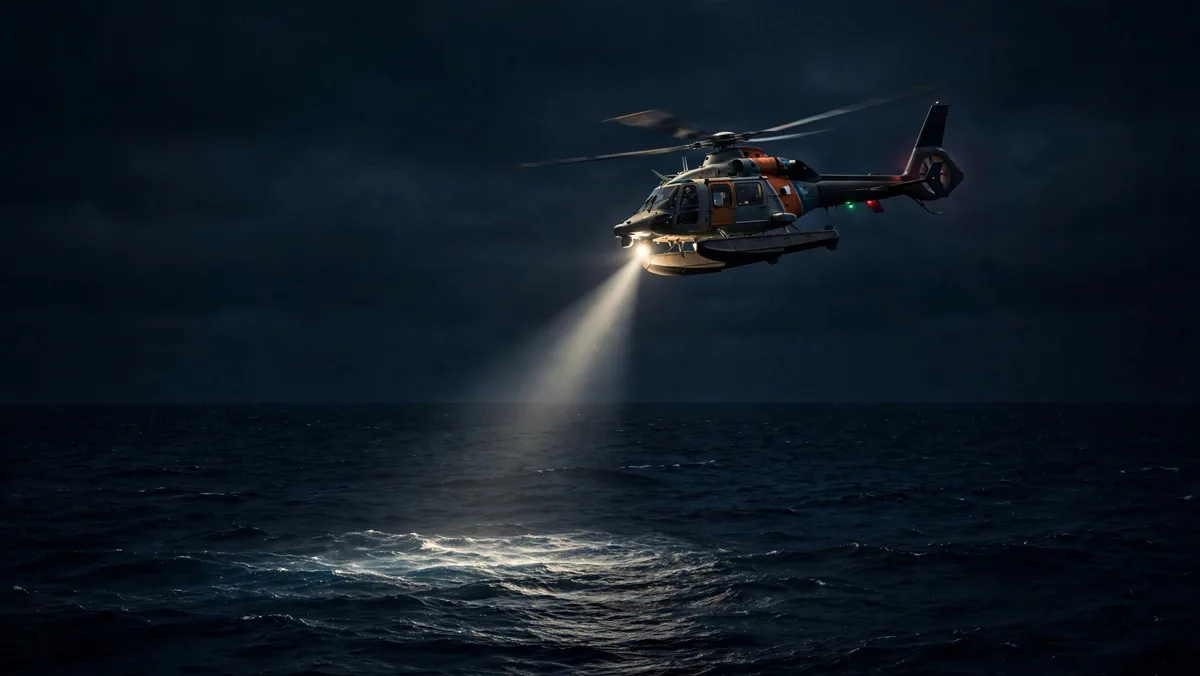
They were in the water for hours, in the black of night, about 140 miles off the Mexican coast. Some held onto each other. Some held onto whatever debris they could find. And while they waited for rescue, the sharks found them.
On Friday, October 16, a boat carrying 27 people capsized off the coast of Baja California. The U.S. Coast Guard pulled 16 survivors from the Pacific Ocean. Eleven people are still missing. And several of the people rescued had wounds consistent with shark bites, suffered while they treaded water waiting to be found.
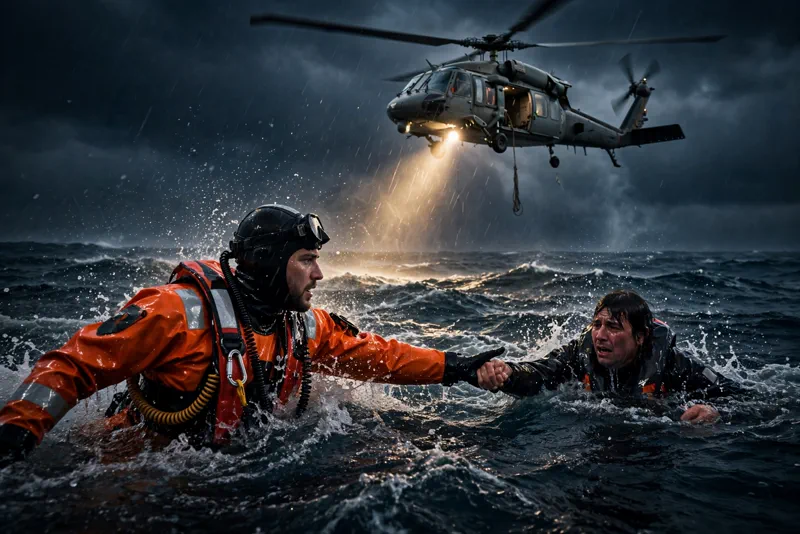
A desperate, multi-nation search is still underway. Here is what we know, and what is still horrifyingly unknown.
The 1 a.m. Call That Started It All
At about 1 a.m. local time on Friday, Coast Guard watchstanders at Sector San Diego picked up a radio distress call. A vessel was taking on water, roughly 140 miles west of Ensenada, Mexico. That is far from shore, deep in the open Pacific, and well outside U.S. waters.

Crews from Air Station Ventura, Air Station Sacramento, and the Coast Guard Cutter Active scrambled. A Navy helicopter from Helicopter Sea Combat Squadron 23 and the USS Kingsville joined them. But the ocean does not give up its secrets easily, and the first helicopter did not reach the scene for about two hours.
When rescuers arrived, there was no boat. Petty Officer Chris Sappey put it bluntly: “There was no sight of a vessel in the water, just straight people in the water.”
90 Minutes to Pull 16 People From the Water
Lieutenant Santiago Tamburini of the Coast Guard was part of the response. He described a scene that will stay with you.
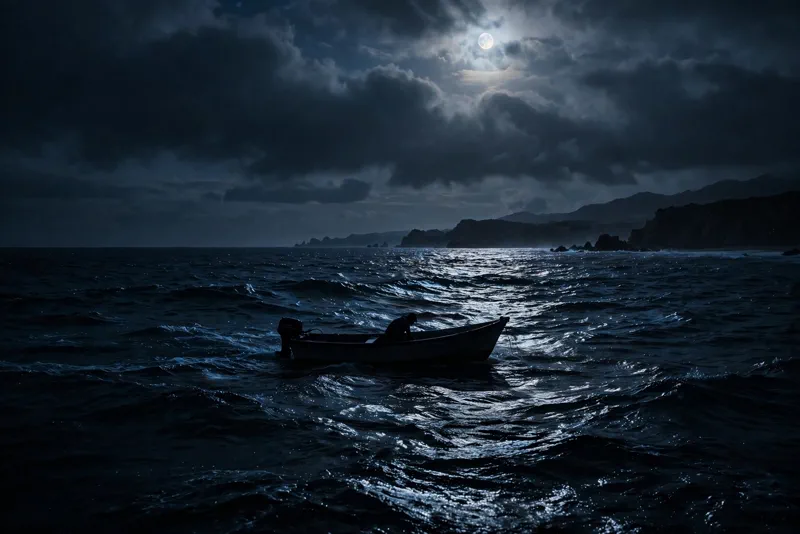
“People were holding onto each other, to debris, just treading and trying to stay above water before being rescued,” he said.
It took the crew, including a rescue swimmer dropped into the dark water, about 90 minutes to pull all 16 survivors aboard. Coast Guard personnel gave lifesaving first aid on the way to San Diego, where emergency medical teams were waiting. The survivors were taken to area hospitals, including Scripps Mercy Hospital San Diego, where a hospital spokesperson said three arrived, one with a suspected shark bite and two treated for cold exposure.
Think about that for a moment. They were in the water for hours before anyone reached them. Not minutes. Hours.
Then the Sharks Came
This is the part of the story that is almost too awful to sit with. Several of the survivors were suffering from severe injuries consistent with shark bites when rescuers reached them, according to the Coast Guard.
“Several of the individuals rescued were suffering from severe injuries consistent with shark bites, and the Coast Guard provided life-saving first aid while en route to San Diego,” the agency said in a statement on Saturday.
Struggling, bleeding people floating in open water for hours in the middle of the night. The ocean is not merciful to the vulnerable. The Coast Guard has not released details on the severity of the bites or the current conditions of the survivors, but hospital reports indicate at least one confirmed suspected shark bite injury, and two survivors were described as being in critical condition by Canadian broadcaster CBC.
Who Was on That Boat?
Here is where the story gets more complicated, and harder to look at.
The Coast Guard said reports indicated there may have been 27 people aboard the vessel, which had departed from Mexico. All 16 people rescued are Mexican nationals, according to the Mexican consulate in San Diego. U.S. Customs and Border Protection is interviewing the survivors, the Coast Guard confirmed.
The area where the boat went down is known for two very different kinds of traffic. It is popular with fishing and leisure boats. But it is also a well-known smuggling corridor, the route small open boats called pangas use to carry migrants from Baja toward the United States in the dead of night, sometimes traveling hundreds of miles.
Captain Robert Tucker, commander of Coast Guard Sector San Diego, was direct: “This case highlights the extreme dangers of taking to the sea. The vessel had a large number of people onboard and was following a route normally used in illegal maritime smuggling operations. Offshore conditions are unforgivable and can quickly result in death.”
The Coast Guard has not confirmed the vessel was part of a smuggling operation. But the route, the hour, and the overloaded boat tell their own story.
The Search Is Still Going
Eleven people are still missing. The search continued through Saturday and into Sunday with support from the U.S. Navy and the Mexican Navy, using helicopters, a fixed-wing aircraft, a Coast Guard cutter, and a Navy vessel. The Coast Guard planned to add another helicopter to the operation.
Survivor accounts are the only source for the headcount. One rescued person said as many as 27 people had been aboard. That number has not been independently confirmed, which leaves a painful gap: nobody knows for sure how many people remain in the water, or whether some may have been pulled out by other vessels before the Coast Guard arrived.
The clock is working against everyone. Every hour in open water drops the odds. The search crews know that. So do the families waiting for news in Mexico and the United States.
What We Know So Far
- 27 people are believed to have been aboard the vessel when it capsized off Baja California early Friday, October 16. The count comes from survivor accounts and has not been independently verified.
- 16 people were rescued and taken to San Diego area hospitals. All are Mexican nationals, per the Mexican consulate.
- Several survivors had injuries consistent with shark bites, suffered during hours in the water before rescue. Two were reported in critical condition.
- 11 people remain missing. The search involves the U.S. Coast Guard, the U.S. Navy, and the Mexican Navy, with aircraft and cutters on scene.
- The vessel went down about 140 miles west of Ensenada, in waters outside the U.S. that sit along a known maritime smuggling route. CBP is interviewing survivors.
- The distress call came at about 1 a.m. Friday. No vessel wreckage had been recovered as of the latest updates.
This Keeps Happening
This is not the first tragedy on this route, and the pattern is hard to ignore.
In May of 2025, at least three people died when a panga flipped off the California coast about 35 miles north of the U.S.-Mexico border. In 2023, eight people were killed when two boats approached a San Diego beach in heavy fog and one capsized in the surf. The vessels are small, open, overloaded, and built for fishing, not for carrying dozens of desperate people through open ocean at night.
Each time, the Coast Guard says the same thing: the sea out there is unforgiving, and the smuggling routes run through some of the most dangerous water on the coast.
For more on how dangerous these crossings get, see our US News coverage, including the story of a woman who survived 20 hours in open water after jumping from a cruise ship, a rescue that ended very differently.
What Happens Next
The search will continue as long as there is hope, and the Coast Guard has shown it is throwing serious resources at it. The survivors will be treated, and then CBP’s interviews will determine what kind of operation put them in that water.
But the bigger questions will not be answered by interviews. Who owned the boat? Who organized the crossing? Who was paid, and how much? And who are the 11 people still missing, whose families are right now living through every family’s worst nightmare?
For now, all anyone can do is watch the search, hope for the impossible, and remember that behind the headlines about smuggling routes and policy are 27 people, 16 rescued, and 11 who never came home.
Sources: USA Today, People, New York Post. This story is developing; facts were verified against the latest published reports as of October 19, 2026.