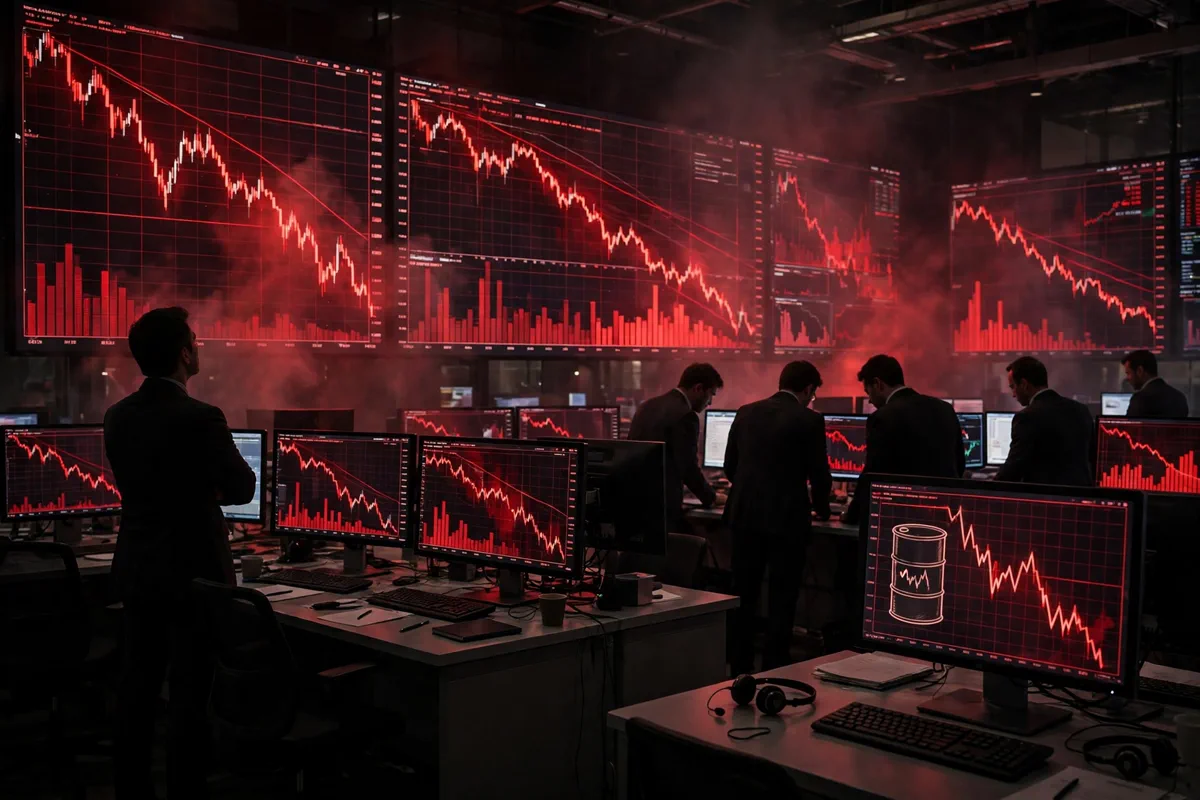
Tuesday gave Wall Street a day that honestly sounds made up. The world’s richest man added $65 billion in a single session. The world’s most valuable company is now a stone’s throw from a number nobody has ever typed into a market cap field. And the S&P 500 is knocking on the door of a record high while bond yields sit at levels most traders have never seen in their careers. Here is Tuesday in three numbers, and what each one is really telling you.
Number one: $1.04 trillion
Elon Musk is a trillionaire again. The Bloomberg Billionaires Index puts his fortune at roughly $1.04 trillion after a $65 billion jump on Monday, the first time in three months his net worth has needed thirteen digits to write down.

How does a man gain $65 billion in a day? He doesn’t, really. Not in cash, anyway. The number moved because the two companies that make up more than 98 percent of his wealth both ripped higher. SpaceX shares surged 7.6 percent to close at $171.09, helped by rumors of chip partnership talks with TSMC and a bullish Morgan Stanley note calling the company one of the cheapest ways to play the space and intelligence boom. Tesla added 2.2 percent to close at $378.73 after third quarter deliveries beat estimates last week.
This is a comeback story inside a comeback story. Musk became the world’s first trillionaire back in June, right after SpaceX’s record-breaking IPO at roughly a $1.77 trillion valuation. Then the stock slumped on worries the valuation had run too far, too fast, and by June 24 his fortune had fallen to about $957 billion. The crown was gone in less than two weeks. Now SpaceX has rebounded 58 percent from its August low, Tesla’s deliveries are beating expectations again, and he is back over the line.
For scale, Forbes notes his wealth now exceeds the entire GDP of Taiwan and is closing in on the economic output of Poland and Switzerland. One man’s paper fortune is worth more than most countries. It is the kind of statistic that makes you laugh and then quietly sit down.
Worth remembering, though: this is paper wealth, and it cuts both ways. Tesla shares are still down about 15 percent for the year, and SpaceX sits roughly 30 percent above its $135 IPO price after a genuinely ugly summer. The trillionaire title is a milestone, not a guarantee. Ask anyone who watched it vanish in June.
One fun footnote: Musk has apparently made up with President Trump after their very public split last year. He showed up at a White House AI event on September 29 alongside other tech executives, and he has even backed Trump’s push to rebrand AI as “super intelligence.” That rebrand has a whole story of its own.
Number two: $6 trillion, almost
While Musk was reclaiming his title, Nvidia was quietly chasing an even bigger one. The chipmaker closed Monday at $238.90, up 2.1 percent, its first record close since May, valuing the company at close to $5.76 trillion.
Nobody has ever been worth $6 trillion. Not a company, not a country’s stock market in some cases. Nvidia needs its shares to trade above $248.96 to cross the line, and the options market is giving it roughly a coin flip’s chance of getting there by the end of October. In premarket trading Tuesday, the stock was already up another 0.7 percent, pushing the valuation toward $5.8 trillion.
The fuel is the same story that has driven this market all year: AI, and specifically the bet that AI agents will need an ocean of new hardware. BNP Paribas analyst Karl Ackerman raised his price target to $345 from $285 on Monday, arguing Nvidia’s rack-scale hardware and its CUDA software moat are unmatched and that the company should sustain gross margins above 70 percent despite every competitor gunning for it. The company also just expanded its share buyback by $150 billion, bringing the total program to $235 billion, the largest ever.
Here is the part that should make you pause. The Nasdaq closed Monday at a record high, its 23rd of 2026, while the 10-year Treasury yield was sitting at a 24-year high. Normally, yields that high are supposed to crush growth stocks. Instead, the AI trade keeps climbing the wall of worry like it doesn’t even see it. That resilience is either the sign of a generational investment boom, or the kind of confidence that looks reckless in hindsight. Maybe both.
Number three: a market that refuses to die
Step back from the trillionaires and the almost-trillionaires, and Tuesday was broadly, stubbornly green. The S&P 500 rose 0.5 percent, putting it on track for its first record close since August 13 and its 28th record of the year. The Nasdaq added 0.7 percent. The Dow climbed nearly 300 points in the morning session, led by a 3 percent jump in Caterpillar.

What made it possible was relief on the two things that have been strangling this market all summer: yields and oil. The 10-year Treasury yield pulled back below 5.3 percent on Tuesday after touching 5.349 percent on Monday, a level not seen since 2002. The 30-year had hit 5.702 percent a day earlier, also a 2002 high. A $58 billion auction of three-year notes went smoothly, which calmed nerves.
Oil helped too. Brent crude fell below the $100 mark to around $99.60, and WTI dropped nearly 2 percent to about $88 a barrel, as resilient Middle Eastern exports and a G7 emergency stockpile release eased supply fears. Cheaper energy takes pressure off inflation, which takes pressure off the Fed, which is exactly the chain reaction stock buyers wanted to see.
Elsewhere: gold futures rose 1 percent to $4,205 an ounce, bitcoin held near $86,000 after its wild $87,000 tease last week, and the semiconductor ETF that tracks chip stocks jumped nearly 2 percent. It is up 74 percent this year. Let that sink in.
So what does any of this mean for you?
- The AI trade is the market right now. Nvidia, the chip stocks, and the trillionaire whose rocket company rides on the same optimism are doing most of the heavy lifting. When that trade sneezes, everything else catches a cold.
- High yields are not killing stocks, yet. Buyers keep treating dips as buying opportunities and equities as an inflation hedge. That works until it suddenly doesn’t, and the bond market at 2002 levels is the thing to watch.
- Earnings season is the next real test. The big banks report next week, and all of this optimism is priced on the assumption that corporate profits keep delivering. A British brokerage just called for a 35 percent S&P 500 crash by end of 2027. Someone is going to be very wrong.
- Milestones are fun, but they are not advice. A trillionaire and a $6 trillion company make great headlines. Your portfolio does not care about headlines.
Tuesday was the kind of day that reminds you why markets are addictive. Records, comebacks, and numbers with too many zeros, all before lunch. Just remember the guy who lost the trillionaire crown in twelve days back in June. In this market, the only thing moving faster than the records is how quickly they can be rewritten.
Sources: Reuters, Investopedia, Barron’s. Market figures reflect Monday’s close and Tuesday’s morning session, October 5-6, 2026.