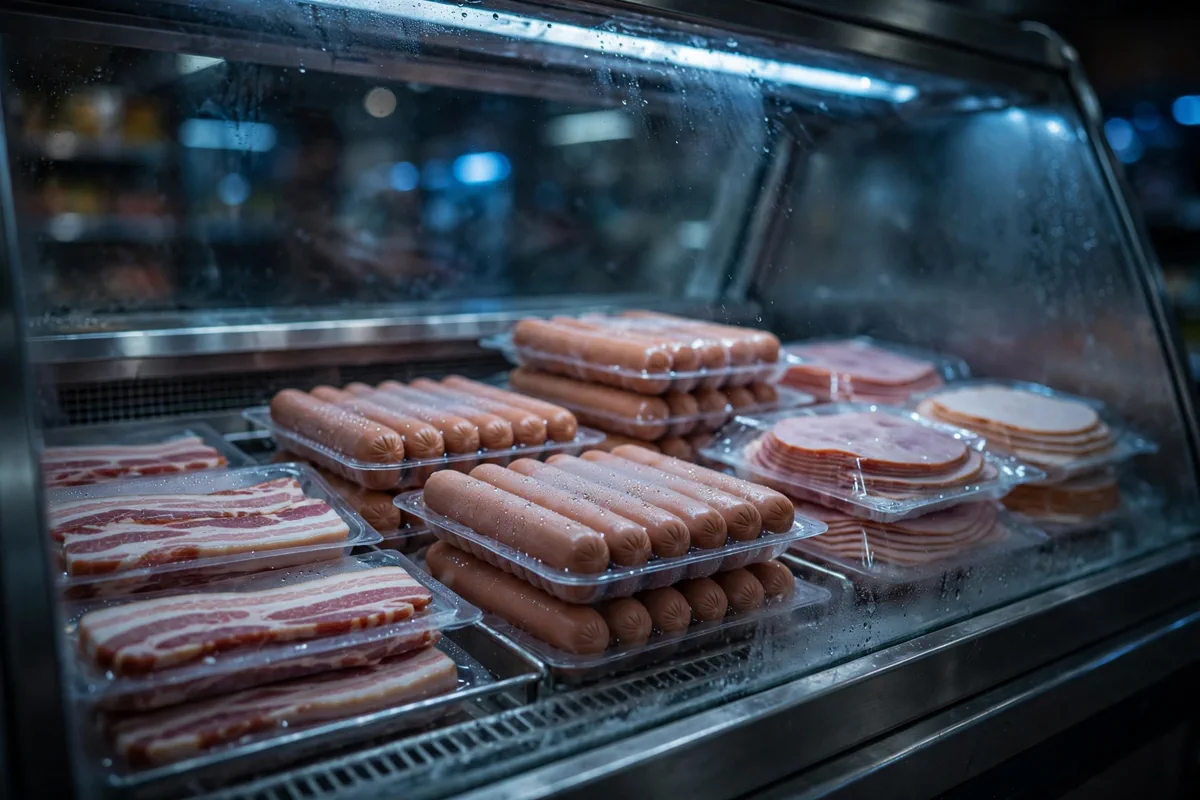
Go look in your refrigerator. Right now. If you have hot dogs, bacon, ham, turkey slices, kielbasa, or bologna sitting in there, you need about ninety seconds of your time. Because the USDA just announced one of the biggest meat recalls of the year, and the stuff that got recalled has been sitting on store shelves and in home kitchens since March.
On October 17, Kayem Foods, Inc., a family-owned craft meat company based in Chelsea, Massachusetts, recalled roughly 1,584,361 pounds of ready-to-eat meat and poultry products. The reason sounds almost too simple: the food may have gotten warm during storage. A warehouse cooler broke down. For products you eat straight out of the package without cooking, that is not a minor detail. It is the whole game.
No illnesses have been reported yet. But federal inspectors classified this as a Class I recall, which is the most serious kind, reserved for products that carry a reasonable probability of causing serious health problems or death. And the agency is explicitly worried that a lot of this food is still sitting in consumers’ refrigerators and freezers across the country, and even in Hong Kong, where some of it was shipped.
What exactly got recalled
The recall covers ready-to-eat products made from approximately March 31, 2026, through October 7, 2026. That is a six-month production window, which is why the number is so staggering. This is not one bad batch from one Tuesday. It is half a year of production from a company that makes some very familiar products.
The affected items include hot dogs, bacon, ham, oven-roasted turkey breasts, bologna, kielbasa, sausages, and other fully cooked products. If you are thinking that sounds like most of the deli aisle, you are not wrong. The recall spans nine brands:
- Kayem
- Genoa
- Al Fresco
- Triple M
- McKenzin Country Classics
- Deutschmacher
- Jordan’s
- Essem
- Winnisimmet
Al Fresco is the one that probably rings the loudest bell. Their chicken sausages are sold nationwide, including at Walmart and Market Basket, and they are marketed as the healthier option, which means a lot of health-conscious shoppers have them in the fridge right now without knowing.
How to tell if yours is affected
Here is the part that matters. Inside the USDA mark of inspection on the package (that little round seal on the label), look for one of three establishment numbers:
EST. M/P 7839
EST. P 20935A
EST. M 9520
If any of those numbers is on a product made between March 31 and October 7, it is part of the recall. The USDA has posted full lists of products, UPC codes, and photos of the labels on its recall page, and Kayem Foods has a customer service line at 800-426-6100 (Monday through Friday, 7:30 a.m. to 4 p.m. Eastern) and an email, info@kayem.com, if you want to check.
One more thing to know: because the production window stretches back to spring, some of this food has been in people’s freezers for months. Freezing does not reset the clock on temperature abuse. If the product sat warm before it was frozen, the risk came along for the ride.
How this happened: a cooler broke, and nobody noticed for months
The story behind the recall is almost comically ordinary, which is exactly what makes it unsettling. According to the USDA’s Food Safety and Inspection Service, the whole thing started with a single retail customer complaint on October 1. A store received a delivery and noticed the products felt warm. Warm. Not damaged, not leaking, just warm to the touch.
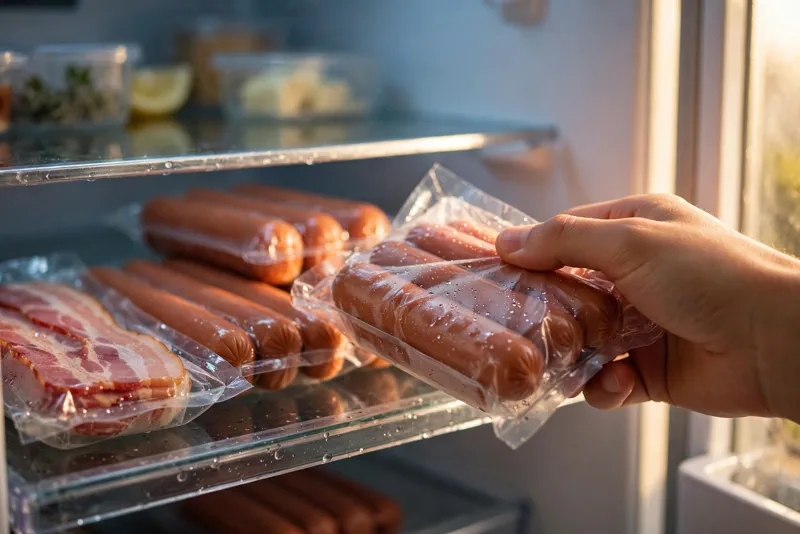
That complaint triggered an investigation, and Kayem determined that a warehouse cooler storing various ready-to-eat products had been experiencing temperature deviations. The company said a cooling-system malfunction at a warehouse was to blame, that it takes food safety very seriously, and that it has learned from the issue and corrected it. That is the corporate version. The uncomfortable version is that the cooler was misbehaving long enough to potentially affect products made over a six-month span before anyone caught it.
The recall was formally announced on October 17 as recall 026-2026. And this is the part worth sitting with: the only reason anyone found out was that one person at one store noticed their delivery felt warm and said something. The food safety system, in this case, was one observant person.
Why “temperature abuse” is scarier than it sounds
Temperature abuse is one of those bureaucratic phrases that undersells the problem. Here is the plain-English version. Perishable food should never be kept out of refrigeration for more than two hours. A refrigerator should be set to 40 degrees or below and a freezer to 0 degrees or below. Bacteria that cause food poisoning multiply the quickest between 40 degrees and 140 degrees, a range food safety experts call the danger zone.
That matters extra for ready-to-eat products. With raw chicken, you at least get a kill step: cooking. Ready-to-eat hot dogs, deli turkey, and bologna are meant to be eaten cold, straight from the package. There is no second chance. If bacteria like Listeria monocytogenes got a head start during warm storage, they can survive and keep growing even in your refrigerator at home, because Listeria, unlike most bacteria, actually grows in cold temperatures.
That is the real reason this recall is Class I, and the reason the USDA is worried about what is sitting in your fridge right now. Listeria infections can be especially dangerous for pregnant women, newborns, older adults, and people with weakened immune systems. No confirmed illnesses have been linked to these products so far, but the whole point of a recall is to keep it that way.
The Hong Kong detail nobody is talking about
One line in the recall notice deserves more attention than it is getting: these products were shipped not just nationwide but also to Hong Kong. That turns a domestic warehouse failure into an international food safety story, and it means travelers and expats who stocked up abroad could be holding affected products too. It also means the distribution footprint of one Massachusetts company’s cooler malfunction is genuinely global.
What to do right now
If you find a matching product, the instructions are simple and non-negotiable: do not eat it. Throw it away or return it to the place of purchase. Do not try to salvage it by cooking it, freezing it again, or trusting that it smells fine. Temperature-abused food can look, smell, and taste completely normal while carrying a real risk.
When you throw it away, bag it so nobody else fishes it out of the trash, especially if you share a building or put bins on the curb. If you or anyone in your household feels sick after eating any of the recalled products, contact a healthcare provider.
And while you are at it, this is a decent excuse to check the temperature of your own refrigerator. If it has been running warm, or if you are not sure, a two-dollar fridge thermometer from the grocery store will tell you in a few hours. Your refrigerator should read 40 degrees or below. Given what just happened to 1.5 million pounds of professionally stored meat, it is fair to say the cold chain is only as strong as its weakest cooler, and sometimes that cooler is in your own kitchen.
The biggest food safety stories are rarely the ones with dramatic headlines. They are the quiet ones, like a warehouse cooler in Chelsea, Massachusetts, drifting a few degrees too warm while millions of pounds of hot dogs rolled through. Go check the fridge. It takes ninety seconds, and it is the one food safety step nobody can take for you. For more stories like this, browse our US News section and vidx.online daily.