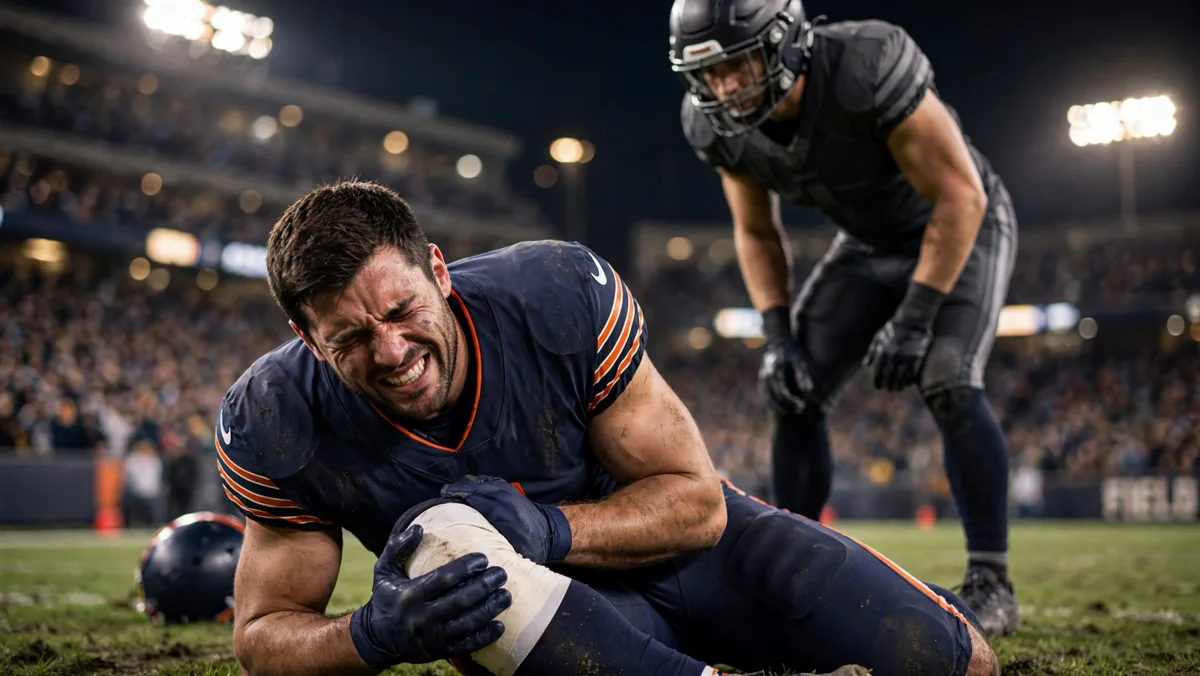
It took Adam Schefter exactly one post on Saturday morning to detonate the NFL’s quietest blockbuster. The Arizona Cardinals, he reported, are finalizing a deal to trade wide receiver Marvin Harrison Jr., and the team had already told its 24-year-old former No. 4 overall pick that he will sit out Sunday’s game against the Detroit Lions while the details get finished.
Let that sink in for a second. Less than three years after Arizona spent a top-five draft pick on the son of a Hall of Famer, a player analysts called the most complete wide receiver prospect of his generation, the Cardinals are moving on. Harrison was not even allowed to suit up on Sunday. This was not a slow drift apart. This was a door being shut.
The Report That Blew Up Saturday
The news broke the way all NFL bombshells break now: with a Schefter post and an Ian Rapoport co-sign. Sources told ESPN and NFL Network on Saturday, October 10, that Arizona is finalizing the trade. Harrison was informed that morning. No trade partner and no compensation had been announced as of Saturday afternoon, which means Sunday morning talk shows and Monday headlines will be doing the rest of the detective work.
But the outlines are already there. The Houston Texans have held talks with Arizona and are thought to be squarely in the mix, according to the reporting. If that happens, the storyline writes itself: Harrison would reunite with C.J. Stroud, his college quarterback from Ohio State, on a team with real playoff ambitions. The Indianapolis Colts, notably, are not involved, a source told ESPN’s Stephen Holder, which quietly rules out one sentimental landing spot for the son of a Colts legend.
The NFL trade deadline is November 10, so this is not a last-minute panic deal. It is a team deciding it has seen enough, and doing it with weeks to spare.
How a “Generational” Prospect Became a Trade Chip
To understand how shocking this is, you have to remember what the hype machine said about Marvin Harrison Jr. coming out of Ohio State. He was not just a good college receiver. He was a two-time unanimous All-American who posted back-to-back 1,200-yard seasons in Columbus and looked like a receiver assembled in a lab: 6-foot-4, velvet hands, route running so clean it looked computer-generated. Teams do not throw the words “can’t miss” around often. They threw them around for him constantly.
The rookie year was not a disaster. It was just… fine. Sixty-two catches for 885 yards and eight touchdowns across 17 games sounds perfectly respectable until you remember the pick: fourth overall. And even in that decent rookie season, Harrison never once posted 70 receiving yards in consecutive games. The production came in bursts, then vanished for weeks.
Then came 2025, the year everything got wobbly. Harrison played only 12 games. He needed an appendectomy. He battled a foot and heel injury. Over the final eight games of the season he appeared just three times, and while he was on the sideline, Michael Wilson emerged as the kind of WR1 Harrison was supposed to be. As the Arizona Republic laid out in detail, Harrison never managed to establish a consistent pattern of success, finishing the year with just 608 yards, a number that would embarrass most fourth overall picks.

This season made it worse. Through four games, Harrison had five catches on 12 targets for 85 yards and one touchdown. Tight end Trey McBride, Wilson, Kendrick Bourne, and even running back Jeremiyah Love all had more targets. The supposed franchise receiver was the fifth option in his own offense. That is not a slump. That is a verdict.
The Agent Hiring Was the Tell
In hindsight, we all should have seen this coming on September 23. That was the day Harrison, who had never had an agent in his NFL career, hired Todd France and Tory Dandy, a change reflected in the NFLPA’s online database. Players do not hire heavyweight agents mid-season for fun. Sources later said he hired them specifically to help navigate a potential trade, and that interest from other teams had been significant in recent weeks. The trade chatter that followed was not idle gossip. It was the runway.
The Money Forced the Issue
There is also cold, hard math here. Harrison is due $4 million this year and $5.62 million next year, and Arizona already paid out his $22.5 million signing bonus. A fifth-year option decision is coming this offseason, and the Cardinals would rather not make it blind. Any acquiring team wants him for as many games as possible, partly to play him and partly to evaluate whether he is worth that option. That urgency explains why the Cardinals moved now instead of waiting for the deadline.
Where Is He Actually Going?
As of Saturday afternoon, the honest answer is that nobody knows for sure. But the clues point in a clear direction. The Texans make football sense and storybook sense at the same time: a reunion with Stroud, who already made Harrison look like a star in college, on a team that could use exactly this kind of vertical threat. TSN reported that Arizona is asking for a second-round choice and more, while teams around the league view him as worth some form of second-day pick compensation.
Do the math on that and wince. The Cardinals spent the fourth overall pick. They are now hoping to claw back a second-rounder plus change. That is the gap between draft-night dreams and Sunday reality.
That price tells you something else too: the league still believes the talent is real. Nobody pays a second-round pick for a receiver they think is finished. The disagreement is not about whether Harrison can play. It is about whether he is a franchise cornerstone or merely a talented player who needs the right quarterback. Houston is betting on the quarterback angle, and you can see why.
Five Things to Watch While the Details Finalize
- Sunday’s game without him: The Cardinals host Detroit at home, and every target that would have gone to Harrison now flows to Michael Wilson, Trey McBride, and the rest. Watch the split. It is the franchise’s post-Harrison offense auditioning in real time.
- The Stroud reunion watch: If Houston finalizes the deal before Sunday kickoff, Harrison goes from fourth option in Arizona to a featured weapon next to his college quarterback. That is a career rescue.
- The compensation number: Does Arizona get its second-rounder or settle for less? Whatever they get will be quoted against the fourth overall pick for years.
- The fifth-year option clock: Whoever lands him inherits that decision. Watch how quickly the new team signals its intentions.
- Another week of chaos: This league keeps serving it. From the Cowboys’ ugly stumble against Tampa Bay to this trade, the 2026 season refuses to sit still. See more in our sports section.
What This Says About Arizona
Here is the part Cardinals fans will not enjoy: this trade is an admission. The franchise paid Trey McBride. It paid Michael Wilson. It committed real money to players who produce reliably every Sunday, and then looked at the fourth overall pick and decided to take the loss. Rebuilds are built on exactly these kinds of brutal, unsentimental decisions.
Arizona is 1-3 and staring at another season where everything went sideways early. At some point a front office has to stop waiting for the light bulb and start rearranging the room. Trading Harrison now, with weeks before the deadline, gets him off the books, gets assets back, and lets the team commit fully to the pieces that actually work. It is painful. It is also the only honest move on the board.
The generational-prospect label, it turns out, does not survive contact with the NFL. It survives contact with the wrong situation, the wrong timing, the wrong body of work. Harrison might still become a star. But if he does, the evidence is increasingly clear, it will not be in Arizona.