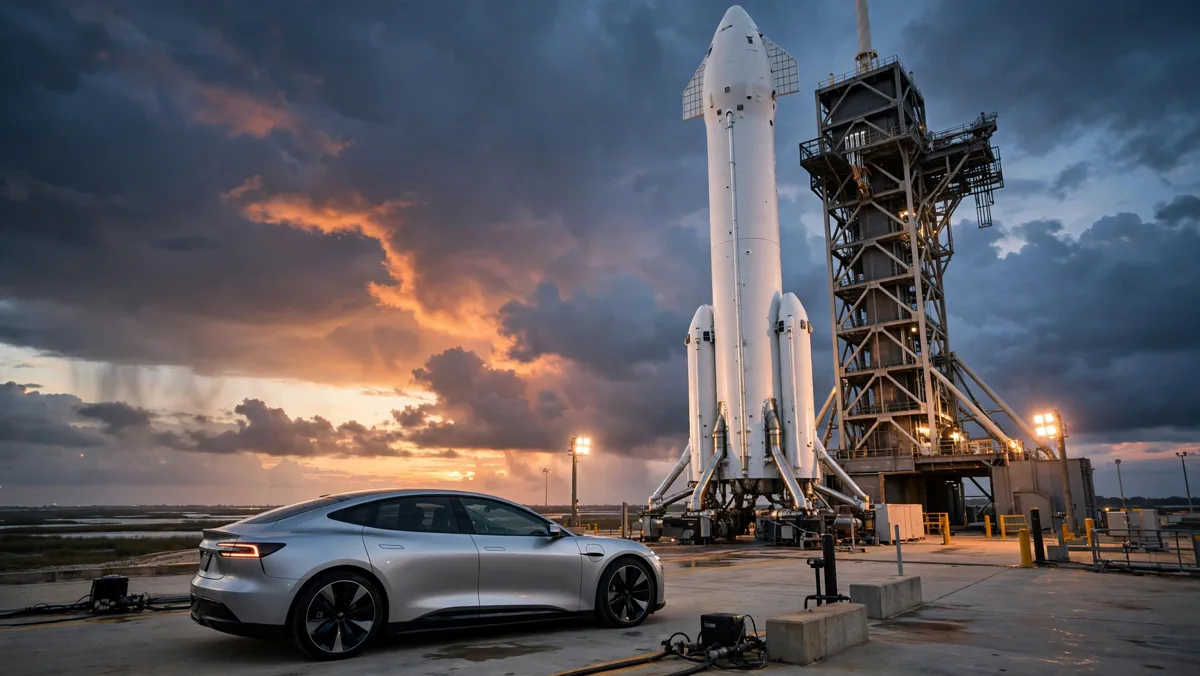
It took Elon Musk four words to move billions of dollars on Tuesday night. A merger between Tesla and SpaceX, he told analysts, would be “a good idea.” SpaceX shares jumped 8 percent in after-hours trading within minutes, and Wall Street woke up on Wednesday to the strangest math it has seen in years: one company, two industries, roughly $3.5 trillion in combined value.
Before you start picturing rocket-shaped Teslas on dealership lots, a word of caution. Musk himself stressed that nothing is agreed, no terms exist, and a deal may never happen. Both companies have formed special committees to study the idea, and that is about as far as it has gone. But the fact that both boards are now formally looking at it, after months of rumors, is why this story is worth your attention.
What Musk Actually Said
The comments came on Tuesday, October 20, during a call to discuss SpaceX’s quarterly results. Speaking with analysts, Musk said combining his electric vehicle company with his rocket and satellite business would bring real benefits. The two companies are already connected through several joint projects, he said, from artificial intelligence to chip manufacturing.
Here is the part that matters: both Tesla and SpaceX have now established independent special committees, made up of directors with no financial interest in the outcome, to examine what a deal could look like. Musk said he will not participate in the discussions at all, describing himself as a “conflicted party” because he runs both companies. He likened the situation to “tap dancing through a minefield,” which might be the most honest line of the evening.
According to reports, the committees were set up following requests from shareholders. That detail is important because it means this is not just Musk thinking out loud. Investors are actively asking for it, and both boards decided the question deserved a formal answer.
The Numbers Are Hard to Comprehend
Let us talk about the scale, because it is genuinely wild. Tesla is valued at roughly $1.5 trillion. SpaceX, which went public only this June, is worth about $2 trillion, making it roughly 1.41 times the size of Tesla. Put them together and you get a combined company worth about $3.38 to $3.5 trillion, depending on the day’s prices.
That would rank among the largest corporate combinations ever attempted, anywhere, in any industry. For context, the entire market value of most countries’ stock exchanges would fit inside it.
SpaceX’s numbers help explain the excitement. The company just posted its first quarterly profit as a public company: revenue surged 161 percent to $14.6 billion, with net income of $4.4 billion, beating Wall Street estimates. The AI business is doing the heavy lifting, with revenue from computing capacity leasing up more than ninefold to about $7.6 billion, and Starlink satellite internet posted about $5.2 billion in revenue. Capital spending nearly tripled to $19.6 billion as the company pours money into infrastructure.
Then came the forecast that made everyone blink. Musk told analysts he expects SpaceX to generate recurring annual revenue between $500 billion and $1 trillion by the end of 2027, and $100 billion of annual recurring revenue by the end of this year. Read that twice. The company that just did $14.6 billion in a quarter is talking about a tenfold jump in eighteen months. That is either the boldest target in corporate history or a signal that the AI computing business is about to go absolutely vertical.
Why It Might Actually Make Sense
Cars and rockets do not sound like natural siblings. But look under the hood and the overlap is real.
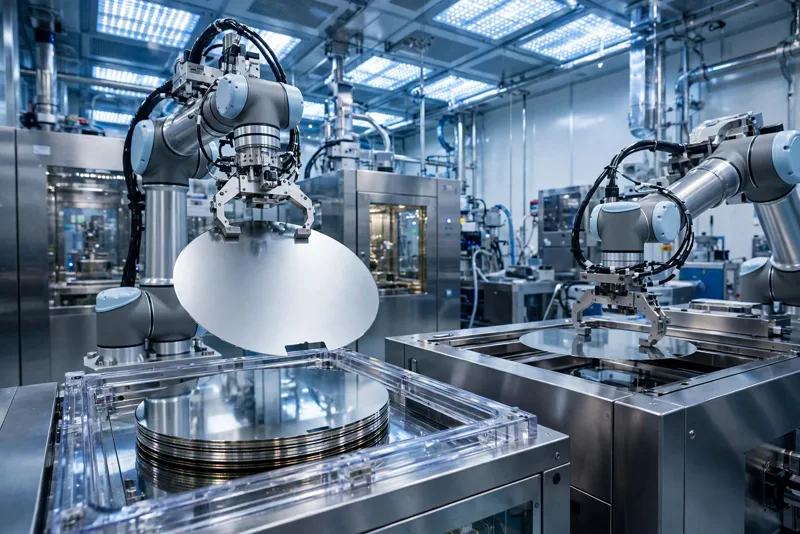
First, chips. Tesla designs its own AI chips for self-driving cars, and SpaceX builds custom hardware for its satellites. The two companies recently launched Terafab, a joint effort to manufacture chips, which means the collaboration has already started in practice.
Second, AI and software. SpaceX’s fastest-growing business is leasing computing capacity, which is AI infrastructure by another name. Tesla is betting its entire future on AI, from robotaxis to humanoid robots. One combined engineering organization would be formidable.
Third, history. This would not even be the first Musk merger. Before SpaceX listed on the market earlier this year, it absorbed xAI and X, the social platform formerly known as Twitter. Musk has a pattern of folding his companies into each other when he sees a strategic fit. Tesla itself already owns about $2 billion of SpaceX stock, disclosed in its second-quarter filing, though that is a minority position of less than 1 percent, not control.
Why It Might Never Happen
Now the cold water. Everything above is the bull case. Here is what stands in the way.
- No deal exists. As of now there is no agreement, no terms, no timetable. SEC filings reviewed through mid-October show no reference to any merger whatsoever. The committees “have not agreed on transaction terms and may never do so,” in Musk’s own words.
- The shareholder hurdle is enormous. Musk said at least half of Tesla’s investors would need to approve a merger, calling that “quite a high hurdle.” Tesla shareholders backed him before, approving his roughly $1 trillion compensation package last year, an episode that made him the first person to reach trillionaire status on paper. But a merger is a bigger ask than a pay package.
- The valuation gap is strange. SpaceX being worth more than Tesla flips the usual script. Structuring a deal where the smaller company absorbs the larger one is technically possible but politically and financially tricky.
- The market is not convinced yet. Prediction-market traders put the odds of a deal by the end of 2026 at just 18.5 percent, rising to about 64 percent by the end of 2027. Smart money says “maybe, eventually,” not “imminent.”

The Market Reacted Anyway
Uncertainty did not stop the trading. SpaceX shares rose 8 percent after hours on the merger talk, and Tesla’s stock gained about 2 percent after a soft stretch in recent weeks. Analysts are split. Barclays suggested last week that a deal could be announced before Tesla’s annual shareholder meeting in December, which would be an aggressive timeline given where the committees are.
Tesla reports its own earnings on Wednesday after the close, and you can bet analysts will press for any update on the committees. Musk has twice declined to rule out a combination in recent months, and each non-denial has added fuel.
What to Watch Next
Three dates matter. First, Tesla’s earnings call on Wednesday evening, where the merger question is unavoidable. Second, Tesla’s annual general meeting in December, the Barclays deadline for a possible announcement. Third, any SEC filing that mentions the committees, because that is when speculation turns into something real.
Until then, this is what it is: the world’s richest person calling a $3.5 trillion idea “a good idea,” while warning everyone not to assume it happens. The committees will do their work, shareholders will do their math, and the rest of us get to watch one of the strangest courtships in business history play out in public.
One thing is certain. When the CEO of both companies starts describing a merger as a good idea on an earnings call, the story does not go away. It just gets bigger.