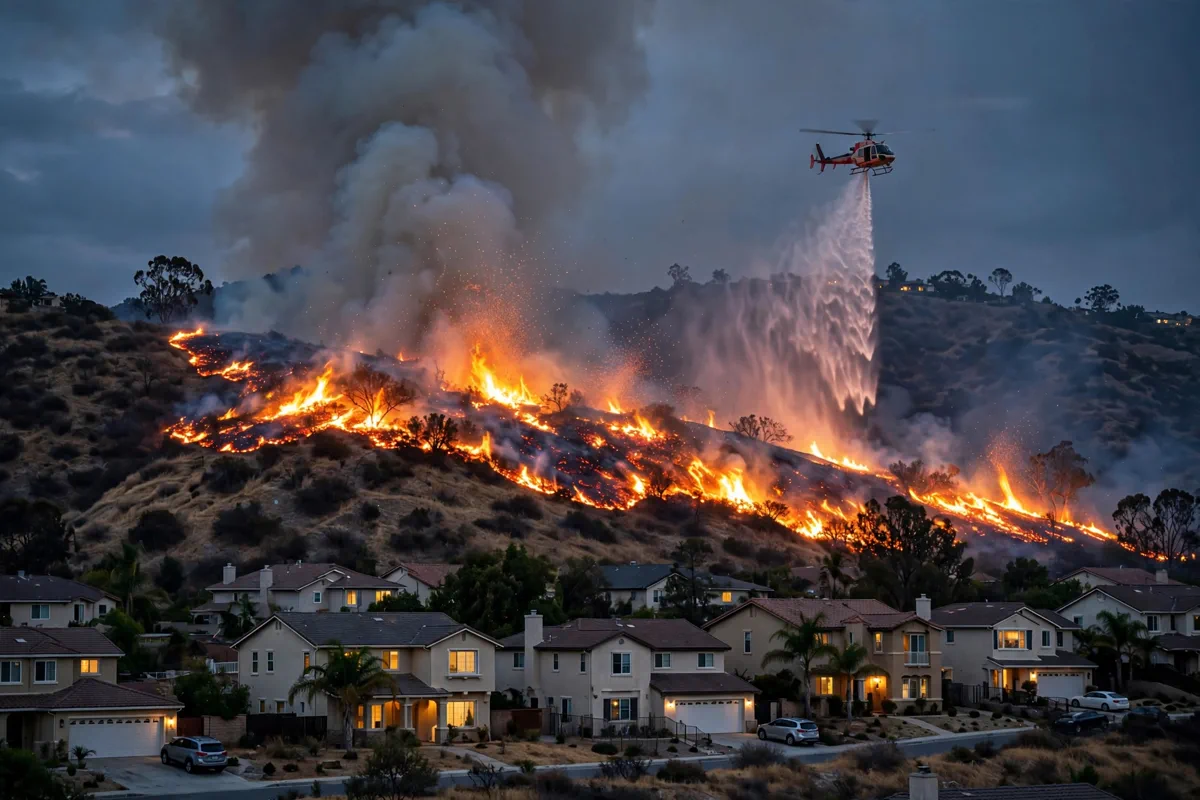
At around 11:30 on Friday morning, October 16, a small brush fire sparked near Portico Del Norte in San Clemente, a quiet coastal city in Orange County where the biggest Friday-morning worry is usually parking at the beach. By the time most people sat down for dinner, that small brush fire had a name, a number, and a footprint the size of a small town: the Norte Fire, 570 acres, six homes destroyed or damaged, and evacuation orders covering roughly 4,600 homes and about 16,000 people.
This is what a Santa Ana wind event does. It takes a routine spark and turns it into a firestorm in a single afternoon, and it gives firefighters almost nothing to work with: brutal gusts, single-digit-style humidity, and vegetation that has not seen meaningful rain since spring. If you live in Southern California, you know the feeling in the air. If you do not, here is the closest thing to being there.
Ten acres at noon. 465 acres by mid-afternoon.
The timeline of the Norte Fire is honestly hard to believe unless you watch the numbers. The Orange County Fire Authority first reported the blaze around 11:30 a.m. Friday near Eminencia Del Norte. At about noon it was an estimated 10 acres, the kind of fire that is usually contained before the evening news. By early afternoon it had grown to 250 acres. At 2:39 p.m., CAL FIRE put it at 465 acres. By Friday evening it stood at roughly 570 acres, and as of Saturday morning it was just 5 percent contained.
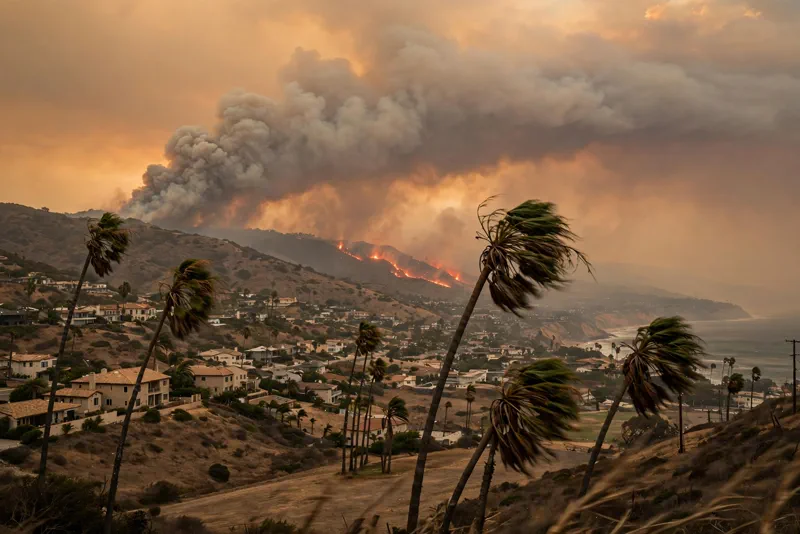
That pace was not an accident of terrain. The fire was driven from the start by fierce Santa Ana winds, the hot, dry gusts that blow from the inland desert toward the California coast every fall. Forecasters reported coastal wind speeds between 35 and 55 mph, with stronger gusts inland, and the hot, dry conditions feeding the fire were expected to persist into Saturday night. The winds arrived right when Southern California’s vegetation is at its driest, after a long, rainless summer. Fire officials said topography and weather conditions allowed the fire to grow rapidly, and the aerial footage told the same story: flames racing uphill through brush straight toward neighborhoods.
The homes it took
Once the flames reached the residential streets of San Juan Capistrano and San Clemente, the damage happened fast. Aerial footage showed flames tearing through the roofs of several houses. The Orange County Fire Authority confirmed six homes had been destroyed or damaged, most of them believed to be on the San Juan Capistrano side, with the impacted streets including areas near Via La Mirada, Avenida Calita, and Via De Agua. NBC Los Angeles reported that aerial images suggested eight or more homes could be impacted, so the final count may rise as assessment crews finish their work.
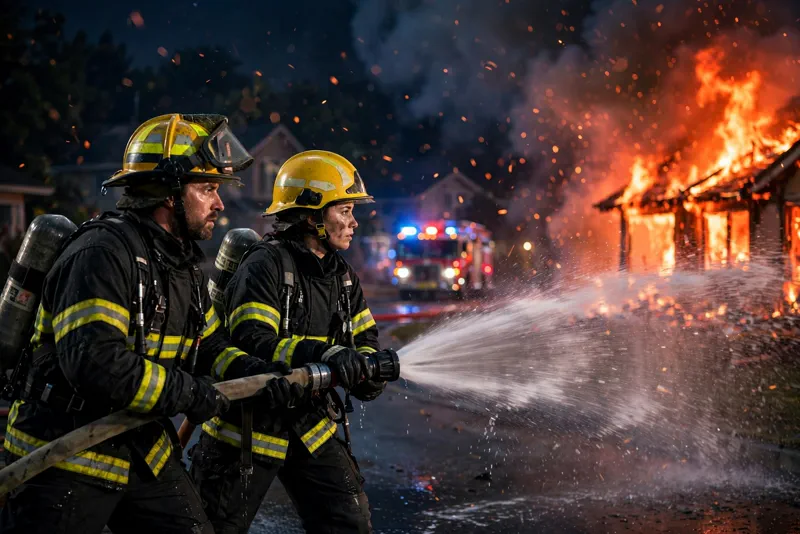
Two firefighters were injured battling the blaze and were taken to area hospitals, where they were reported stable. One suffered heat exhaustion and another was hurt in a separate incident. Their condition underscores how punishing these fires are for the people fighting them: crews worked through Friday night into Saturday morning, and the Saturday objective, in the words of OCFA Chief TJ McGovern, was “keeping the fire within its current footprint” while pushing containment lines forward.
“This is not a show. This is real life and it’s dangerous.”
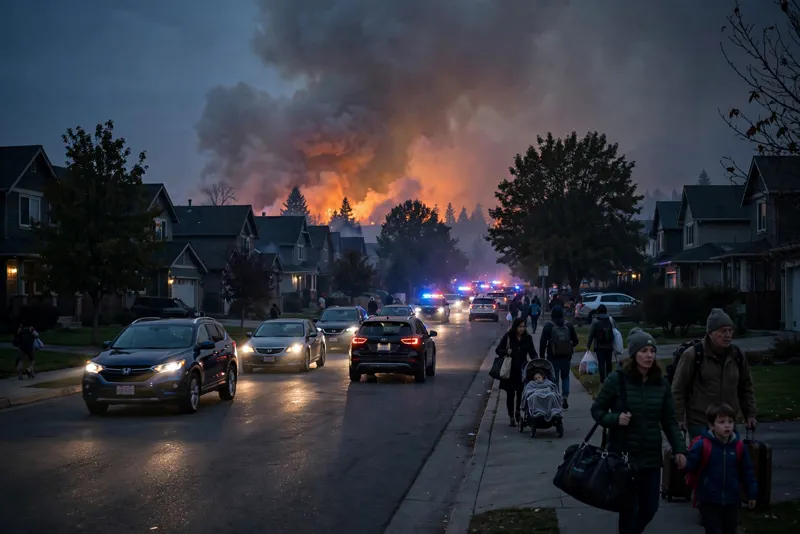
The evacuation orders came quickly and covered a wide area: neighborhoods across both San Clemente and San Juan Capistrano, from Camino Las Ramblas to the 5 Freeway. Mandatory evacuation zones included SCL12 and SCL13 in San Clemente and SJC04, SJC05, and SJC10 in San Juan Capistrano. Emergency shelters opened at the San Juan Capistrano Community Center and the San Clemente Community Center, and helicopters worked overhead as families loaded cars.
Orange County Supervisor Katrina Foley had a blunt message for the people she saw standing on sidewalks watching the flames: “Please evacuate, do not stand around. I’m seeing all these people on the sidewalk looking at it like we’re watching some kind of a show. This is not a show. This is real life and it’s dangerous.”
By Saturday morning, OCFA Captain Greg Barta said in a video update that “our actions today will be to continue to attack the fire and work toward getting residents home as soon as it’s safe to do so.” Spokesman Steve Concialdi was honest about where things stood Friday night: “A majority of the fire has been knocked down. However, we still have some homes that have been impacted here, and as you can see, the wind is still blowing pretty strong up here.” The state secured a grant from FEMA to make sure critical suppression resources stay available, according to CAL FIRE.
It is not the only fire
The Norte Fire is the biggest, but it is far from the only fire burning in Southern California this weekend. In Malibu, crews are fighting the Bryson Fire, which has burned more than 145 acres and triggered local evacuations, with gusts near 70 mph making conditions worse. More than 400 firefighters have brought it to nearly 40 percent containment. The Henderson Fire in San Diego County added to a regional picture that looked, by Friday night, like the whole southern part of the state was under siege.
The winds did not just feed the fires. They also forced utilities into precautionary power shutoffs to reduce the risk of electrical sparks carried by the gusts. Tens of thousands of people in Los Angeles County lost power, with outages rippling across the region. It is the standard, miserable tradeoff of fire season in California: turn the power off and watch the food in your fridge go bad, or leave it on and risk a downed line starting the next fire.
What to know if you are in Orange County right now
- Evacuation zones: SCL12 and SCL13 in San Clemente; SJC04, SJC05, and SJC10 in San Juan Capistrano. Orders can change fast, so check the official evacuation maps before traveling.
- Shelters: San Juan Capistrano Community Center (25925 Camino del Avion) and the San Clemente Community Center (100 Calle Seville).
- Containment: 5 percent as of Saturday morning, October 17. The fire footprint was holding at about 570 acres, but officials warned conditions were still volatile.
- Air quality: Thick smoke drifted across south Orange County. If you smell smoke, stay inside, close windows, and run air conditioning on recirculate.
- Power: Precautionary shutoffs hit tens of thousands in the region. Charge phones, keep fridge doors closed, and treat dark intersections as four-way stops.
What happens next
Saturday is the critical day. Firefighters are working hot spots, cutting containment lines, and trying to keep the fire inside its current footprint while the winds stay strong and the heat hangs on. The good news is that aerial attack, ground crews, and air tankers made real progress Friday evening. The bad news is that 5 percent containment on a 570-acre fire in Santa Ana conditions is a long way from safe, and one ember carried across a line is all it takes to start the cycle over.
The Norte Fire will likely be out of the headlines within a week, the way every wildfire eventually is. But for the families who watched their roofs burn on a Friday afternoon, and for the 16,000 people who spent Friday night wondering when they could go home, this one does not end when the containment percentage hits 100. It ends when the last home is rebuilt. That part of the story is just getting started, and we will keep following it here on VIDX US News.
For more developing stories from California and across the country, keep reading US News on VIDX.
Reporting draws on live coverage from CNN, the New York Post, and NBC Los Angeles. Fire statistics are changing as crews work; this article reflects conditions reported on Saturday morning, October 17, 2026.