
Social Security Has a 2032 Expiration Date. Your Check Would Get Cut by $500 a Month.
There is a date on Social Security that nobody in Washington wants to talk about two weeks before an election. It is the fourth quarter of 2032. That is when the government’s own trustees say the retirement trust fund runs dry, and the checks 70 million Americans count on every month get cut by roughly a fifth. Automatically. With no vote, no announcement, and no warning letter you will recognize as urgent.
This is not a rumor. It is not a think tank projection. It comes from the 2026 Social Security Trustees Report, released June 9, and the deadline just moved closer. Here is what the report actually says, why the date keeps creeping forward, and what a 22 percent cut would look like in real dollars.
What the trustees actually said in June
The Old-Age and Survivors Insurance trust fund, the account that pays retirement and survivor benefits, is projected to exhaust its reserves in the fourth quarter of 2032. That is one quarter earlier than last year’s report projected. When the reserves hit zero, incoming payroll tax revenue would cover only about 78 percent of scheduled benefits. That is an automatic 22 percent cut for every current beneficiary, regardless of age or income level.
The combined picture for the retirement and disability funds together is slightly better but not by much: depletion in 2034, with about 83 percent of benefits payable, meaning a 17 percent cut. One catch: those two funds are legally separate, and merging them to buy time would require an act of Congress.
The reserves are shrinking fast. The trust fund held $2,721 billion at the start of 2025 and $2,561 billion by the end of the year. That is a $160 billion drawdown in twelve months, and it has been moving in this direction since 2009. Every year since then, the program has paid out more in benefits than it has collected in payroll taxes, quietly draining the reserves to cover the difference.

Why the date keeps moving closer
The 2026 report did not just move the date. It rewrote the math behind it. The trustees significantly raised their estimate of the program’s long-term shortfall: the 75-year funding gap grew 16 percent, from 3.82 percent to 4.42 percent of taxable payroll. As J.P. Morgan’s retirement team put it, closing that gap with payroll taxes alone would mean raising the combined rate from 12.4 percent to roughly 16.8 percent. That is a noticeably bigger ask than it was a year ago.
Three forces pushed the 2032 date forward:
- The One Big Beautiful Bill Act. The 2025 tax law reduced income taxes on Social Security benefits, which lowered the revenue flowing into the trust fund.
- Fewer babies. The trustees cut their long-term fertility assumption from 1.9 to 1.75 children per woman. Fewer future workers means a thinner payroll tax base.
- Less immigration. Lower immigration projections further shrink the pool of workers paying in.
The Social Security Administration has also asked Congress to analyze the other levers: removing the earnings ceiling on Social Security taxes, raising the payroll tax rate, or raising the full retirement age. SSA’s own estimates say raising the combined payroll tax from 12.4 percent to 16.65 percent would fully fund the program through at least 2100. But nobody in Washington has mustered the will to pick a poison, so the deadline keeps doing the talking.
What a 22 percent cut looks like in real dollars
Percentages are abstract. Dollars are not. The Committee for a Responsible Federal Budget, a nonpartisan fiscal policy group, modeled what this would mean for real households:
- The average retiree collecting about $2,071 a month would lose roughly $455 to $500 a month. That is $5,460 to $6,000 a year, gone.
- In 29 states, the average monthly loss would exceed $500, because average benefits are higher in high-cost states.
- A couple retiring in 2033 could face $18,400 a year in cuts.
- Every one of the 63 million current beneficiaries of the retirement program would be affected. No state is spared. Unlike Medicaid changes, this cut cannot be phased in or waived for certain states. It would be immediate and uniform.
The Congressional Budget Office’s September 2026 projections imply it could be even worse: a first-year cut of about 26 percent. And the payable share is projected to drift lower later in the century as the gap widens.
No, this does not mean Social Security is going bankrupt
Let us clear up the loudest myth in this debate. Trust fund “depletion” does not mean benefits stop. It means the reserve account hits zero and the program can only pay out what it takes in through ongoing payroll taxes. As AARP’s financial security team has repeatedly stressed, the program does not disappear. It keeps running on tax revenue. It just cannot cover every scheduled benefit in full.
There is also real precedent for fixing this. In the early 1980s, Social Security was months away from missing payments. A bipartisan deal, including tax increases and a gradual retirement age hike, put it on firmer footing for decades. The catch this time is the size of the gap and the speed of the drawdown.
But here is the uncomfortable part: Congress is paying attention to the math and still not acting. Lawmakers from both parties have explored fixes, but none of the options are politically pleasant, and the assumption in Washington is that a fix will not happen until 2032 is uncomfortably close.
The fixes nobody wants to talk about before the midterms
Senator Bill Cassidy warned this week that a bigger cost-of-living increase would accelerate trust fund depletion, arguing Congress must act before the situation deteriorates further. The 2027 COLA, announced October 14 at 3.6 percent, is the largest since 2023’s 8.7 percent, and bigger raises mean faster reserve drain. At the same time, AARP’s Bill Sweeney noted that 76 percent of older adults say the annual adjustment does not cover their rising expenses. Lawmakers are stuck between retirees who need more now and a trust fund that cannot afford it.
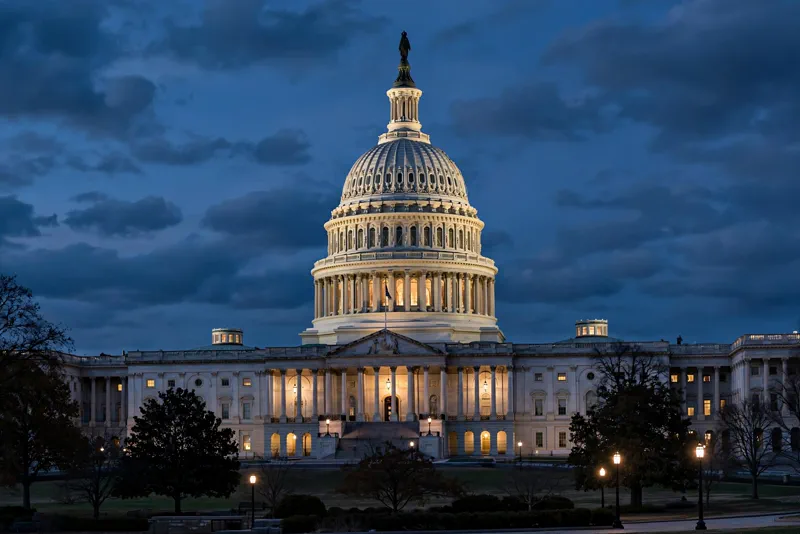
And yet, with the midterm elections on November 3, two weeks away, this is still not a top campaign issue. As one news analysis put it this week, the trust fund is running out, and yet the people asking for your vote are barely talking about it. The options are all painful: raise the payroll tax, raise the retirement age, means-test benefits, or cut them. Nobody wants to say any of that out loud with ballots being cast.
Where this goes from here
The trustees’ projections are not destiny. The depletion date has moved before and will move again as economic conditions, birth rates, immigration policy, and legislation change. The direction of travel, though, has been mostly worse since 2016: the retirement fund’s projected depletion has crept from 2035 to late 2032, and the long-range gap has grown in most years.
What is not going to happen on its own is a rescue. If you take one thing from the 2026 report, let it be this: the countdown is now short enough that people in their late 40s and 50s are the ones who will feel it. A worker who is 50 today would be 58 at depletion. That is not someone else’s problem.
What to do with your own plan
Financial planners have adjusted their advice. The standard guidance now: treat your Social Security benefit as a planning range. Build your retirement math around roughly 80 percent of what your statement shows, and count the full amount as upside. The things that move your number most are the ones you control: when you claim, how long you keep working, how much you save on your own, and how you size your spending plan.

Do not make claiming decisions based on panic about the trust fund. Early filing permanently reduces your check, and that is a decision you cannot undo. The details of the 2026 report are worth reading in full, but the takeaway for your spreadsheet is simple: plan for the reduced number, hope for the full one.
And veterans have a parallel story worth knowing: 2027 VA disability pay is going up 3.6 percent under the same COLA, with rates effective December 1. If you or a family member is in that system, it pays to check what your check looks like now.
The 2032 deadline will be on every front page when it gets closer. The question is whether anyone will do anything about it before then. For more stories on money, retirement, and what is happening to your paycheck, browse our Money section and check back on vidx.online daily.