What the justices actually did
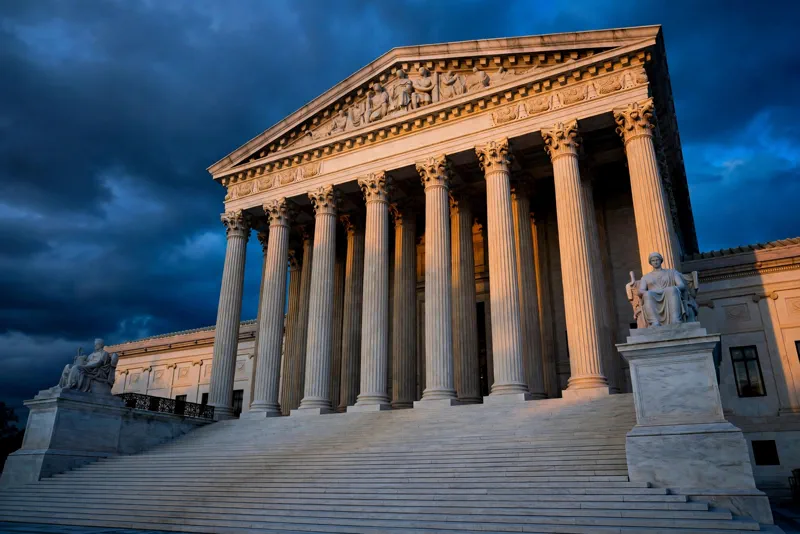
On Thursday, October 22, the Supreme Court handed down one of the shortest orders it will issue all year: a single unsigned paragraph that put student IDs back on New Hampshire’s banned list just under two weeks before the midterms. With the order, the state’s emergency request was granted, and a lower court’s ruling that would have let student IDs serve as a fallback form of identification at the polls was paused for the November election.
Only one justice publicly dissented: Ketanji Brown Jackson. The rest of the court offered no explanation beyond a citation to the so-called Purcell principle, the long-standing doctrine that says federal judges should not rewrite election rules on the eve of an election. The majority quoted a 2020 decision for the idea that the high court has “repeatedly emphasized that lower federal courts should ordinarily not alter the election rules on the eve of an election.” The district court, the justices wrote, “did not point to anything that would justify deviating” from that principle.
This is not a final ruling. The underlying lawsuit over New Hampshire’s student ID restrictions is still alive, and the case could come back to the justices after the midterms. But for November 3, the rules are now set: student IDs are out, both as a standalone ID and as supporting evidence of identity.
How New Hampshire got here
The fight started in April, when Republican Governor Kelly Ayotte signed House Bill 323, a law that removed student identification cards from the list of documents New Hampshire expressly accepts for obtaining a ballot. That alone was a big shift for a state with more than 100,000 college students spread across campuses like Dartmouth, the University of New Hampshire, and Keene State.
Then the state’s top election official went further. Secretary of State David Scanlan, a Republican, issued administrative guidance in April telling election workers they could not consider student IDs at all, not even as backup evidence when a voter lacks another accepted form of ID. New Hampshire law has a “safety valve” provision that lets a voter without qualifying photo ID establish identity through other means, and Scanlan’s directive effectively shut student IDs out of that valve too.
Civil rights groups sued. On October 2, U.S. District Judge Joseph Laplante split the baby: he left HB 323 itself in place but blocked Scanlan’s guidance, meaning student IDs could still serve as supporting evidence while the litigation played out. The state filed an emergency motion to stay that ruling on October 6, the Boston-based First Circuit refused on October 14, and New Hampshire took its fight to the Supreme Court on October 15. The Republican National Committee backed the state’s petition.
Seven days later, the justices sided with the state, at least for now.
Why this one state matters so much
New Hampshire is small. It has four electoral votes and a population under 1.4 million. But it punches far above its weight in national politics, and this particular midterm, it is carrying one of the Senate races that could decide control of the chamber.
Democratic Representative Chris Pappas is facing former Republican Senator John E. Sununu for the seat being vacated by retiring Senator Jeanne Shaheen, a Democrat. Early polling showed the two in a dead heat, though Pappas has recently opened a wider lead, and the Cook Political Report rates the race “Lean Democrat.”
The student ID rule lands squarely on the most college-heavy state in the Northeast outside Vermont. College students skew young, and young voters skew Democratic, especially in a state where thousands of out-of-state students attend school and may vote where they study. Republicans who backed HB 323 framed it as an election-integrity measure. Critics called it a targeted squeeze on a demographic that tends to vote against them. Both sides agree on one thing: in a race that could be decided by a few thousand votes, the margins matter.

That context is also why the Republican National Committee got involved. The party’s interest in the petition was never really about New Hampshire’s paperwork rules in the abstract. It was about who gets to vote, and how easily, in a race both sides see as winnable.
Who this actually affects
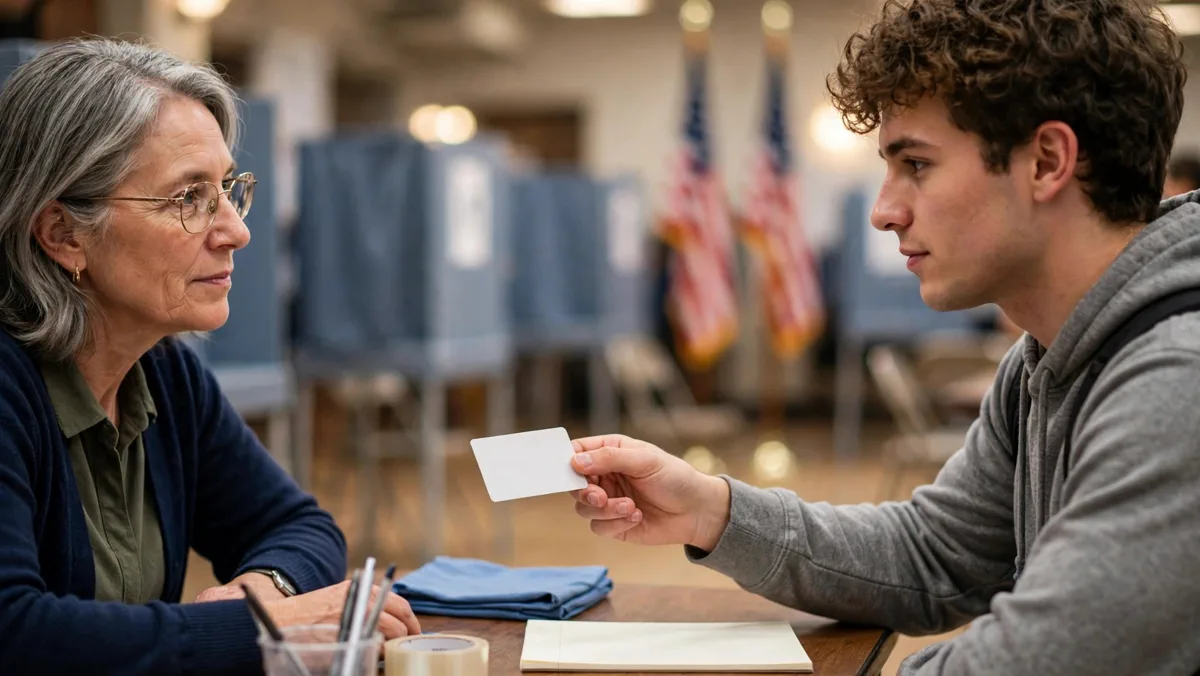
Let us be concrete about what changed for an actual voter. Before Thursday’s order, a New Hampshire college student who showed up to vote without a driver’s license or other accepted photo ID could present her student card as supporting evidence under the safety-valve provision, and the poll worker could weigh it. Now she cannot. The card is simply not usable, full stop.
Civil rights advocates who challenged the ban argued that it places a significant burden on student voters, particularly those who are low-income, lack transportation, or live with their parents and cannot easily satisfy other residency requirements. Out-of-state students are the hardest hit: a kid from Ohio at UNH is unlikely to carry a New Hampshire driver’s license, and her Ohio license may not satisfy the state’s proof-of-residency rules either. The student ID was often the bridge document.
Supporters of the law say this is exactly the point. If you live and vote in New Hampshire, they argue, you should be able to show a state-accepted ID like everyone else. State Representative Ross Berry, who chairs the New Hampshire House Election Law Committee, greeted the lower court’s earlier ruling by calling it the work of “another Liberal judge,” in remarks reported by The Boston Globe. The security-first argument is straightforward: student cards are issued by private institutions with no uniform standards, and accepting them invites fraud.
The evidence for that fraud claim, critics note, has never been produced in any quantity that matches the rhetoric. The state has not presented data showing student IDs have been used to cast fraudulent ballots in New Hampshire. That does not make the law illegal, but it is worth keeping in mind when anyone tells you this was purely about paperwork.
The one justice who said no
Justice Jackson’s dissent was short, but it cut at the logic of the whole order. She argued the Purcell principle did not even apply here, because Judge Laplante was not rewriting election rules at the last minute. He was, in her telling, correcting misleading guidance from state officials so that voters would get accurate information.
“When a federal court determines that material misrepresentations are being made about a State’s election rules, an injunction to prohibit that conduct does not contribute to public confusion, it prevents that very problem,” she wrote. “I would not disturb a clearly justifiable federal-court order issued to ensure that the public receives accurate information about a State’s electoral processes.”
It is a compelling counter-reading, and it points to the deeper tension in every election-eve ruling: is a last-minute court order a disruption of the process, or a repair of one?
Legal scholars will argue for years about whether the Purcell principle is being applied consistently. The majority even pointed to the recent legal whiplash over Missouri’s redistricting as the kind of chaos the principle exists to prevent. But critics of the doctrine have long said it is less a principle than a preference, invoked when convenient. This order, one paragraph long and unsigned, will not settle that debate.
What happens next
For November 3, the matter is closed. New Hampshire’s election workers have their instructions, and college students need to plan accordingly. If you are voting in New Hampshire and your only photo ID is a student card, bring something else: a driver’s license (any state, if it proves your identity), a passport, a military ID, or be prepared to navigate the alternative procedures without your campus card in the mix.
Here is what remains accepted at the polls, in broad terms:
- Driver’s license or non-driver ID issued by any state
- U.S. passport or passport card
- Military ID
- A signed affidavit of identity, challenged only under specific circumstances
After the midterms, the lawsuit returns. The full appeals court will eventually rule on whether HB 323 and the secretary’s guidance survive, and the losing side can ask the Supreme Court to take the case properly, with full briefing and oral argument. Thursday’s order was about timing, not about who is ultimately right.
Until then, one thing is certain: in a swing state with a Senate seat on the line, the smallest piece of plastic a student carries may turn out to matter more than anyone expected.
Related: last week federal agents raided Rep. Ilhan Omar’s Washington home in an immigration fraud probe that has become its own midterm flashpoint. For more on the battles shaping Election Day, see the US News archive.