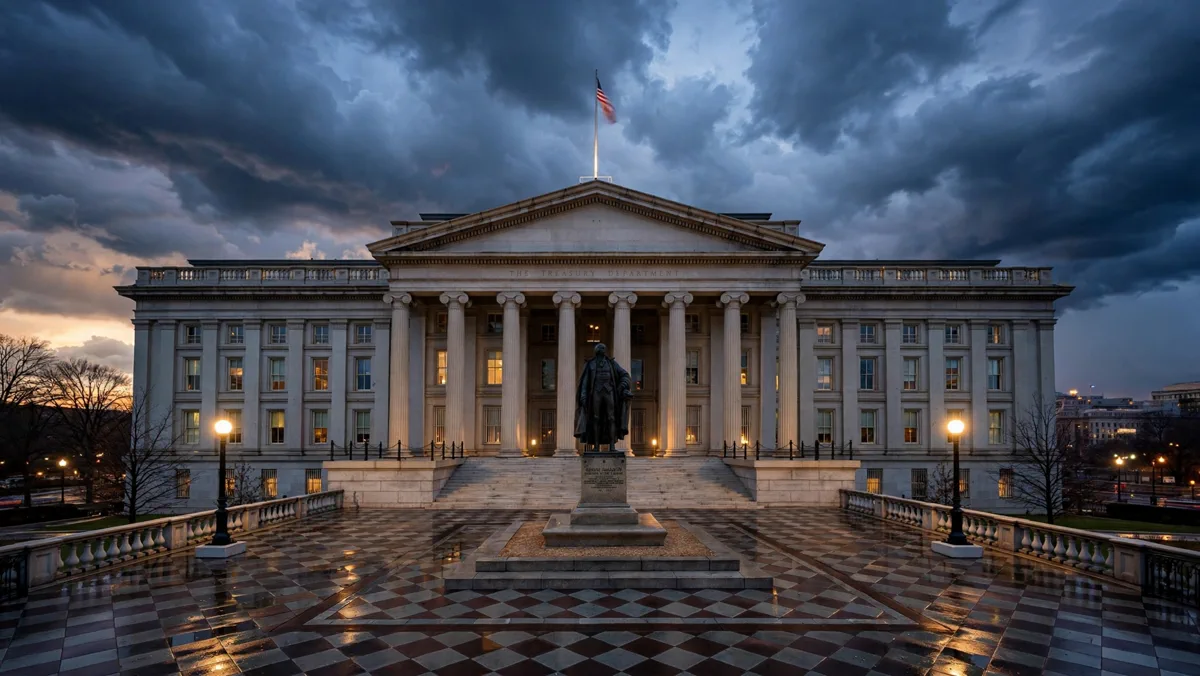
Every year, the Treasury Department quietly drops one number that explains more about your future than almost anything else in the news. This year it dropped on a Friday, October 16, and the number is $1.99 trillion. That is the federal budget deficit for the fiscal year that ended September 30, the largest shortfall since the pandemic-era spending of 2021, and the third largest in American history.
Let me put that in terms you can feel. Washington collected a record $5.40 trillion in revenue, more tax money than any year ever, and still spent $1.99 trillion more than it took in. Spending grew 6 percent while revenue grew only 3 percent, and the gap widened by $217 billion in a single year. The economy is, by most measures, in decent shape. That is what makes this number scary. Deficits are supposed to shrink when the economy is fine. This one grew anyway.
To put $1.99 trillion in historical perspective, it is the third largest annual deficit ever recorded. Only the pandemic crisis years of 2020 and 2021 were worse, with fiscal 2021 peaking at $2.77 trillion amid emergency relief spending. This year’s gap, at 6.2 percent of GDP, arrived with no pandemic, no recession, and no war-time surge to explain it. That absence of an emergency is the most unsettling part of the whole report.

The line item nobody can vote away
Buried inside the report is a figure that should stop you cold. The United States now pays more than $1 trillion a year just in net interest on its debt. Read that again. Not interest plus programs. Just interest. The interest check alone is now bigger than everything the federal government spends except Social Security and Medicare.
Gross debt servicing costs hit a record $1.36 trillion, up 12 percent, or $144 billion, in one year. Think of it like a family whose credit card minimum payment has grown so large that it now rivals the mortgage. The debt itself crossed $40 trillion in August, a milestone nobody in Washington seems eager to talk about with elections weeks away.
Here is why this matters more than any single budget fight. Interest payments are not a policy choice. Congress does not get to negotiate them down or cancel them. They are a bill that arrives no matter who wins the next election, and as interest rates stay elevated, that bill gets bigger every year. Analysts project that total US interest expense, already on track toward $1.4 trillion, could surpass Social Security spending entirely before the end of this decade.

The tariff twist nobody predicted
Now here is the part of the story with real irony. Tariffs were supposed to be a revenue machine. The White House imposed sweeping global duties, and customs revenue did pour in. Then, in February, the Supreme Court struck down those global tariffs, ruling they violated federal law. The Treasury has been writing refund checks ever since.
The Treasury estimates about $145 billion in tariff refunds went out in the last fiscal year. That is $145 billion the government collected and then had to hand back to importers. Refunds in some months actually exceeded gross customs collections entirely, meaning customs offices briefly paid out more than they took in. The refunds wiped out much of the tariff revenue gain the administration had counted on.
To be fair, corporate tax revenue falling 16 percent to $382 billion, even as many businesses posted strong profits, also ate into the revenue side. Higher tax collections from individuals and the tariff income that survived could not keep up with the $386 billion jump in spending.

Why this lands right on the midterms
Timing is everything in politics, and this report could not have landed at a more awkward moment. Voters head to the polls on November 3 for the midterm elections, and fiscal health is quietly becoming one of the sleeper issues of the cycle. The “big, beautiful bill” that Republicans enacted last year is expected to add trillions more to the national debt over the next decade, as its generous tax breaks outweigh its spending cuts.
Maya MacGuineas, president of the Committee for a Responsible Federal Budget, did not mince words in her statement: “Today’s deficit figures cap off a remarkably dismal year for our fiscal health.” She added that neither party has shown willingness to address the problem and that “we’re running out of time to make them.” Tough talk, but the numbers back it up. The deficit now stands at about 6.2 percent of GDP, up from 5.8 percent a year earlier.
What this actually costs you
You might be thinking, reasonably, that Washington’s accounting is not your problem. It is, though, in a very direct way. Treasury bond yields set the tempo for the entire American credit system. When the government floods the market with debt, borrowing costs rise, and those costs flow straight into your life.
Here is the short version of how the $1.99 trillion deficit reaches your wallet:
- Mortgage and loan rates: heavy government borrowing puts upward pressure on bond yields, which banks use as a benchmark for mortgages, auto loans, and credit cards.
- Inflation risk: persistent deficits of this size make it harder for the economy to cool down, keeping pressure on prices for everyday goods.
- Fewer options later: every dollar spent on interest is a dollar that cannot fund roads, defense, healthcare, or tax relief. That trade gets worse every year the debt grows.
The Treasury reported these numbers on a Friday for a reason. Nobody reads budget reports on Friday. But the story they tell is the story of the decade: the world’s richest country is now paying more to carry its debt than it spends on nearly everything it actually does. The bill is real, it is growing, and whether anyone in Washington talks about it before November 3 or not, it will still be there the morning after.
For more on how Wall Street is reading the debt warning signs, see our earlier coverage of the bond market’s 24-year warning (link) and last week’s CPI-week market rundown (link). You can also browse the full Markets archive.
Sources: CNN, The Hindu BusinessLine, NewsCentral (Treasury Department figures, October 16, 2026).