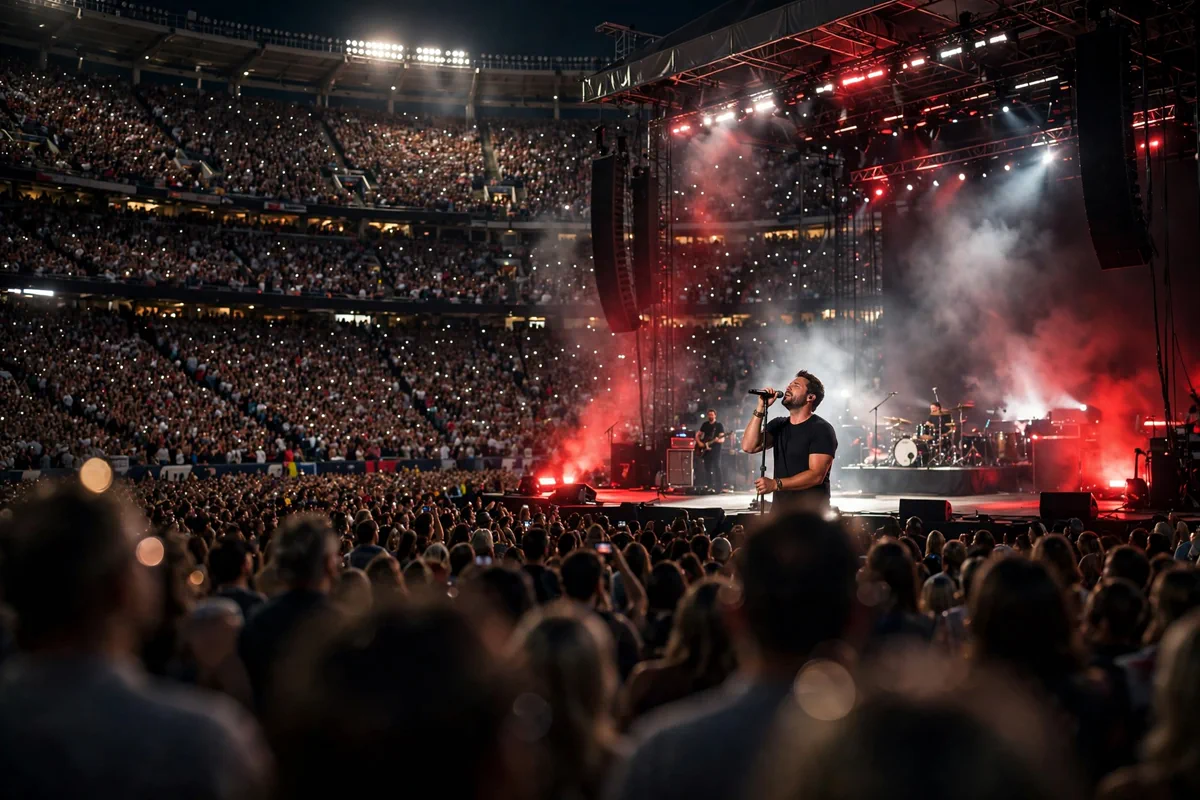
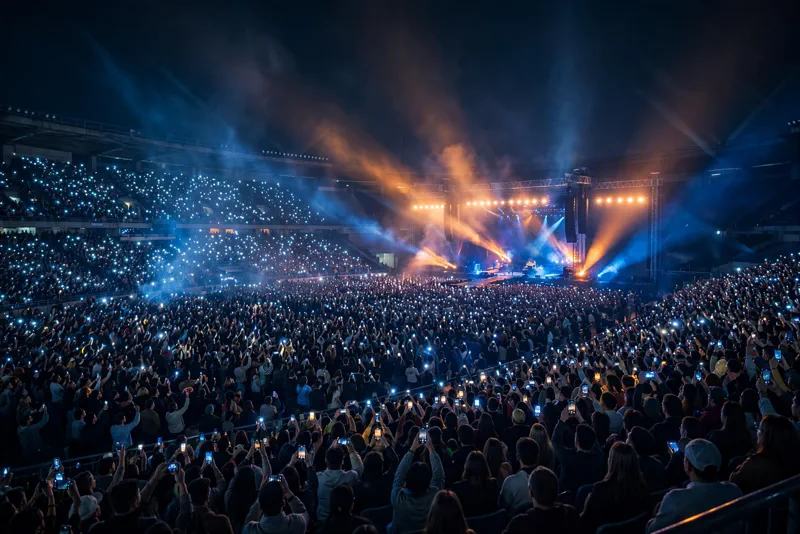
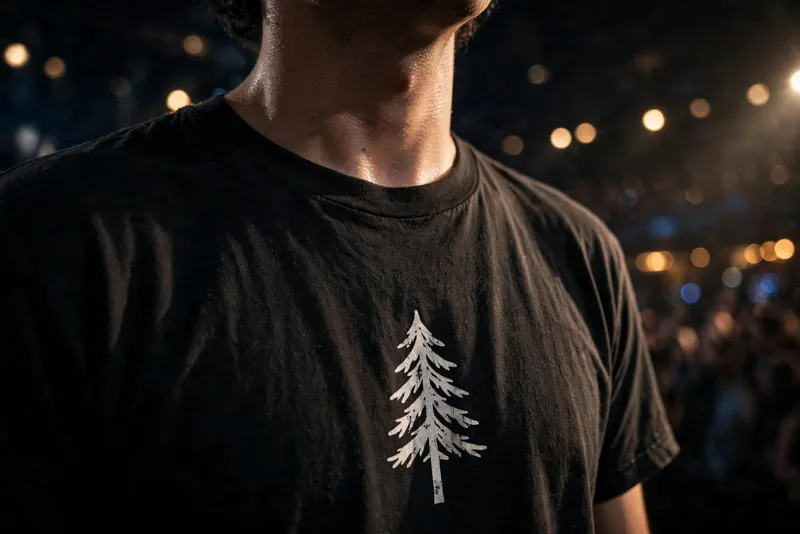
Twenty thousand people showed up to hear country songs on a Friday night. What they got instead was the loudest silent statement of the year. Zach Bryan walked onto the stage at Gillette Stadium on October 2 wearing a plain black T-shirt that read “FREE PALESTINE” over a pine tree, with the words “An Appeal to Heaven” underneath it. He never explained it from the mic. He did not have to. Within hours, photos of the shirt were everywhere.
The timing was the story. This was not just any venue. Gillette Stadium is owned by Robert Kraft, the same Robert Kraft who publicly barred Macklemore from performing there after the rapper’s pro-Palestinian statements. Bryan knew exactly where he was standing, and he wore the shirt anyway. Whether you read that as courage or provocation depends entirely on where you stand, but nobody could call it an accident.
The shirt that did all the talking
According to reporting from Page Six and the TNND, Bryan kept the shirt on for the entire night one of his two-night stand in Foxborough, the closing leg of his With Heaven On Tour. It was not a backstage joke or a one-song costume change. The message was on his chest for the whole show, in front of a sold-out crowd, in the middle of one of the most photographed sports venues in America.
He was not alone. Several band members wore Palestine-branded clothing, and guitarist Noah Le Gros posed in a green Palestine soccer jersey right in front of Kraft Sports and Entertainment signage. That detail did not go unnoticed. When your backing band is posing with political messages next to your venue owner’s corporate branding, that is a choice, not a coincidence.
Here is what made it land so hard: Bryan said nothing about it on stage. Reports say he never mentioned the shirt, Gaza, or any political topic from the mic. He just closed the set without comment and let the shirt do the talking. There is something undeniably theatrical about refusing to explain yourself to 20,000 people, and the silence gave the photos room to spread on their own terms.
Why Gillette Stadium made it explosive
To understand why this blew up the way it did, you need the backstory, and it is a wild one. Back in September, Macklemore was performing at MetLife Stadium when he shouted “Free Palestine” from the stage and performed his song “Hind’s Hall.” The Messina Touring Group pulled him from Ed Sheeran’s Loop Tour US dates on September 14, just days later. Then Robert Kraft confirmed he had barred Macklemore from performing at Gillette Stadium, calling the rapper’s remarks hate speech while also acknowledging that Palestinian suffering is real and committing $2 million to humanitarian aid.
So Gillette Stadium, the place Kraft owns and where he had just drawn a very public line about what artists can say, became the stage for Bryan’s message. You do not need a political science degree to see why that specific combination sent the internet into orbit. It was a direct test of the venue’s new unwritten rules, delivered by one of the biggest country acts in the world, and he did it without saying a single word about it.
His response the next morning
Bryan did not leave the interpretation to chance. The morning after the show, he posted a statement that put his reasoning in plain language: “I didn’t put on a FREE PALESTINE shirt to please everybody. I wore it because some things are bigger than music, fame, and public approval. You’re free to disagree with me, but I’m not going to pretend I don’t care just to keep everyone comfortable.”
That last line is doing a lot of work. “Just to keep everyone comfortable” is a direct answer to the people who think musicians should stick to music, and it frames the shirt not as a stunt but as a personal line he was not willing to move. You can disagree with the position and still notice the clarity of the delivery. Most celebrity political statements arrive wrapped in three paragraphs of PR padding. This one did not.
How the internet reacted
The reaction split exactly the way you would expect, which is to say completely in half. Fans posted the concert photos with captions about standing up for what you believe in, while critics accused him of disrespecting the venue owner who had just taken a stand. A few highlights from the mess:
- The supporters treated it as a rare moment of a major artist refusing to play it safe in an industry where silence is usually the business plan.
- The critics argued that wearing it at Kraft’s own stadium, days after the Macklemore ban, was a deliberate insult to a man who had also donated $2 million to humanitarian aid.
- The memes did what the internet always does: turned the shirt into a template, the pose into a format, and the whole thing into content within about six hours.
- The merch watchers noticed something else: “An Appeal to Heaven” is the phrase from the pine tree flag, which has its own complicated political history, and people immediately started arguing about that too.
As of this weekend, “zach bryan” was the only non-sports topic trending on Google Trends in the US with 50K+ searches in a single day. Everything else was college football. That tells you something about the scale of the conversation: on a Saturday dominated by Penn State, Ohio State, and Michigan, a T-shirt was the one thing that was not about sports.
What happens on night two
Bryan’s Foxborough run was a two-night stand, which means everyone is now watching to see what he wears on the second night. Does he double down with another statement piece? Does he go quiet in a plain tee and let the first night speak for itself? Either choice becomes its own headline.
There is also the Kraft question. The venue owner drew a line with Macklemore. Bryan just crossed it in the most visible way possible, and Kraft has not publicly responded. If he does nothing, the ban looks selective. If he responds, the story gets another news cycle. Either way, the story is not over.
And there is a bigger pattern here worth noticing. This is the second major moment in a month where a big American artist used the stage to force a conversation about Gaza, and both times it happened in stadiums, not in interviews or social media posts. The stage is becoming the statement. Artists have figured out that a photo of a shirt on stage travels further and lasts longer than any press release, and this weekend proved the point again.
The bottom line
Strip away the debate and you are left with a pretty simple fact: a guy in a black T-shirt made more noise than most headliners manage with a full production. Zach Bryan did not shout, did not lecture, did not explain himself to the crowd. He just stood there in the middle of Robert Kraft’s stadium wearing three words, and let the internet do the rest.
That is the real viral mechanic at work. The shirt was the content. The silence was the strategy. And the venue made it a story nobody could scroll past.
For more stories about the moments the internet cannot stop talking about, check out the viral section and the entertainment archives. And if you missed last week’s wildest internet story, read about the time Microsoft’s X account got hacked to shill a Clippy crypto coin.