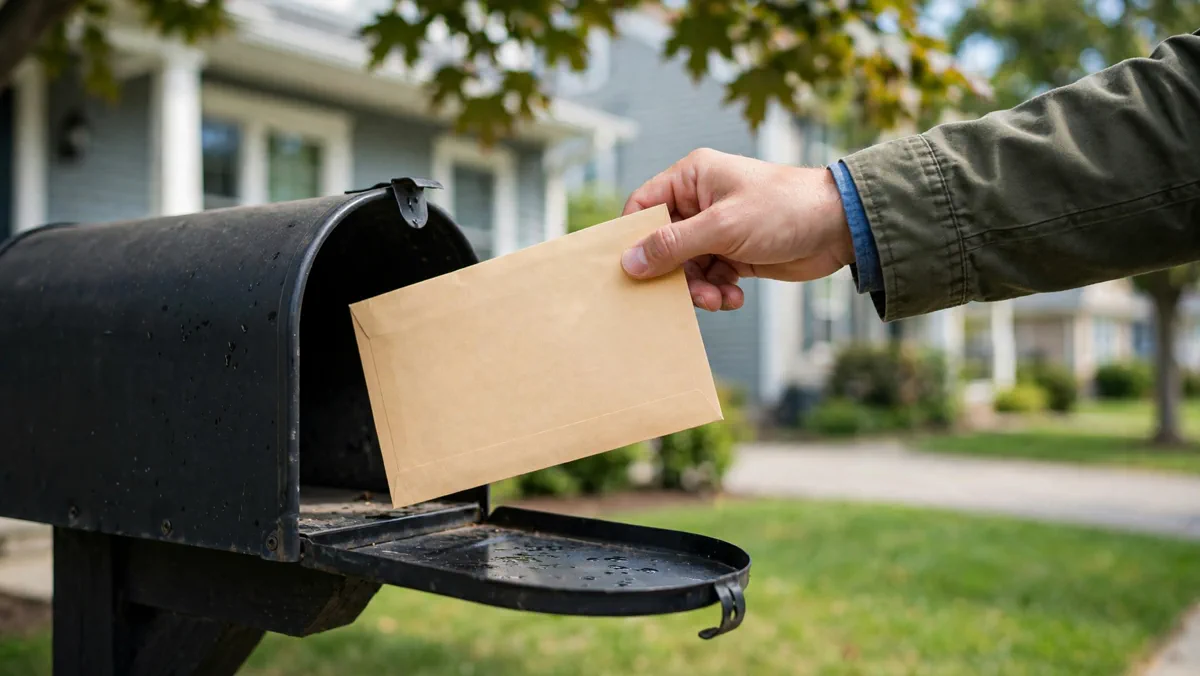
Imagine finding a $500 check from the Treasury Department in your mailbox. Sounds like the kind of thing that only happens in a political ad. This month, though, it is happening to nearly a million Americans, and the letter inside is signed by President Donald Trump. The catch? Out of more than 19 million people enrolled in Affordable Care Act coverage, fewer than one in twenty will see a dime. If you are wondering whether you made the cut, keep reading, because the rules are narrow and the scams are already everywhere.
Here is the short version: starting last week, the federal government began mailing one-time $500 refunds to about 950,000 ACA enrollees in 30 states. You do not need to apply. You do not need to call anyone. If you qualify, the check just shows up. And if someone asks you to “register” or pay a fee to get yours, that is a scam, full stop. Let us get into who actually qualifies and why this is happening now.
What the $500 ACA Refund Check Actually Is
The White House announced the program on September 10, describing it as a return of surplus money, not a stimulus check and not new spending. The logic goes like this. Insurance companies that sell plans on HealthCare.gov pay the federal government a “user fee” to help run the exchange, covering the website, the call centers and enrollment help. The fee was 1.5 percent of premiums in 2025 and rose to 2.5 percent in 2026. Insurers build that cost into premiums, so customers never see it as a separate line item.
The Trump administration says the government collected more in those user fees than it needed to run the exchange, and that consumers effectively paid for the extra through higher premiums. So it is returning part of that surplus as a one-time $500 payment. The administration puts the over-collection at more than $500 million, which neatly explains the payment amount: 950,000 checks at $500 each lands right around $475 million.
One thing worth knowing: this is not the same as the medical loss ratio rebates some people get under the ACA’s 80/20 rule, where insurers that spend too little on medical care have to refund the difference. Those rebates come from your insurer. This $500 comes from the Treasury. In theory, a person could receive both.

Who Qualifies (and Who Does Not)
The eligibility rules are strict, and they knock out the vast majority of the 19 million people in marketplace coverage. According to the White House and reporting from USA Today network outlets, you must meet all of these:
- You bought 2026 health coverage through HealthCare.gov, the federal exchange.
- You live in one of the 30 states that use the federal exchange (list below).
- You paid the full cost of your plan, meaning you did not receive a premium tax credit or any other ACA subsidy.
- The payment is $500 per eligible enrollee, not per household. A family with three qualifying members could get three checks.
That last point matters more than it sounds. Most ACA enrollees receive premium subsidies, so most are automatically out. The administration has said most recipients earn above 400 percent of the federal poverty line, the point at which subsidies phase out, though officials told CNBC that some people between 100 and 400 percent will also get checks. The New York Post put the rough cutoff at about $64,000 for an individual and $132,000 for a family of four.
Then there is the geography problem. If you live in a state that runs its own exchange, you get nothing, even if you paid full price. That means California, New York, New Jersey, Pennsylvania and the other states with state-based marketplaces are excluded entirely. An administration official told ABC News the reason is simple: the federal government did not collect the user fees in those states, so there is no surplus to return.
The 30 States Where Checks Are Going Out
The refund program applies only to residents of the states that use HealthCare.gov: Alabama, Alaska, Arizona, Arkansas, Delaware, Florida, Hawaii, Indiana, Iowa, Kansas, Louisiana, Michigan, Mississippi, Missouri, Montana, Nebraska, New Hampshire, North Carolina, North Dakota, Ohio, Oklahoma, Oregon, South Carolina, South Dakota, Tennessee, Texas, Utah, West Virginia, Wisconsin and Wyoming.
If your state is not on that list, you are not getting a check, and anyone who says otherwise is trying to rob you.

When the Money Arrives
The White House originally said checks would begin going out in October. Then an administration official told CNBC the first batch actually went out the week of September 30. Treasury checks started mailing September 30, and the administration says recipients should expect them through October, with delivery stretching over several weeks.
The payments arrive by paper check or direct deposit, and each comes with a letter signed by the president. If you think you might qualify, make sure your mailing address and bank details are current in your HealthCare.gov account, then just watch your mail.
There is no official tracker for these payments, and nobody has announced one. So if a website or a caller offers to “check your refund status” in exchange for your Social Security number, that is a con. The real checks do not require you to do anything at all.
The Part Nobody Agrees On
So why is this happening now? The timing is impossible to ignore. The midterm elections are on November 3, about a month away, and a half-billion dollars in $500 checks with the president’s signature on the letter is the kind of thing that does not arrive by accident. Critics are already calling it an election-year gimmick that will do nothing about the bigger problem: enhanced premium subsidies are expiring, and millions of enrollees are facing much higher premiums for 2027. A one-time $500 check does not fix that.
There is also a real dispute about the math itself. The administration says consumers were overcharged. Health policy experts at KFF, cited by Kiplinger, suggest the surplus may mostly be the result of reduced spending on enrollment assistance, navigators and outreach during the current administration, rather than customers paying too much. In other words, the money might not be an overcharge at all. It might just be unspent budget.
For the people getting checks, that debate is academic. Money is money.
A quick word about your own finances
If you are one of the lucky few, treat this like found money, because that is what it is. The smartest move is the boring one: put it toward your emergency fund, pay down a high-interest balance, or set it aside for next year’s premiums, which are about to get more expensive. And if you are not getting one, which statistically you are not, this is still a good moment to double check your own health plan costs for 2027. Open enrollment is coming, and with subsidies expiring, the difference between reviewing your options and ignoring them could be a lot more than $500. If rising costs have you rethinking your whole financial picture, the September jobs report and what it means for mortgages is worth a read too, and our look at why early retirement feels out of reach for most Americans hits the same nerve.

What To Do Right Now
Here is your checklist, and it is short because there is almost nothing to do:
First, do not apply for anything. There is no application, no form, no deadline and no sign-up. The administration says it has already identified the recipients. If you qualify, payment is automatic. Second, update your information. Log into HealthCare.gov and confirm your mailing address and direct deposit details are current, because a check sent to an old address is nobody’s idea of fun. Third, protect yourself. Scammers love government payment headlines. Real agencies will never call, text or email asking you to pay a fee, “verify” your identity, or click a link to claim your refund. Hang up and delete.
Want to read the fine print? USA Today network reporters have broken down who qualifies and why some states are excluded in detail, and Experian’s October personal finance briefing puts this in the context of everything else hitting household budgets this month, from the Fed’s rate moves to rising mortgage costs.
The bottom line: $500 checks are real, they are going out now, and almost nobody gets one. If you are in a federal-exchange state and paid full price for your 2026 coverage, watch your mailbox. Everyone else can file this under interesting news and move on, because the best financial decision you can make this month probably is not waiting for a check. It is taking one hard look at your own money. For more stories like this, check out our Money section.