The biggest AI partnership nobody can afford to lose just cracked
It was supposed to be a cornerstone of Britain’s AI future. A hyperscale data center in Essex, backed by Nvidia money, contracted to one of the biggest names in tech. Then, on a quiet Sunday, Microsoft walked away.
According to a report in Britain’s Telegraph newspaper, carried by Reuters on October 18, Microsoft has terminated its data center agreement with Nscale, the British cloud provider that has become one of the fastest-growing names in AI infrastructure. Microsoft was one of Nscale’s two largest customers. The site was in Loughton, Essex, just outside London.
The Telegraph did not say why Microsoft withdrew. Microsoft declined to comment to Reuters. Nscale did not immediately respond either. But the little detail that did leak out tells a bigger story than the breakup itself.
A data center with no power until the 2030s
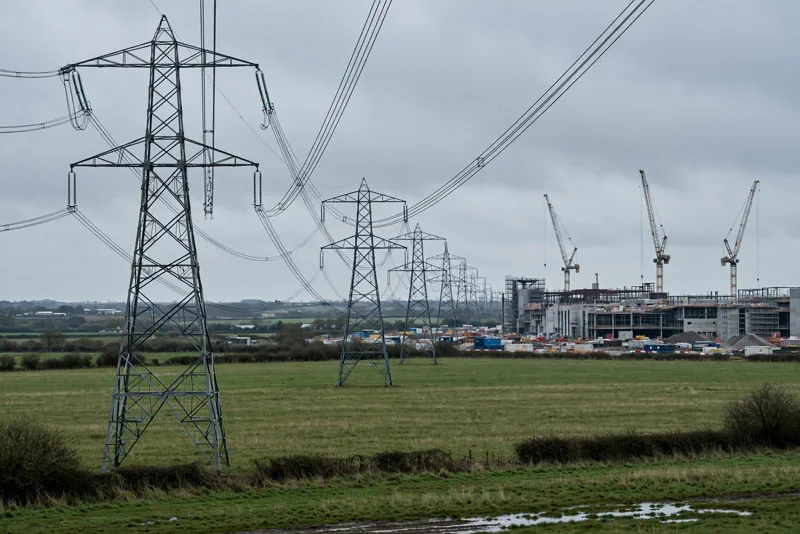
The project had faced repeated delays, according to the Telegraph’s reporting. Then came the killer detail: National Grid officials had told Nscale they did not expect a power supply for the Loughton site until the 2030s.
Read that again. A data center built to train and run AI models, hardware that eats electricity the way a small city does, sitting in a county where the grid could not promise it power for another decade. In the AI gold rush, electricity is the new oil, and this claim hit one of the only wells that mattered in southeast England.
Nscale pushed back. A company spokesperson told Reuters that “our relationship with Microsoft remains strong and long-term, and this unfortunate London-wide grid issue has no impact on our other contracts.” The company added it remains committed to both the Loughton project and the UK, and is “exploring alternative power sources for the site, in addition to other expansion sites in the UK.”
That is corporate-speak for: the grid failed us, not the other way around. Maybe true. But investors tend to read these statements carefully, and the timing could hardly be worse.
Why this breakup lands at the worst possible moment
Nscale filed for a US initial public offering just last month. Its prospectus named Microsoft and Anthropic as expected major customers. Microsoft walking out of the Loughton deal does not kill the IPO, but it changes the story the company tells on the roadshow. Anchor customers are the entire pitch of the AI infrastructure trade. Lose one publicly, and every banker in New York reaches for the red pen.
Nscale is Nvidia-backed and competes directly with CoreWeave, Nebius, Crusoe, and Lambda, the neocloud crowd renting out AI compute at eye-watering rates. The company has grown at an almost absurd pace, scaling from $100 million to more than $103 billion in total contracted value in two and a half years, according to Reuters. Growth like that is priced for perfection. Perfection does not usually include losing a flagship customer to a power socket problem.
And here is the context that makes this sting across the whole sector. AI infrastructure stocks have been getting hammered on debt fears. CoreWeave, Nscale’s bigger American rival, was down sharply earlier this week on concerns about its balance sheet, and bond markets have been pricing the sector’s leverage at junk-style yields. When money gets expensive, the companies renting you the picks and shovels start looking like the riskiest part of the gold rush.
The UK’s awkward position in the AI race
There is a national angle here too, and it is not flattering for Britain. The UK government has been talking up the country as an AI superpower, courting hyperscalers and promising streamlined approvals for data centers. But approvals mean nothing if the electrons are not there. London and the southeast already face grid connection queues stretching years into the future, and data center developers across the country have been quietly shopping for sites with confirmed power rather than promised power.
Microsoft, for its part, is under a different kind of pressure in Britain. The country’s Competition and Markets Authority is moving toward tougher oversight of the software giant, with a proposed “strategic market status” designation that would let regulators impose tailored obligations on how Microsoft’s products interact with competitors. Google and Apple were brought under the same framework in October 2025. Nobody at Microsoft needs a troubled, delayed data center project in Essex while regulators circle in London.
The neocloud model, under the microscope
To understand why this deal mattered, you have to understand what Nscale actually sells. The company belongs to a new breed of “neoclouds”: specialist providers that raise enormous sums, buy GPUs by the tens of thousands, and rent compute back to AI labs and enterprises. The model works beautifully when demand is infinite and capital is cheap. It gets uncomfortable fast when either of those conditions changes.
That discomfort is exactly what markets have been pricing in. Nscale’s American rival CoreWeave has become the poster child for the trade’s risks: massive contracted revenue on paper, matched by massive debt in reality. When CoreWeave’s shares slid and its bonds started pricing in serious stress earlier this month, the whole neocloud complex shivered. A Microsoft walkout at Nscale will not calm anyone down.
The defenders will say the demand is real. Anthropic, reportedly Nscale’s other anchor customer, just posted blockbuster quarterly revenue and is heading for a November IPO at a valuation that could reach $2 trillion. OpenAI, Google, and Meta are all racing to build or rent more compute. Nobody in this industry is forecasting less GPU demand. But demand and bankability are different things. Lenders do not get paid in optimism. They get paid in cash flow, and cash flow needs working data centers with actual power.

What Microsoft gets out of walking away
Here is the part nobody says out loud: Microsoft can afford to be picky. It has its own data center buildout, its partnership with OpenAI, its stake in the broader Azure ecosystem, and plenty of alternative sites. Walking away from a delayed project with a decade-long power problem is not a tragedy for Redmond. It is portfolio management.
For Nscale, though, the math is different. When you are about to ask public investors for money, every headline is a line item in the risk section of your prospectus. “One of two largest customers terminates flagship agreement” is not the kind of sentence you want investors reading the morning after the Telegraph publishes it.

What to watch next
A few things are worth keeping an eye on:
- The IPO. Nscale’s prospectus goes to investors with one fewer anchor tenant than planned. Watch the filing updates and the roadshow chatter.
- The power story. If the grid really cannot deliver until the 2030s, Loughton is not the only project in trouble. Britain’s data center pipeline has a quiet queue problem.
- The ripple. Every delayed or abandoned AI data center feeds the market’s growing question: how much of the $100-billion contract book is real, and how much is a promise priced in dollars?
Microsoft has not said whether it will replace the capacity elsewhere or walk away from Nscale entirely. Nscale says the relationship remains strong. Both can be true at once, and neither tells you what the bankers think. In the AI infrastructure boom, the most expensive words in the dictionary are “delayed” and “terminated.” This week, Essex learned what they cost.