Jensen Huang and Satya Nadella Just Launched a Laptop That Runs AI Without the Cloud
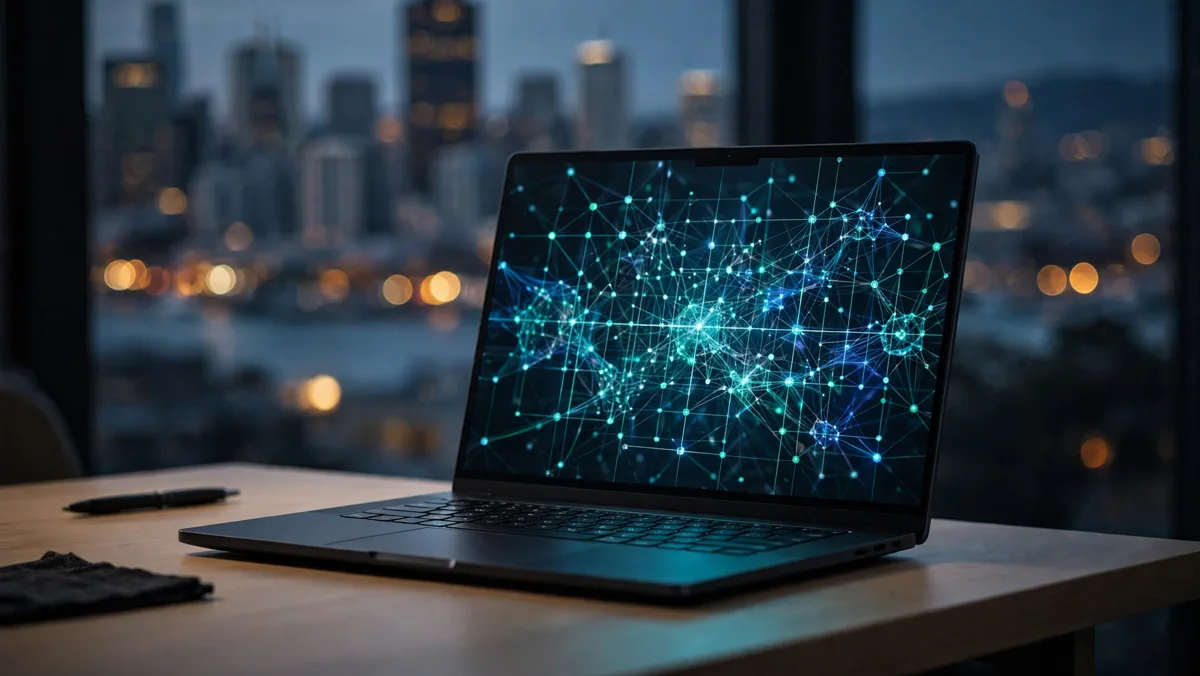
It is not every day you see the CEOs of Microsoft and Nvidia share a stage, but today in San Francisco, Satya Nadella and Jensen Huang stood side by side to do something neither company could do alone. They launched the Surface Laptop Ultra, a machine Microsoft calls the most powerful Surface ever built, and its entire reason for existing is artificial intelligence that runs on your desk instead of in someone else’s data center.
The star of the show is not really the laptop. It is the chip inside it: Nvidia’s RTX Spark, a purpose-built system-on-chip that shrinks the Grace Blackwell data center architecture down into a 3-nanometer package small enough to fit in a 15-inch notebook. And the headline number is the kind that makes developers sit up straight. With up to 128 gigabytes of unified memory, this laptop can run 120-billion-parameter AI models locally, no cloud subscription, no API calls, no sending your data off to a server farm.
Two years ago that would have required a multi-GPU server rig. Today it is a laptop you can buy at a store. Let that sink in.

What the Surface Laptop Ultra Actually Is
Microsoft first teased this machine back in May, and the details have been dripping out ever since. Today’s event was the full reveal. Here is what is official:
- Chip: Nvidia RTX Spark, with a 20-core Arm-based Grace CPU and a Blackwell GPU with 6,144 CUDA cores
- Memory: Up to 128GB of LPDDR5X unified memory, shared between the CPU and GPU
- AI compute: 1 petaflop, enough for 120-billion-parameter models running locally
- Display: 15-inch mini-LED PixelSense Ultra, 2880 by 1920, with up to 2,000 nits of peak HDR brightness
- Ports: HDMI, USB-C, USB-A, a full-size SD card reader, and a headphone jack (yes, they kept them all)
- Software: Windows 11 tuned for the chip, including a new Workload Profile Scheduling system and a tuned Prism emulation layer for x86 apps on Arm
Microsoft also dropped the Copilot+ PC branding for this machine, which tells you something. This is not a Copilot laptop. This is a developer workstation that happens to be thin enough to carry.
RTX Spark: The Chip That Changes the Game
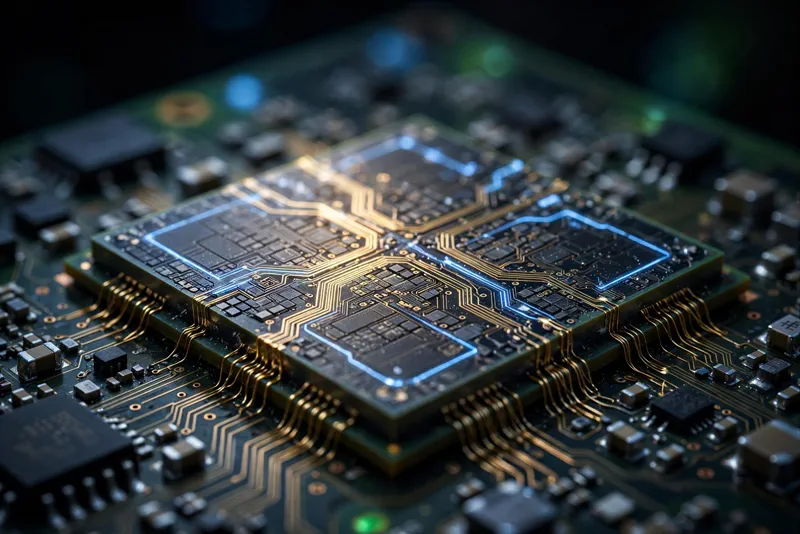
Let me explain why the chip matters more than the laptop, because this is the part that will ripple across the entire PC industry.
RTX Spark combines a 20-core Arm Grace CPU with a Blackwell GPU on a single die, connected by NVLink-C2C. Both processors share the same pool of up to 128GB of LPDDR5X unified memory, with roughly 300GB/s of bandwidth. Because the memory is shared, the GPU never has to copy model weights back and forth from separate VRAM. That shared pool is the whole trick. It is what lets a laptop load a 120-billion-parameter model that used to need a server rack.
This is not a gaming GPU with an Arm chip bolted on. It is data center silicon, reshaped for a laptop chassis. Nvidia unveiled RTX Spark in June alongside Microsoft’s Surface announcement, positioning it as the chip that “reinvents Windows PCs for the era of personal AI agents.”
And Microsoft did not stop at one device. Reports point to a Surface RTX Spark Dev Box, a compact desktop PC with the same 1 petaflop and 128GB of memory for developers, plus Lenovo’s Yoga Pro 9n and Yoga 9n 2-in-1 as other RTX Spark machines on the way. An ecosystem is forming around this chip, not just a single product.
Why Microsoft Needs This to Work
Here is the business logic, and it is brutally simple. Right now, when you ask an AI to write code or summarize a document, that work usually happens in Microsoft’s Azure cloud data centers. Those data centers cost Microsoft billions to run. Every AI query you run burns compute that Microsoft pays for.
Now imagine shifting a big chunk of that work onto powerful machines in offices and homes, where the customer bought the hardware. Same features, zero cloud bill. That is the bet. As Reuters’ Stephen Nellis reported ahead of the event, Microsoft is betting that agentic AI workloads, like writing code on your behalf, can move from expensive cloud infrastructure to high-powered Windows machines where customers foot the hardware bill.
There is a second angle too. Microsoft wants Windows to become the platform where AI agents live. Today’s event was billed as the birth of the “next generation of Windows agentic platforms.” If AI agents are going to handle tasks like writing software without touching the cloud, they need a home. Microsoft wants that home to be Windows, not someone else’s operating system.
Why Nvidia Is Coming for Your Laptop
For Nvidia, this is about the last frontier. The company already owns the data center, the gaming GPU market, and increasingly the automotive and robotics world. The one chip-heavy market it never cracked is the PC, where Intel and AMD have owned the processor slot for decades.
The Surface Laptop Ultra is Nvidia’s beachhead. If developers and creators start buying RTX Spark machines because they can run serious AI workloads locally, Intel and AMD suddenly have a problem in a market they have controlled since forever. Barron’s flagged exactly this: the PC is one of the few chip-heavy sectors where Nvidia is not the de facto supplier, and that is about to be tested.
The timing is sharp. Memory costs are soaring, agentic AI services are exploding, and Apple keeps proving that on-device AI is the future with its own silicon. Nvidia clearly decided it could not sit this one out.
The Price, and When You Can Get It
This is the part everyone was waiting for. Two configurations are available at launch, according to reports from the event:
- RTX Spark S2: 18-core CPU, 5,120-core GPU, 24 to 32GB of unified memory, starting around $2,999
- RTX Spark S3: 20-core CPU, 6,144-core GPU, up to 128GB of unified memory, priced up to roughly $7,000
Pre-orders opened today, and hardware is expected to ship in mid-October. At these prices, this is clearly a machine for developers, creators, and professionals first, not a holiday gift for your parents. But that is how every computing revolution starts: expensive for the pros, cheaper for everyone later.
The Catch Nobody Mentioned on Stage
Now for the honest part. This machine runs Windows on Arm, and Windows on Arm has a long, painful history of app compatibility problems. Microsoft says the ecosystem has crossed 7,000 verified apps, a foundation built with Qualcomm’s Snapdragon X push, and Windows Latest’s testing found real progress. But their own compatibility testing also found it is not perfect yet. Some of your apps will run through the Prism emulation layer, and emulation always costs you something.
Then there is the price. Starting around $3,000 puts this squarely against Apple’s MacBook Pro, which is exactly the comparison Microsoft wants you to make. Apple has years of head start on Arm, its own developer ecosystem, and machines that run AI workloads beautifully. The Surface Laptop Ultra has to prove it can compete not just on specs, but on the day-to-day experience.
And the biggest question of all: how many developers actually need a 120-billion-parameter model running on their laptop? For the hardcore AI crowd, this is a dream machine. For everyone else, it might be the most overpowered web browser ever built.
The Big Picture

Step back from the spec sheet and look at what today actually signals. Two of the most powerful companies in tech are betting, in public, that the future of AI is local. Not entirely, but meaningfully. Your laptop running serious AI without the cloud. Your data staying on your machine. Your work not waiting on a server.
It is the same direction Google is heading, pouring a reported $1 billion into nuclear power to feed its AI data centers just this week. The cloud is not going away. But the center of gravity is shifting, and today Microsoft and Nvidia planted a flag.
The Surface Laptop Ultra ships mid-October. The era of the AI PC just got its first real heavyweight. Check back here, we will be testing what this thing can actually do.
Want more stories like this? Browse our Technology section for the latest in AI, gadgets, and the tech shaping your world.