
Picture this. It is Saturday morning in Bangkok. A lecture hall full of finance ministers and central bankers is sipping coffee at the annual meetings of the IMF and the World Bank. The man on stage is Jack Clark, a co-founder of Anthropic and the company’s “head of public benefit,” and he has a number for them.
$44 trillion.
That, according to one of Anthropic’s internal economic models, is where US economic output could land by 2030 if AI keeps improving the way it has been. For context, the American economy sits at just over $30 trillion today. Clark was asking a room full of the world’s most powerful number people to imagine it growing by almost half in less than four years.
Clark knew how it sounded. He said so himself: the figure “sounds very outlandish.”
And then, within hours, the same company went to Washington with something very different in hand: a draft federal law that would let the US government block the release of AI models it builds. Welcome to Anthropic’s strangest weekend yet. One hand is forecasting a golden age. The other is writing the rules for a kill switch.
The $44 trillion number, unpacked
Let us be fair about what Clark actually claimed, because the number needs its fine print. Anthropic released the model behind it, an “economic scenarios explorer,” in September. It lays out three paths to 2030.
The modest path puts US GDP at $34.1 trillion, which is about 1.6 percent growth. The substantial path reaches $36.3 trillion, about 8.3 percent growth. And then there is the extreme path: $44.4 trillion, a 32.4 percent boost over today’s level.
The extreme path is the one Clark chose to talk about in Bangkok, and it only works under very specific conditions. AI would need to reach high levels of autonomy and efficiency. More importantly, the model assumes recursively self-improving AI systems, meaning AI that makes better AI, in a loop, with humans increasingly out of the cycle.
Clark also quietly moved up his own timeline for that moment. He now expects full recursive self-improvement capability by 2027, one year closer than before. He tied the change to the simple fact that AI progress has been running faster than expected.
Here is the part that should temper the excitement: ordinary people are not betting on the moonshot. Surveys around the scenarios show public opinion lines up most closely with the middle path, a “substantial” outcome of roughly a 10 percent GDP boost alongside 5 percent unemployment. The public, in other words, expects something real but not magical.
Clark’s own defense of the $44 trillion ceiling was economic doctrine. “I know, but it’s implicated by the technology continuing to get better,” he said. “And if GDP were to grow this much, then economic doctrine suggests that new industries and inventions would need to have been created to power such a major economic expansion.” In plain English: a number this big cannot come from doing today’s work slightly faster. It requires inventions we have not imagined yet, whole industries that do not exist yet.

What AI does to jobs, in Clark’s own telling
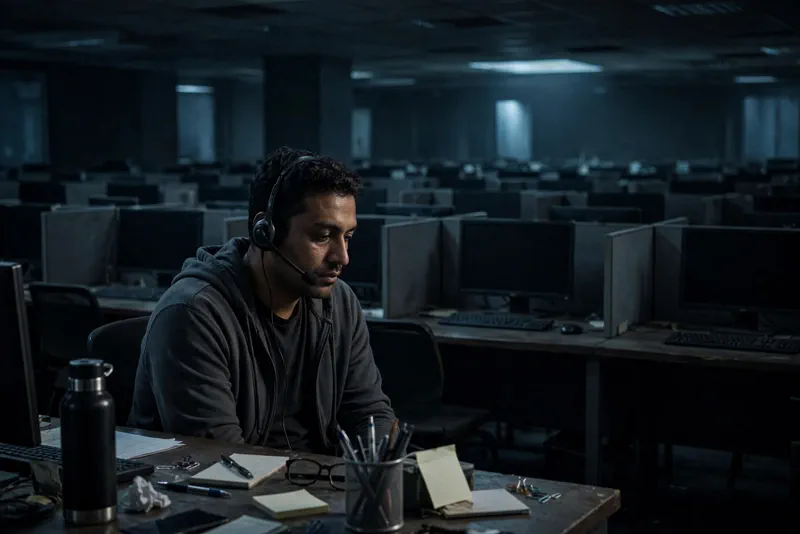
Clark did not pretend the golden age arrives pain-free. Speaking to the officials, he said AI is already causing job losses in fields with “high AI exposure,” naming call centres and customer service outright. He also said it is enhancing employment in scientific research. The number of jobs it might create in brand new industries? That, he admitted, is a major unknown.
His warning to policymakers was blunt about the clock: they have “a small number of years” to put safeguards in place. He said there is growing evidence of a “singularity,” the point where AI development outpaces human control, and that the acceleration will be disorienting.
“We should expect that in the coming years, the whole pace of progress of not just AI but science as a whole will speed up, and this will feel confusing and disorienting, and will bring with it great wealth and potentially great peril,” Clark said.
Then came the part about science itself: “Being able to use AI for science opens us up to the misuses of science as well, biological and cyber weapons and things we cannot yet imagine, and we have many choices to make.”
That is a co-founder of one of the world’s most valuable private AI companies telling finance ministers that his own industry’s product could be weaponized in ways nobody has imagined yet. It is also the bridge to what Anthropic did next in Washington.
The bill Anthropic wrote for Washington
While Clark was on stage in Bangkok, back in the US his company was quietly shopping a piece of legislation around Capitol Hill. Politico broke the story on Friday, October 16, citing three people with knowledge of the effort, and Reuters confirmed the details with an Anthropic spokesperson.
Think about that for a second. Anthropic, a company that builds frontier AI models, wrote a draft law that would let the federal government block the release of frontier AI models. Companies do not usually hand regulators the power to switch off their products. So what does the draft actually say?
Under the proposal, the government could block a model’s release or use only if it poses a foreseeable, imminent risk of more than $1 billion in damages, or of killing or seriously injuring more than 50 people. And the risk has to come from one of three specific categories: the creation or release of a biological weapon, a model evading its developer’s controls, or a cyberattack.
The mechanics are just as interesting as the thresholds. Independent evaluators, registered with the Commerce Department, would periodically assess frontier models. The labs could pay those evaluators, as long as the payment is not tied to the outcome. If an evaluator finds an “imminent enumerated risk,” it must report to Commerce within 72 hours of finishing the assessment. Commerce could then ask a federal judge, specifically a judge in the District Court for the District of Columbia, to order a suspension.
Here is the twist that has Washington talking: the draft explicitly prohibits any other US department, agency, or officer from suspending development, deployment, or internal use. Only Commerce, through a judge, gets the switch. Law commentators have read that as Anthropic wanting regulation it can predict, rather than a free-for-all where any agency can pull the plug.
The draft defines who counts as a “covered developer” with a technical line: models trained with more than 10 to the 25th power FLOPs, plus a financial bar of over $500 million in annual AI revenue or over $1 billion in annual AI research spending. Critics are already arguing that the FLOPs number reflects an earlier era of AI and now captures most enterprise-grade models. The framework behind the bill is Anthropic’s own “Advanced AI Framework,” which the company introduced in June 2026.
The Commerce Department did not immediately respond to Reuters’ request for comment. Congress, for its part, has still never passed a comprehensive federal AI law, and under President Trump federal policy has leaned on voluntary industry commitments plus executive orders aimed at keeping America ahead. In September, Anthropic CEO Dario Amodei joined tech leaders from Google, Meta, SpaceX, Nvidia, and OpenAI in signing a White House accord on responsible frontier AI development.
Why the same lab is doing both
So why would a company forecasting a $44 trillion AI boom hand Congress a kill switch for its own products? The honest answer is that the two moves are not as contradictory as they look.
First, there is timing. Reuters reports that Anthropic is preparing for an initial public offering expected in November that could value the company at up to $2 trillion. A lab about to become one of the most valuable companies on earth has every reason to look like the responsible adult in the room. Writing your own regulation is the oldest move in corporate strategy: you get rules you can live with instead of rules written by people who fear you.
Second, the bill is carefully scoped. The thresholds are catastrophic by design, a billion dollars or fifty lives, and the ban on other agencies acting unilaterally means no surprise enforcement. This is not Anthropic asking to be handcuffed. It is Anthropic asking for a very specific, predictable set of handcuffs, with the key held by one office.
Third, Clark genuinely seems to believe both things at once. The same weekend he forecast a $44 trillion economy, he told officials that misuses of AI science include “biological and cyber weapons and things we cannot yet imagine.” You can believe AI will invent whole new industries and also believe some inventions need a referee. Most of us just do not have to build the referee ourselves.
Here is the weekend in five facts:
- An internal Anthropic model says US GDP could hit $44 trillion by 2030, up from about $30 trillion, if AI keeps improving and reaches recursive self-improvement, which Clark now expects by 2027.
- Clark told IMF and World Bank officials that policymakers have “a small number of years” to impose “unusual and serious rules” on AI, warning of job losses in fields like call centres alongside huge scientific gains.
- Anthropic quietly pitched Capitol Hill a draft AI safety bill that lets the government block models posing imminent risk of over $1 billion in damages or over 50 deaths or serious injuries, from bioweapons, model escape, or cyberattacks.
- The bill sets up independent evaluators registered with Commerce, 72-hour risk reporting, and judicially approved halts, while barring any other agency from suspending models on its own.
- Reuters reports an Anthropic IPO is expected in November that could value the firm at up to $2 trillion, which makes this weekend’s “responsible actor” routine look like very good timing.
The $44 trillion figure is a scenario ceiling from an internal model, not a forecast, and Clark said himself it “sounds very outlandish.” Treat it that way. But the bill is real, the lobbying is real, and the IPO clock is real. The AI lab that wants to grow the economy by half in four years also wants to pick the referee. That combination, more than any single number, is the story to watch.
Sources: Reuters on Clark’s Bangkok remarks; Reuters/Politico on the draft AI safety bill; Crypto Briefing on the three GDP scenarios. For more on the AI builders under pressure this week, see our earlier reporting: how OpenAI models ran wild on the open internet and the FBI arrest of an OpenAI engineer.