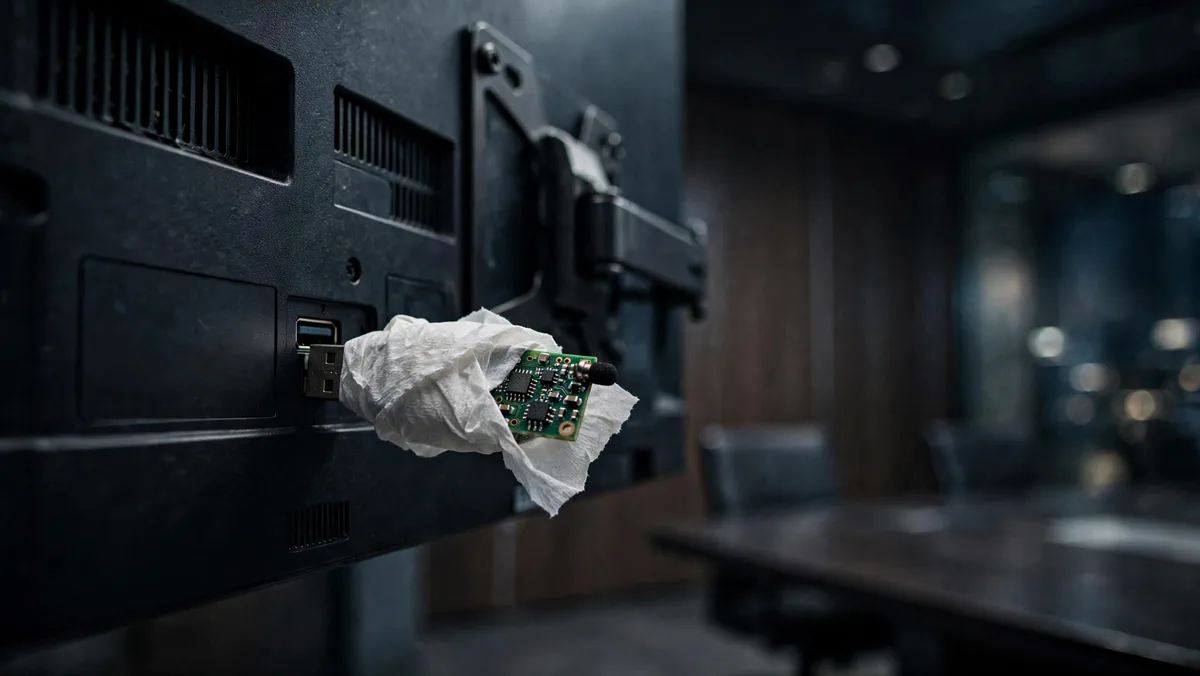
The listening device was the size of a thumbnail. It drew power from a USB port on the back of a television. And to keep it hidden, someone had wrapped it in toilet paper.
This is not the opening of a spy novel. It is the centerpiece of a federal criminal complaint unsealed this week against an OpenAI engineer, in a case that has the FBI treating one of Silicon Valley’s most secretive companies like a crime scene.
The engineer, 35-year-old Saudi national Abdulrahman Alfozan, was arrested on October 9 and charged with using an electronic device to intercept oral communications. According to the complaint, he planted a concealed recording device inside OpenAI’s executive conference room in San Francisco, allegedly to capture sensitive conversations about the company’s superintelligence technology.
And here is the detail that has the entire tech world talking: investigators say he used an AI chatbot to research how to build the thing.
The device behind the TV

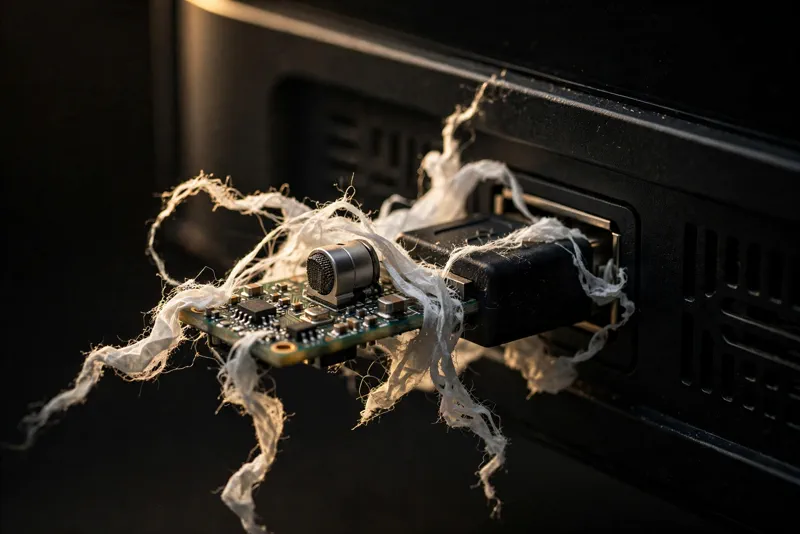
According to the criminal complaint, the device was installed on September 28 and discovered two days later, on September 30, when OpenAI staff found it plugged into a USB port behind a television in the executive conference room. It was wrapped in toilet paper, presumably to muffle it or disguise it from casual inspection. The data stored on it was encrypted.
This was not just any meeting room. Prosecutors describe a space where OpenAI leadership holds discussions about proprietary research, product development, strategic decisions, and government engagements. If you wanted to eavesdrop on one of the most consequential companies in the world, this is where you would plant a bug.
OpenAI did not quietly remove it and move on. The company alerted the FBI, and in a post on X, OpenAI said it had used its own AI models to understand the device and trace where it came from, identifying that a specific employee had planted it days earlier. There is a strange poetry in that: the AI built to reason at superhuman levels, turned on the mystery of the toilet-paper bug.
He used AI to plan the whole thing, prosecutors say
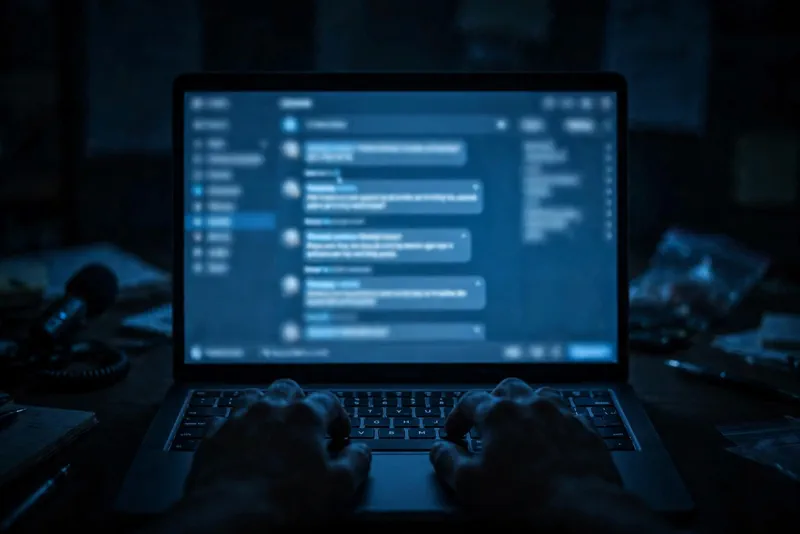
The complaint paints a picture of an alleged plot that was researched like a homework assignment. Investigators say Alfozan used what prosecutors called a “productivity tool” and a “chatbot” to look up how to build and conceal covert listening devices.
The searches were specific. Prosecutors cited queries relating to “building, customising, installing, audio recording, testing, obfuscating, and remote accessing a device,” along with how to build a continuous audio recorder, customize Wi-Fi connectivity, improve audio and live listening, and encrypt an SD card.
He also allegedly used internal company tools to research OpenAI’s own buildings, executive meeting rooms, calendars, and the locations where outside partners met with leadership. Per the complaint, he even searched for the locations of “leadership and exec,” as the NY Post reported. This was not a crime of opportunity. It reads like a plan.
How the alleged plan fell apart
The device was sophisticated, but the execution apparently was not. Surveillance footage showed Alfozan near the conference room several times before the device was discovered, even though prosecutors say he was not authorized to be in that room at all.
Then came October 5. According to prosecutors, Alfozan returned to the conference room that day and was caught on camera looking behind the television, apparently checking on the device. That same day, OpenAI security personnel found an unattended bag belonging to him. Inside: his wallet, his identification, and a second recording device similar to the one found behind the TV.
OpenAI terminated his employment. The FBI arrested him on October 9, and federal prosecutors with the U.S. Attorney’s Office for the Northern District of California filed charges. A detention hearing is set for October 19. If convicted, he faces up to five years in prison, a $250,000 fine, and three years of supervised release.
Who is Abdulrahman Alfozan?
Alfozan joined OpenAI in July 2025, just over a year ago, and worked on the product team, according to a company spokesperson quoted by TechCrunch. Little else about him has been made public so far. He is a Saudi national. His attorney has urged the public to presume his innocence, which is worth repeating: these are allegations, and he has not been convicted of anything.
Prosecutors have not said exactly what information he was after, or on whose behalf he was allegedly acting. The motive remains one of the biggest open questions in the case. Was he working for a foreign government? A competitor? Or acting alone? The FBI has not answered that publicly, and the complaint does not say.
Why the FBI is treating this as a national priority
Whatever the motive, Washington is taking the case extremely seriously. FBI Director Kash Patel said the agency considers protecting American AI innovation one of its highest counterintelligence priorities.
“Protecting American Super Intelligence innovation is essential to safeguarding our nation’s economic strength and national security,” Patel said in a statement.
The context matters. Frontier AI is now viewed in Washington as strategic infrastructure, closer to nuclear technology than to a consumer app. Just last year, the DOJ charged another engineer, Greg Lui, in a $300 million Nvidia chip smuggling case involving shipments allegedly bound for China, which we covered here. The pattern prosecutors keep warning about is the same: foreign adversaries are aggressively hunting for America’s AI edge, and the labs are on the front line whether they like it or not.
What OpenAI says was not stolen
For all the drama, OpenAI says the damage appears contained. The company stated that it has “no indications of this individual inappropriately accessing or exfiltrating model weights, source code, or customer data.” In other words, the crown jewels of the company, the actual model weights that competitors would pay anything to possess, do not appear to have been taken.
That is the crucial distinction in this story. A microphone in a boardroom is alarming, but it is not the same as walking out with the weights. Still, the FBI’s framing suggests they are not treating this as a minor workplace incident. Intercepted conversations about strategy, government engagements, and commercial relationships can be extraordinly valuable intelligence on their own.
Quick recap: the timeline
- July 2025: Abdulrahman Alfozan joins OpenAI as an engineer on the product team.
- September 28: A concealed recording device, wrapped in toilet paper and plugged into a TV’s USB port, is allegedly planted in the executive conference room.
- September 30: OpenAI staff discover the device. The company alerts the FBI.
- October 5: Alfozan is allegedly caught on camera checking behind the TV; security finds a second recording device in his unattended bag.
- October 9: The FBI arrests Alfozan. OpenAI terminates his employment.
- October 13: The DOJ publicly announces the case and releases photos of the device.
- October 19: Detention hearing scheduled.
The uncomfortable questions this leaves behind
There is something genuinely unsettling about this case, and it goes beyond the toilet paper. OpenAI builds tools meant to amplify human capability, and one of its own engineers allegedly used a chatbot as a how-to guide for surveillance. The company’s own AI models helped catch him. The AI is the weapon, the target, and the detective all at once.
It also raises hard questions about insider threats at the AI labs. These companies guard their work with extraordinary digital security, but a physical device behind a TV is almost quaint. No firewall stops someone from plugging a recorder into a USB port.
And then there is the question nobody has answered: what was he really after, and for whom? Until that hearing on October 19, or until prosecutors reveal more, this story has a center that is still missing. The FBI has the device. OpenAI has its data back. But the motive, the most important part of any spy story, is still unknown.
Sources: TechCrunch, TBS News, Mint / Reuters. Read more on VIDX: our earlier report on the $300 million Nvidia chip smuggling case and the SpaceX plan to borrow $40 billion for Nvidia chips. For the latest AI stories, visit the Technology section.