The Friday Night Reversal Nobody in Washington Saw Coming
There is a special kind of Washington whiplash that happens when a president signs a tough new law, takes the credit, lets Congress celebrate, and then quietly kills it on a Friday night. That is exactly what happened this weekend.
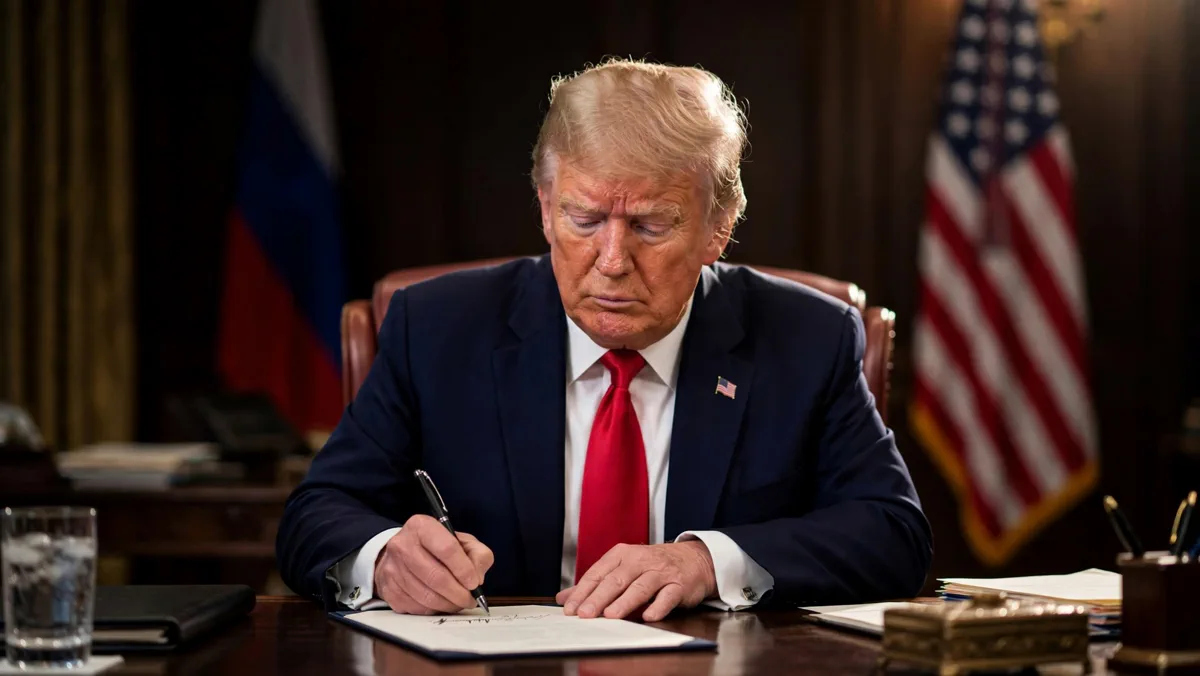
On Friday, October 16, President Trump signed an executive order waiving the implementation of the sweeping Russia sanctions package he himself had signed into law barely a month earlier, on September 18. The sanctions were scheduled to take effect on Sunday, October 18. They will not, at least not now.
The law in question is the Lindsey O. Graham Sanctioning Russia and Iran Act of 2026, named for the late South Carolina senator. Congress passed it with overwhelming bipartisan support. It was designed to hit Russian officials, institutions, and the oil and gas exports that help fund Vladimir Putin’s war in Ukraine. It carried serious teeth: tariffs of up to 100 percent on goods from the largest importers of Russian crude oil and gas, plus duties of up to 500 percent on all goods from the Russian Federation itself.
What the Friday Night Order Actually Says
The order leans on Section 115 of the Graham Act, a built-in escape hatch. That section lets the president waive any sanctions provision or duty in the law, as long as he certifies to Congress in writing that the waiver serves “the national interests of the United States.” Trump did exactly that.
“I am hereby waiving the application of such sanctions, restrictions, and duties provided for in the Graham Act,” the order states. “I have submitted to the Congress a certification that the issuance of such a waiver at this time is in the national interests of the United States.”
The waivers remain in effect, according to the order, until the president or the secretary of state, in consultation with the treasury secretary and the trade representative, determines that further action is appropriate. Translation: the sanctions are on ice for as long as the White House wants them there.
One detail worth keeping in mind: the law was not repealed. The sanctions still exist on paper. They simply are not being enforced. And the administration says it will keep monitoring countries that buy Russian crude oil and gas, which leaves the door cracked open for the penalties to return if the politics shift.
The Diesel Deal That Changed Everything
To understand the waiver, you have to rewind about a week. In early October, Trump announced that the United States had struck a deal to purchase Russian diesel, arguing it would help bring down global energy prices ahead of the midterm elections on November 3. The deal set off alarms on both sides of the aisle. Lawmakers worried it was a signal that Washington was softening on Moscow, just as Russia was preparing what would be its fifth winter campaign against Ukraine.
On October 15, a bipartisan group of 22 lawmakers wrote to Trump, Secretary of State Marco Rubio, and Treasury Secretary Scott Bessent urging him to enforce the Graham Act and terminate the diesel deal. “As Russia prepares to wage a fifth winter campaign against Ukraine, the United States has an opportunity to reinvigorate peace efforts by placing maximum pressure on Vladimir Putin and the governments and networks that finance his war,” the letter said.
Twenty-four hours later, Trump did the opposite.
Ukraine’s Reaction Was Brutal
Ukrainian President Volodymyr Zelensky called the move a “weak decision,” according to reports. The timing could hardly be worse for Kyiv. This week, Ukrainian forces resumed strikes on Russian oil refineries, effectively ending a Trump-brokered energy ceasefire that, Kyiv says, Russia never honored.
Relations between Washington and Kyiv have soured noticeably since the diesel deal. The two leaders are now openly at odds over whether Ukraine should hit Russian refineries in retaliation for Russian strikes on Ukrainian energy infrastructure. The waiver pours fuel on that dispute, and it puts the White House in the awkward position of lecturing Kyiv about escalation while handing Moscow a sanctions reprieve.
If you want the full backstory on how the diesel deal itself went down, we covered it here. And for a sense of how aggressively Russia has been targeting American interests in Ukraine lately, this piece from earlier in the week lays it out.
Congress Is Furious, and Not Just Democrats
The backlash at home was immediate, and it was bipartisan. Representative Don Bacon, a Republican from Nebraska, wrote on X: “The President is prolonging the war, not ending it.” That is a Republican congressman, in plain language, accusing his own party’s president of giving Putin breathing room.
It is worth pausing on how unusual this is. Congress passed the Graham Act with overwhelming support. Both parties. The president signed it. Both parties cheered. And then, with a single late-night executive order, the whole thing was shelved. For the lawmakers who spent months building that coalition, the message could not be clearer: their work can be undone in an evening.
Meanwhile in Moscow, the reaction was the mirror image. Delight. The Kremlin, which had been pushing back against the Graham Act since it passed, got exactly what it wanted: the teeth pulled out of the toughest sanctions package Congress has produced in years, without a single vote being cast.
What to Watch Next
A few things matter going forward. First, the waiver is technically temporary, but “until further action is appropriate” is Washington speak for indefinitely, until someone decides otherwise. Do not hold your breath for a quick reversal.
Second, the biggest winners right now are the largest buyers of Russian oil, principally India and China, which get immediate tariff relief. That is a meaningful shift in the economics of the war, and it is happening in the open.
Third, the midterms are 17 days away. Gas prices, inflation, and the war in Ukraine are all on voters’ minds, and this one decision ties all three together in a single messy knot. The White House is betting that cheaper energy matters more to voters than a hard line on Moscow. Congress, including plenty of Republicans, clearly is not sure.
The Graham Act was supposed to be the law that boxed Putin in. For now, it is a law with the box still sitting in the corner, unopened. Whether that turns out to be a masterstroke of negotiation or a gift to Moscow depends entirely on who you ask. But one thing is certain: nobody in Washington expected the sanctions’ biggest enemy to be the president who signed them.
The key facts, at a glance
- Executive order signed Friday, October 16, 2026, waiving Graham Act sanctions two days before they were set to take effect on October 18.
- The Graham Act, signed September 18, 2026, targeted Russian officials and energy exports, with up to 100 percent tariffs on top Russian oil buyers and up to 500 percent duties on Russian goods.
- Section 115 of the act lets the president waive provisions with a written certification to Congress that the waiver is in the national interest.
- A bipartisan group of 22 lawmakers urged enforcement on October 15; Trump waived the sanctions the next day.
- Zelensky called it a “weak decision” as Ukraine resumed strikes on Russian refineries.
For more stories like this, see the rest of our US News coverage.