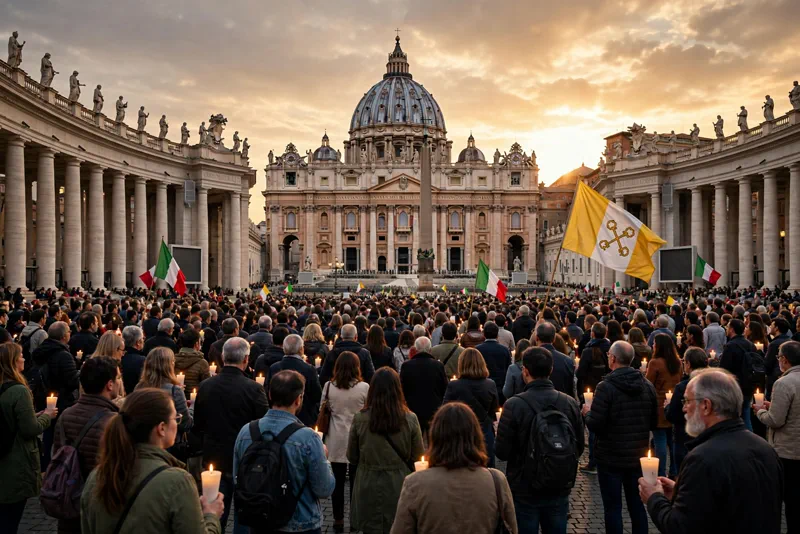
On Sunday morning, Pope Leo XIV stood in front of the crowd at St. Peter’s Square and said something no one saw coming. Doctors had found a nodule on his lung, he told them, and he would be having surgery within days. Less than 72 hours later, the Vatican confirmed the rest: the growth was cancer.
Let that sink in. The leader of the world’s 1.4 billion Catholics, the first American-born pope in the history of the Church, just had part of his right lung removed because of the most common form of lung cancer on the planet. Here is everything we know so far, what the doctors are saying about his chances, and why this health scare hits different from anything the Vatican has dealt with in decades.
The Announcement Nobody Expected
It started quietly. During his regular Sunday blessing on October 11, the 71-year-old pontiff mentioned that a recent health checkup had turned up a small nodule on his lung. He described it as detected “at a very early stage” and “well-contained,” and said his doctors had advised him to have it removed.
There was no drama in his voice, at least none the Vatican’s bulletins reported. He asked for prayers and moved on. If you were watching the live feed, you could be forgiven for thinking it was routine. Popes get nodules. Nodules get removed. End of story.
Except it wasn’t.
What Happened in the Operating Room
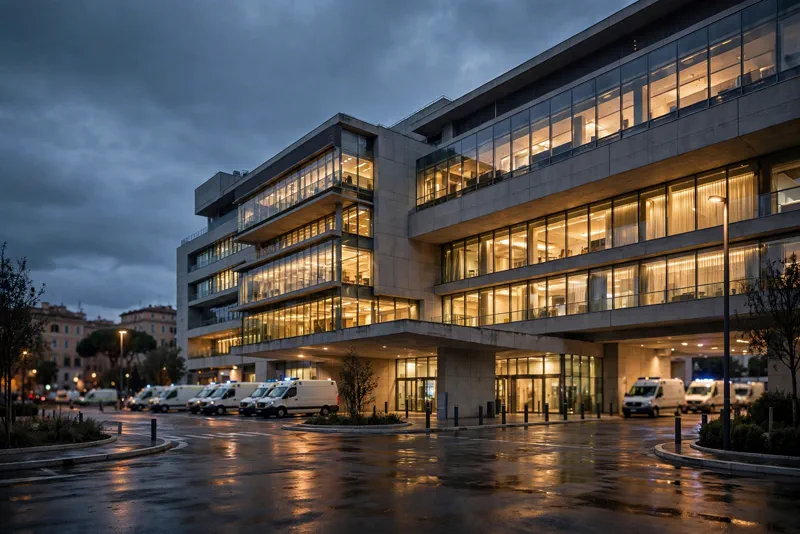
On Tuesday, October 13, Pope Leo XIV was admitted to the Agostino Gemelli University Policlinic in Rome, the same hospital where ailing popes have been treated for decades. His predecessor, Francis, spent weeks there in 2025 fighting a pulmonary infection. Leo would be its most famous patient this week.
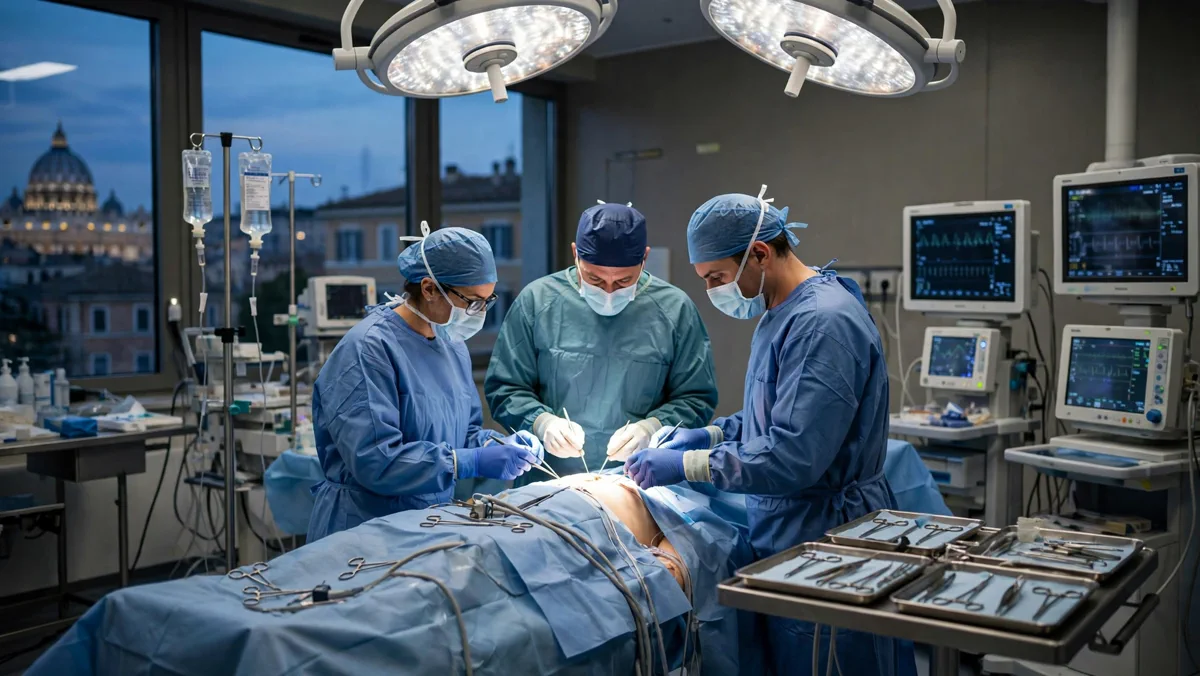
The surgical team, led by Professor Stefano Margaritora, found what the pre-operative tests had suggested. The nodule was pulmonary adenocarcinoma, the most common type of non-small cell lung cancer, accounting for roughly 40 percent of all lung cancer cases. Using a video-assisted surgical technique, the team removed the lower lobe of the pope’s right lung, the lobe where the growth was sitting.
The procedure itself lasted about 90 minutes, though the pope spent roughly three hours in the operating room. The Vatican’s statement was characteristically spare: “The procedure was successful, and there were no complications.” The pope woke up normally and, after a brief observation period, returned to his room on the hospital’s tenth floor.
Wednesday morning brought the first real update. The Vatican said the pontiff had spent a “quiet night.” Three words, and Catholics across the world exhaled.
The Recovery Plan
The Vatican has cancelled all of the pope’s public audiences through October 20, and doctors expect him to spend about a week in the hospital recovering. That part of the plan is uncomplicated. Surgery to remove a lung lobe is a big operation, but it is also one of the most common thoracic surgeries performed, and recovery usually runs two to three weeks for a healthy patient, according to oncologists who spoke about the case.
The bigger question is the calendar. The pope is scheduled to begin an 11-day apostolic trip to Latin America on November 6, with stops in Uruguay, Argentina, and Peru. As of Wednesday morning, the Vatican had not cancelled that trip, which tells you something. If doctors were worried about his ability to travel three weeks from now, the postponement would already have happened.
One thing worth remembering: there is no vice pope. The Catholic Church has no deputy who steps in when the pontiff is sick. The last time the Church faced a serious papal health crisis, it was Francis’s long hospitalization in 2025, and the machinery of the Vatican kept turning without missing a beat. It will do the same now, while Leo rests on the tenth floor of the Gemelli.
Why Doctors Are Cautiously Optimistic
Here is the good news, and there is more of it than you might expect from the word “cancer.”
Pulmonary adenocarcinoma is a serious diagnosis, but it is also the type of lung cancer doctors are best equipped to handle when it is caught early. It grows and spreads more slowly than small cell lung cancer, and when the tumor is localized, as the Vatican says this one was, surgery is the standard first-line treatment. The whole point of the operation is to remove the problem entirely.
“The fact that Pope Leo had a localized case of adenocarcinoma with an early-stage detection works in his favor, especially after surgical removal,” Dr. Juanita Mora, the national medical spokesperson for the American Lung Association, told CNN. The Vatican itself stressed that the growth was identified at a very early stage and was well-contained.
A few key facts about the diagnosis, in plain English:
- Adenocarcinoma accounts for about 40% of all lung cancers. It is the form most often diagnosed in people who have never smoked. The pope is not known to be a smoker.
- It is frequently caught late in ordinary patients. One reason it is a leading cause of cancer death is that it is often discovered only after it has spread. Early detection, which is what happened here, changes the math dramatically.
- The right lung has three lobes. Removing one leaves two. The body adapts, and lung function recovers well in otherwise healthy patients.
- The stage is not yet public. The exact staging of the pope’s cancer has not been announced, and doctors have not said whether any further treatment will be needed.
So the prognosis, as the experts keep putting it, is genuinely encouraging. Not guaranteed, of course. Cancer doesn’t do guarantees. But this is about as good a set of circumstances as you can get with a diagnosis like this one.
Why This Matters More Than Any Other Pope’s Health Scare
Every pope’s health is global news. This one lands differently for Americans, and it’s not hard to see why.
Leo XIV is the first American-born pontiff in the 2,000-year history of the Catholic Church. He was born Robert Francis Prevost in Chicago, graduated from Villanova University, and spent years as a missionary in Peru before rising through the Vatican. Elected in May 2025, his papacy is barely 17 months old.
Think about what that means. For the first time ever, American Catholics have a pope who grew up with their accent, their baseball teams, their Fourth of July. When the news broke on Tuesday evening, it wasn’t just a Vatican story or a Rome story. It was a Chicago story, a Villanova story, a story playing on every American news channel in prime time.
There’s also the simple matter of precedent. Francis, Leo’s predecessor, had a long history of health problems, including a partial lung removal decades ago, and the world learned to live with his fragility. Leo has had none of that. Until this week, he had no significant health problems on record, apart from a bout of typhoid fever in Peru back in 1985. He plays tennis regularly. He reportedly had a personal trainer during his cardinal days. He walked into his Sunday blessing looking like a healthy 71-year-old, which is exactly what he is.
And then there’s the family angle, which the pope himself has never made a secret of. His eldest brother, Louis Prevost, is currently being treated for cancer, first diagnosed in 2017. His mother, Mildred, died of cancer in 1990. His father, Louis, died of colon cancer and heart disease in 1997. Cancer runs through this family’s story like a dark thread. On Tuesday, it touched the most famous member of it.
It is worth noting, too, that this diagnosis arrives in the middle of an already tense period for the Church’s relationship with Washington. Just last week, newly minted Nobel Peace Prize laureate Navi Pillay condemned American sanctions on the International Criminal Court, sanctions imposed the same day her win was announced. The Vatican watches all of this closely. A pope in a hospital bed is a pope who is not managing any of it.
What Happens Now
The short answer: we wait, and the Vatican talks. The Holy See’s press operation has a rhythm for these moments. Expect daily medical bulletins from the Gemelli, terse and reassuring, until the pope goes home. Expect the world’s Catholic media to hang on every word of them. Expect the Latin America trip to be reconfirmed, day by day, as a kind of health barometer.
If the early-stage assessment holds and no further treatment is needed, Leo could be back to a near-normal schedule within weeks. Either way, this is the first major medical test of the first American papacy, and the whole world is watching how Rome handles it.
For now, the update that matters most is the simplest one. The pope had a quiet night. After the week he just had, quiet is exactly what you want to hear.