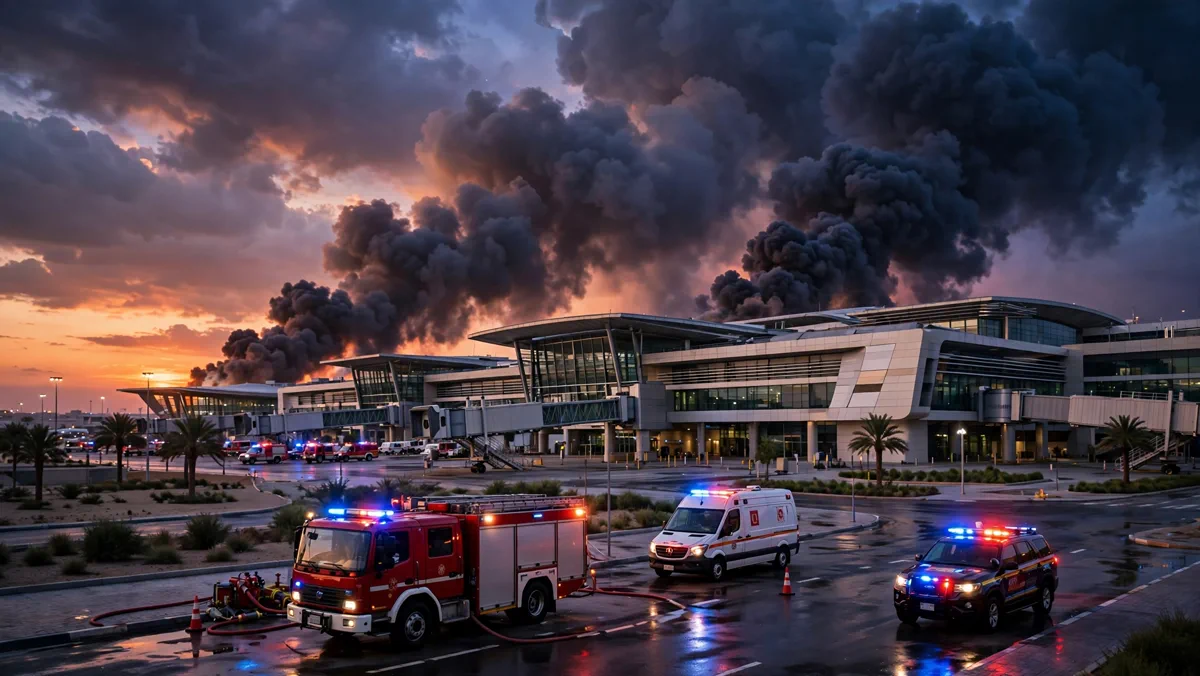
A Ballistic Missile Just Hit Riyadh’s Airport. 12 People Are Dead, Including an American.
On Saturday afternoon, travelers at King Khalid International Airport were doing what travelers do: dragging carry-ons, checking departure boards, herding tired kids through the terminal.
Then something tore across the sky outside the windows.
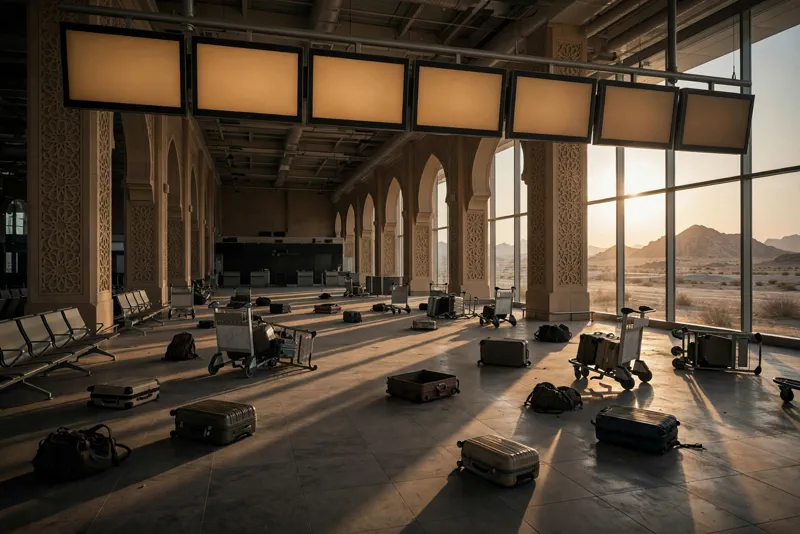
One traveler told Reuters he saw it coming before part of the ceiling near a departure gate collapsed. Another heard the explosion first, then turned to see people lying wounded on the floor. An eyewitness video released by Reuters showed large boards and debris strewn across the terminal floor, with people moving through a dust-filled hall. Within minutes, Riyadh’s busiest airport had become the scene of Saudi Arabia’s deadliest attack in more than a decade.
A ballistic missile fired by Yemen’s Houthis had struck the terminal. By Sunday, the count was devastating: 12 dead, 309 wounded, the airport shut down, more than 600 flights canceled, and the president of the United States openly considering whether to join a bombing campaign in Yemen.
Here is what happened, and why it could pull America deeper into a war most Americans barely think about.
The missile hit the terminal
Saudi Arabia’s civil aviation authority, GACA, said the missile struck a terminal building at King Khalid International Airport on Saturday, October 10. It was the third missile strike on the airport in a single week, and the most destructive by far.
Twelve people were killed: four Saudi citizens, two people from Bangladesh, and one each from the United States, Jordan, Palestine, Syria, Sudan, and Egypt. Secretary of State Marco Rubio confirmed that at least one American was among the dead.
Another 309 people were wounded, some critically, according to the kingdom’s civil aviation body. GACA warned the casualty count could still change as hospitals updated their records.
The airport suspended all operations immediately. More than 600 flights were canceled. Incoming flights were diverted to Dammam and Madinah, and passengers scheduled to fly to Riyadh were told to check with the airport before traveling, with some choosing to reach the capital by road. Airlines including Air France and Air India extended cancellations for days, in Air France’s case until October 24.
One week, four attacks
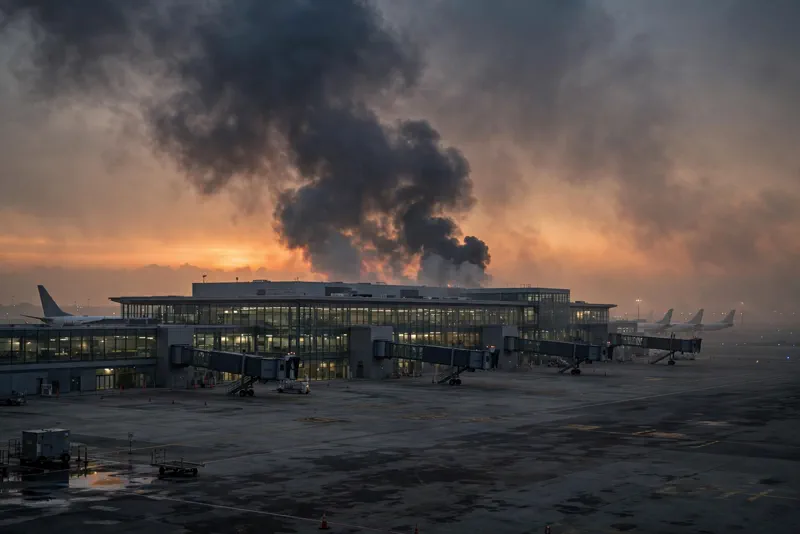
Saturday’s strike was not an isolated event. It was the culmination of a week of escalating attacks on Saudi aviation, and the airport had been hit at least four times in the past week by one count.
Just two days earlier, on Thursday, October 8, a strike on the same airport killed three Saudi nationals, including a Saudia Airlines pilot, Captain Hamoud Ali Alkalthami. The airline announced his death in a statement citing an “incident” at the airport. That same strike damaged a Saudia aircraft parked at the terminal, identified by aviation press as an A320-series jet.
King Khalid International Airport is Saudi Arabia’s second-busiest, serving the capital, a city of about eight million people. Hours after Saturday’s attack, the Saudi-led coalition reported that a projectile had also fallen near King Fahd International Airport in Dammam, in the kingdom’s eastern province. It was the first time that airport, one of Saudi Arabia’s busiest transport hubs, had been targeted since the wider war erupted in February. On Sunday, the coalition said it had intercepted a drone in the region.
Then, on Sunday morning, the Houthis issued a blunt public warning. In a post on X, they told airlines, travelers, experts, employees, and airport workers to stay away from Saudi airports and Saudi airspace, which they called “a theatre of operations for our forces.” The only exceptions: the airports serving the holy cities of Mecca and Medina. Senior Houthi official Nasr al-Din Amer had already posted a taunting message after the strike: “We shut down Riyadh international airport.”
Trump is weighing US strikes
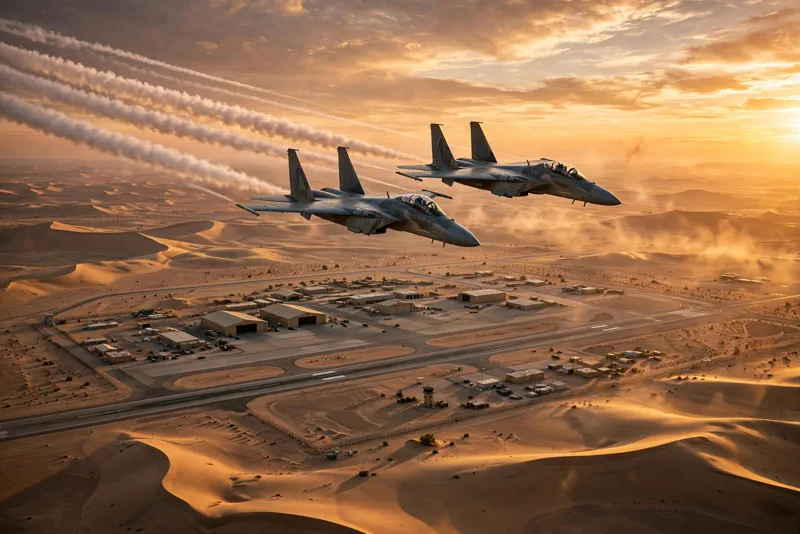
Hours after the missile hit, President Donald Trump said the United States was considering joining Saudi strikes against the Houthis in Yemen.
That would be a sharp reversal. Washington has previously resisted Riyadh’s requests for direct military intervention against the Houthis, keeping American involvement indirect even as the wider conflict with Iran has deepened. Trump called the airport attack “terrible” and said the United States was evaluating its military response options.
The political stakes are obvious. An American is dead, killed on foreign soil by an Iran-backed militia, at a moment when the US is already at war with Iran. The US Mission in Riyadh, along with the UK, Spain, Canada, and Ireland, all issued warnings urging their citizens against using the airport.
The question now is whether “evaluating options” turns into airstrikes. The administration has not said what a US role would look like, how limited it would be, or how it would be squared with the broader war effort. But the president putting the option on the table, in public, hours after the attack, is the clearest sign yet that the Houthi campaign has Washington’s attention.
Why this war keeps escalating
The airport strike is a spillover from a much bigger conflict: the wider war the US and Israel launched against Iran in February 2026. Since then, the Iran-backed Houthis have built up a large arsenal of missiles, including ballistic weapons, and drones, with Iranian assistance.
Saudi Arabia, meanwhile, has stepped up its military involvement in Yemen in recent weeks, launching strikes against the Houthis and backing a Yemeni government counteroffensive after the group seized strategic territory along the Red Sea coast last month.
The Houthis have framed their attacks as retaliation. One senior Houthi official described the Riyadh strike as a response to Saudi airstrikes in Yemen, arguing that civilian facilities should be off-limits on both sides. A spokesman for the Houthi-affiliated health ministry says Saudi airstrikes have killed 91 people since September 3, most of them women and children, though that figure has not been independently verified.
The kingdom, for its part, has called the attacks blatant assaults on civil aviation and vowed to keep its military campaign going.
Saturday’s attack has exposed something else, too: vulnerabilities in the kingdom’s defenses. Despite years of investment in air defense, a ballistic missile got through to one of the country’s most sensitive civilian sites. Saudi Arabia’s energy ministry insisted on Sunday that a long-planned international energy conference in Riyadh would go ahead as scheduled, a show of normalcy that the canceled flights outside told a different story about.
What to watch next
Three things will decide where this goes from here.
- The US response: Does Trump move from “considering” to ordering strikes? Any US action against the Houthis would widen America’s military footprint in a war that already spans the region.
- Saudi airspace: The Houthis have effectively declared every Saudi airport except Mecca and Medina a target. If airlines believe them, the disruption to one of the region’s biggest aviation hubs could last far beyond Sunday.
- The next attack: This was the third strike on Riyadh’s airport in a week, and the Houthis have promised more. The pattern suggests the missile that hit the terminal was not a one-off, but a campaign.
For now, the facts are stark: a ballistic missile hit a civilian airport terminal on Saturday, 12 people from eight countries are dead, and an American president is publicly weighing whether to join the bombing. Whatever happens next, the war in Yemen stopped being someone else’s problem the moment that missile came through the sky over Riyadh.
Related: more US News on VIDX Trends and our earlier coverage of America’s carrier buildup against Iran.