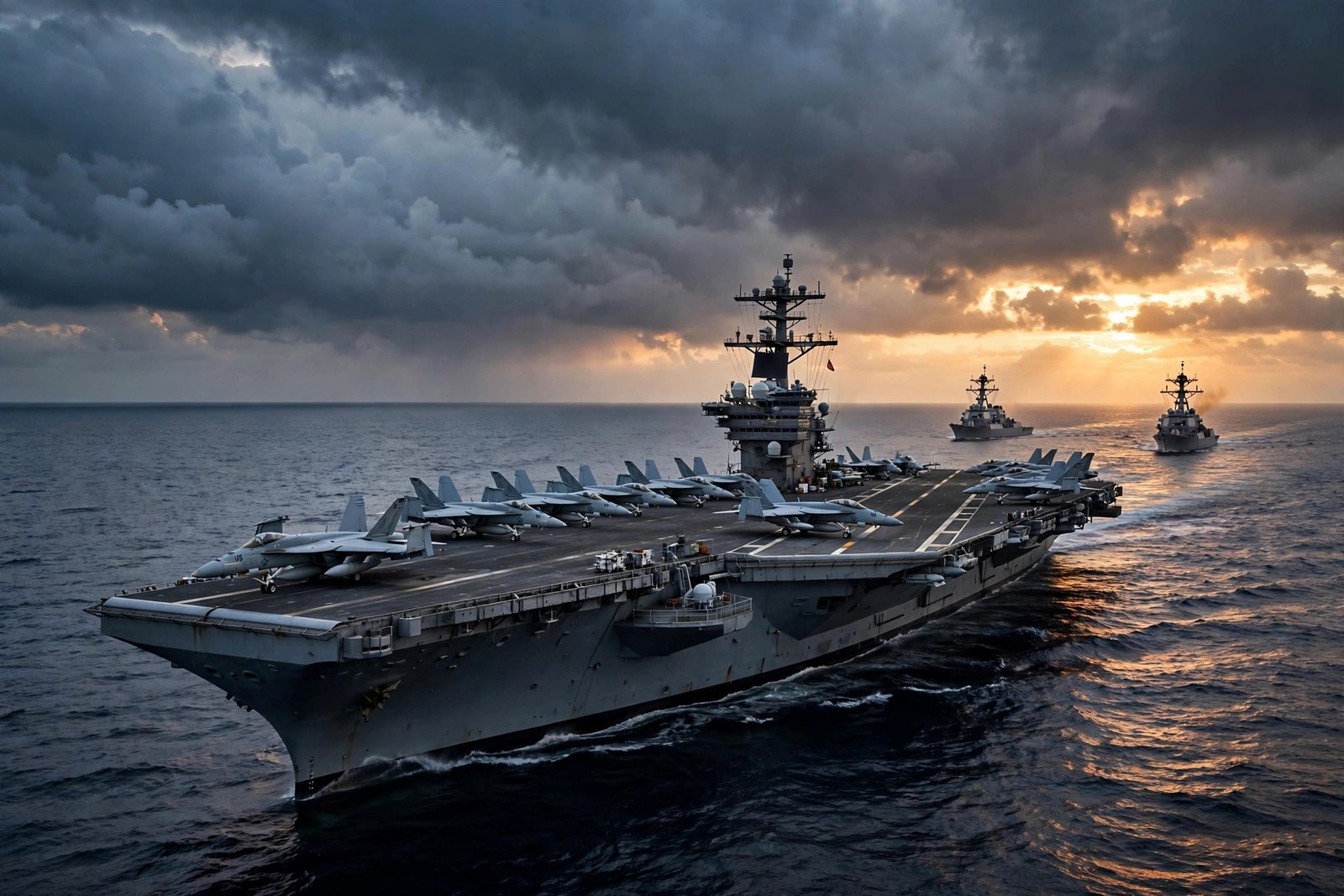
The last time America parked three aircraft carriers near Iran, it was April, and the war was supposed to be almost over. It is October now. The war is in its eighth month. And the Pentagon is sending a third carrier strike group back to the region, along with up to 10,000 more troops, just as the latest round of diplomacy collapses and the president starts talking openly about what happens after the midterms.
This is not a routine rotation. It is the largest American naval buildup in the region in months, and every piece of it, the ships, the timing, the rhetoric, points in the same direction.
The buildup, ship by ship
The USS Theodore Roosevelt left its San Diego base on Sunday, September 27, according to U.S. officials cited by the Wall Street Journal. A day later, the USS Makin Island amphibious ready group followed, carrying the 13th Marine Expeditionary Unit and more than 2,000 Marines. Together, the two groups are moving roughly 9,000 to 10,000 sailors and Marines toward the Middle East, with arrival expected by the end of November.
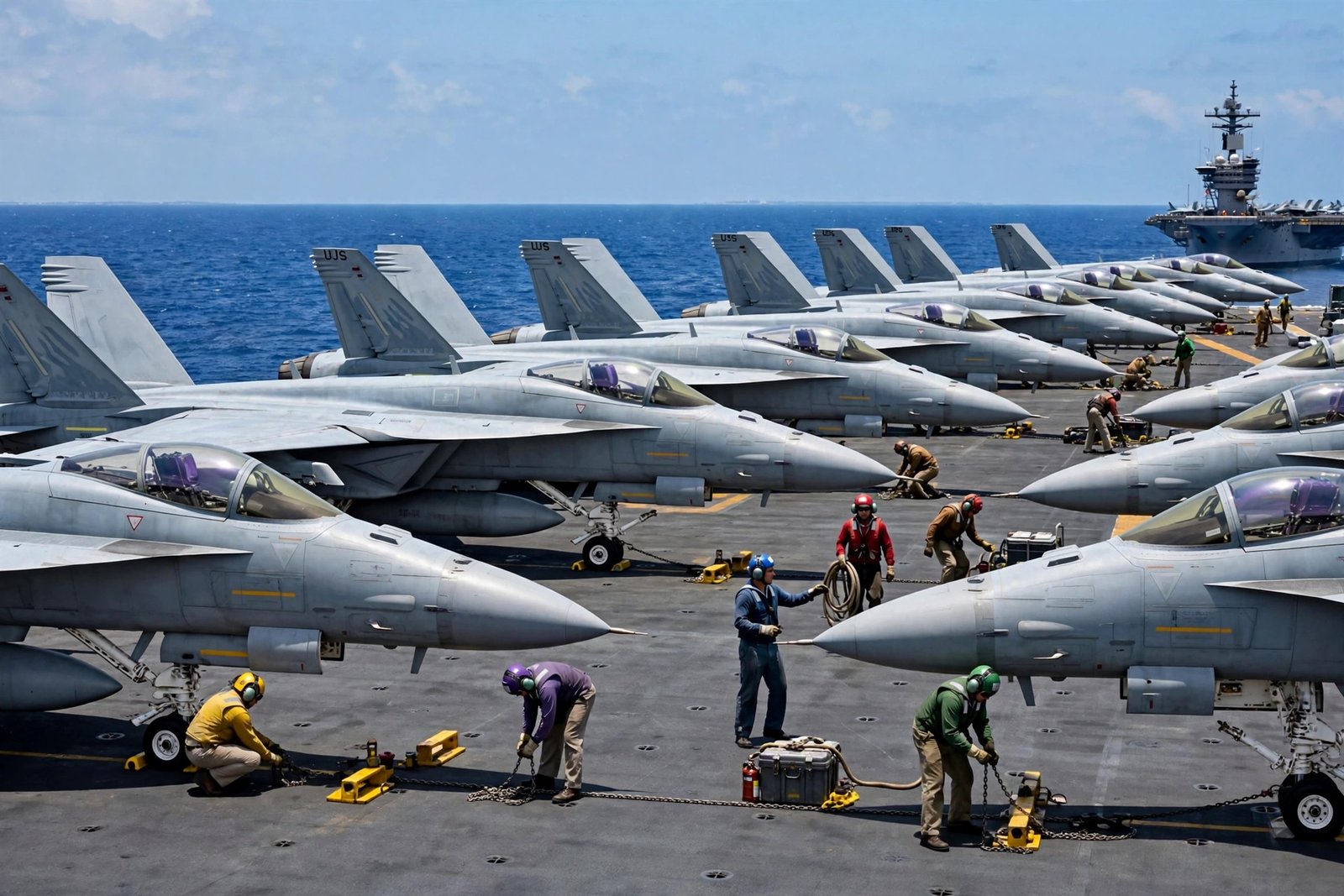
They are not sailing into empty water. The USS George H.W. Bush and the USS George Washington are already operating in the region, along with the USS Boxer amphibious group. If the Roosevelt stays, the United States will have three carrier strike groups near Iran for the first time since April, plus two amphibious landing groups. All told, close to 50,000 American service members are already stationed across the region, with about 20 ships assigned to the naval blockade and to escorting commercial vessels through the Strait of Hormuz.
The deployment also includes F-35 fighter jets and additional air power, and Washington has extended the deployments of several air defense units and the 82nd Airborne Division. Defense Secretary Pete Hegseth has said American forces are “ready to go” if President Donald Trump orders further strikes.
One detail from the New York Post’s reporting hints at how long the Pentagon expects this to last. After reports of exhausted sailors and disrupted supply lines, including problems at a key port in Bahrain, the Navy loaded the Roosevelt for an extended stay: extra food, hygiene supplies, and better communication home for the crew. You do not pack a ship that way for a short trip.
The talks that died in New York
While the ships were sailing, the diplomacy was sinking. On Monday evening, Secretary of State Marco Rubio ordered Iran’s delegation to the United Nations, led by Foreign Minister Abbas Araghchi, to leave New York immediately after days of indirect negotiations hit a wall.

According to Axios, which first reported the move, White House officials started Monday believing Qatari mediators might still produce progress. By evening, they had concluded the talks were stuck. “Secretary Rubio kicked out the Iranian delegation who had overstayed their welcome,” one U.S. official said. “The U.N. General Assembly was over, so it was time for them to go.” Araghchi and his team flew to Doha shortly after 1 a.m. Tuesday.
Iran tells a very different story. Its U.N. mission says the delegation left Monday evening exactly as planned, on a schedule communicated to the State Department back on September 17, and called the American account “baseless and worthless.” The Associated Press noted that some accounts had Araghchi planning to stay until Wednesday, while another source said he was always leaving Monday night. Either way, the message from Washington was unmistakable: the talking phase is over for now.
What collapsed was a Qatari-mediated effort to bridge gaps over Iran’s nuclear program, the U.S. naval blockade, and the Strait of Hormuz. Tehran had proposed a seven-day roadmap: reopen the strait and resume nuclear talks in exchange for an end to the blockade and sanctions relief. Trump rejected the plan as unacceptable. A source close to the negotiations put it bluntly: “It is stuck. The Iranians are asking for things the U.S. can’t accept, and the U.S. thinks it is winning so there is no need for compromise.”
What Trump is saying out loud
The president is not hiding his thinking. Asked by Time magazine whether he would ramp up bombing after the November 3 midterm elections, Trump answered with a single word: “Possible.” Pressed on targets, he declined to elaborate but added that the military has spent months rebuilding its arsenal. “We have a lot of weapons. You know, we’ve been stocking up for the last six months,” he said.
Speaking to Fox News, Trump said he believed the United States would “win the war” with Iran “very soon.” And on Wednesday, asked about reaching an agreement with Tehran, he told reporters, “Maybe I will blow ’em up.”
The Treasury Department added economic pressure this week, sanctioning Iranian rail and automotive conglomerates in a bid to cut off remaining sources of revenue for Tehran.
What it is already costing
Seven months ago, this was supposed to be quick. The conflict began on February 28, and Trump initially predicted it would last four to five weeks. In March he called it a “short-term excursion” that would “be finished pretty quickly.” Rubio said at the time the administration expected the campaign to conclude within “weeks, not months.”
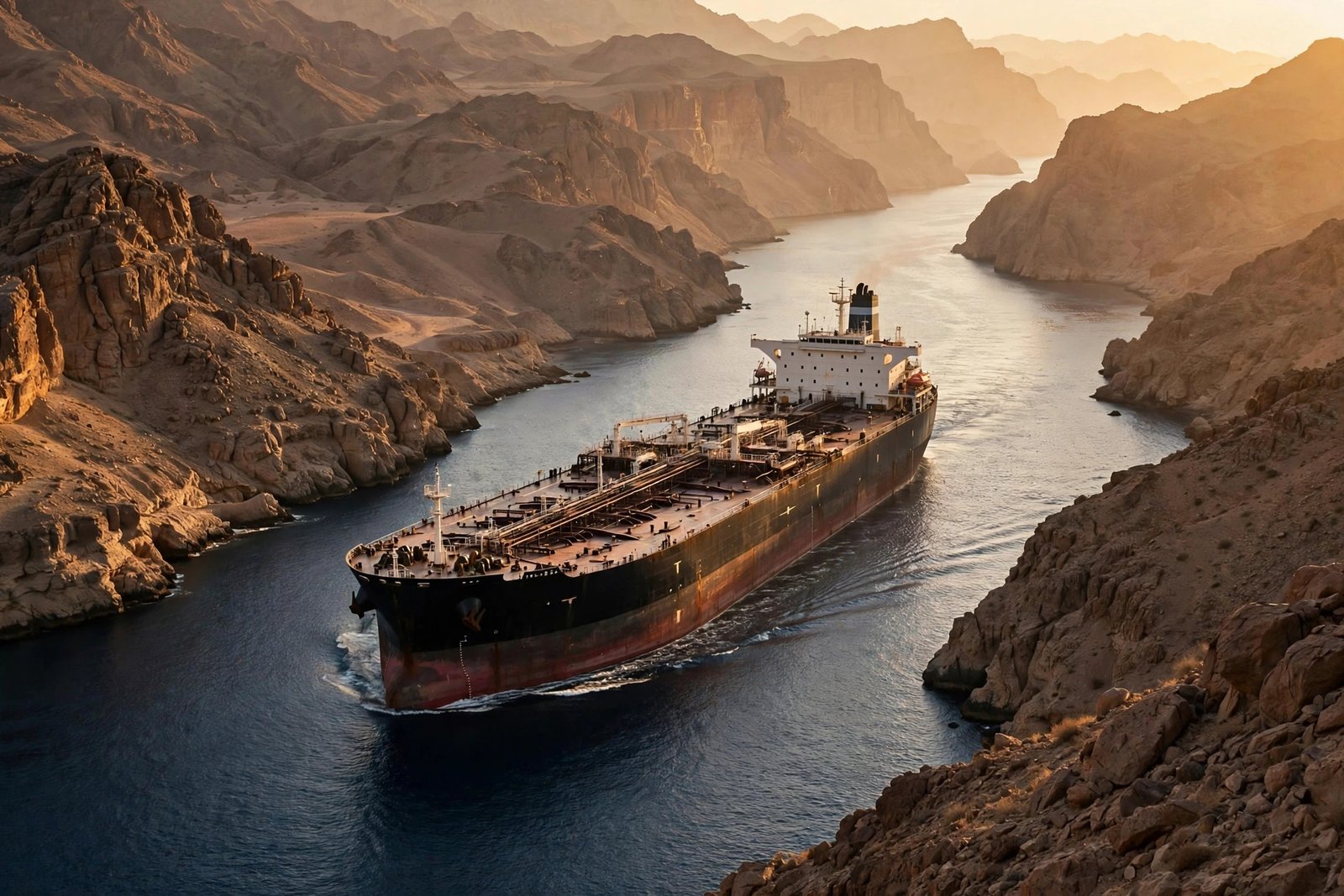
The bill keeps growing. Brent crude briefly climbed back above $100 a barrel on Thursday as the deployment news landed. The Strait of Hormuz, the narrow waterway at the center of the standoff, remains the world’s most important oil chokepoint, and Iran’s restrictions on passage have disrupted global energy markets for months. With around 50,000 U.S. troops in the region and another 10,000 on the way, the human and financial cost of the standoff is compounding every week.
What to watch next
Three dates matter. First, the midterm elections on November 3, which Trump himself has now tied to the timing of any escalation. Second, the end of November, when the Roosevelt strike group and the Makin Island group are expected to arrive, completing the three-carrier lineup. Third, whatever comes out of the Qatari back channel, which remains the only active line between Washington and Tehran even after the New York blowup. Iran says it has already received Washington’s official response to its latest proposal.
With three carriers, two amphibious groups, F-35s, and 60,000 troops converging on one of the world’s most volatile waterways, the margin for miscalculation is shrinking on both sides. The buildup is meant to give the president options. The question is which option he picks, and when.
For months, the administration has paired maximum military pressure with on-again, off-again diplomacy, and this week both tracks accelerated at once: more ships sailing in, more diplomats flying out. Whether the armada is a prelude to negotiation or to something less orderly is now the central question in American foreign policy, and the answer may not come until after Americans vote.
For continuing coverage of this story and the other headlines shaping the country, follow our US News section.