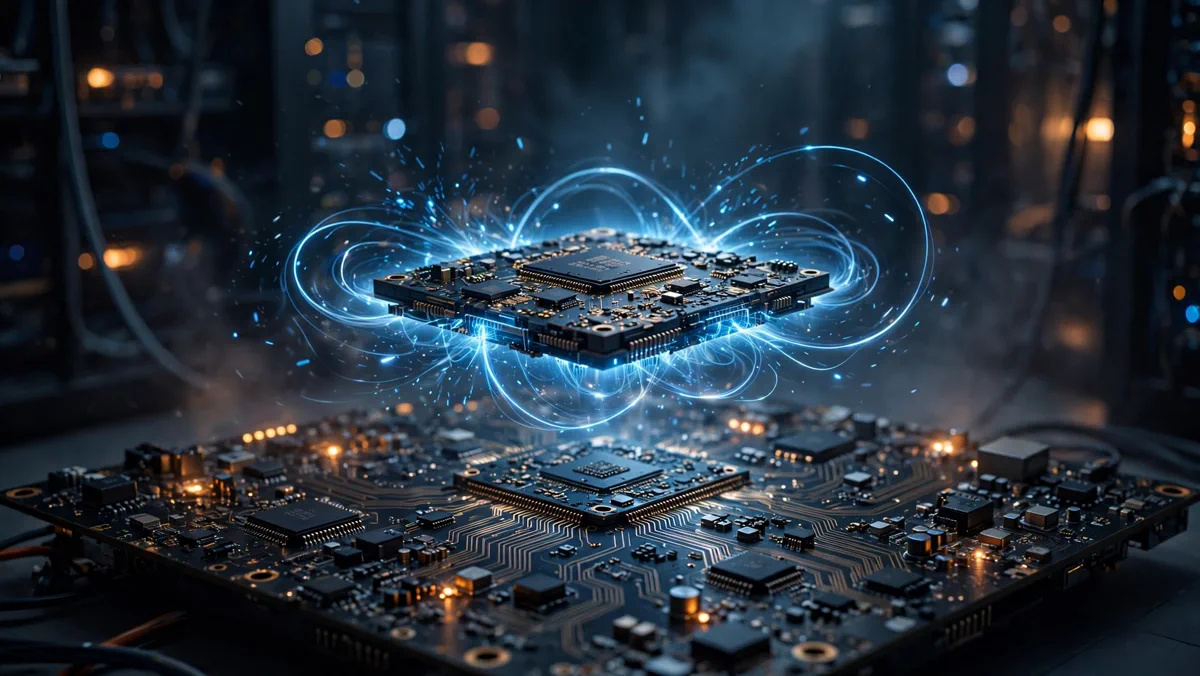
Microsoft just did something it almost never does: it showed the world a piece of silicon and basically dared the most valuable company on the planet to get nervous about it.
On Monday, at the OCP Global Summit in San Jose, the software giant unveiled Maia 300, the third generation of its in-house AI chip. According to the company, this is not a science project. Microsoft plans to deploy more than a million of these things starting in 2027, spread across multi-gigawatt data center installations. CEO Satya Nadella called it “our biggest bet yet on our own silicon” in a post on X.
Read that again. Over a million chips. And their job is to do the work Microsoft currently pays Nvidia a fortune to do.

The check Microsoft is tired of writing
Here is the part nobody at Microsoft will say out loud but everybody understands. Microsoft is expected to spend more than $175 billion in capital expenditures this calendar year. A meaningful chunk of that money has been flowing straight to Nvidia, whose graphics processors power the AI boom. Every time you ask Copilot a question, summarize a meeting, or let GitHub Copilot finish your code, a Nvidia chip somewhere is doing the heavy lifting. And Microsoft is writing the check.
That is the pressure Maia 300 is designed to relieve.
Scott Guthrie, the executive vice president who runs Microsoft’s cloud group, put it bluntly in a blog post: Maia will become “the primary AI inference system for Microsoft products and services.” Inference is the day-to-day work of running an already-trained AI model: answering questions, summarizing documents, writing code. It is the work behind Copilot, and it is where most of the computing cost actually lives.
Training new models from scratch, the spectacular and wildly expensive part, is still Nvidia territory. Microsoft is not pretending otherwise. But inference is the part that keeps growing, and it is the part Microsoft now wants to own.
What the chip actually does
Maia 300 is built around a simple idea: design for what you actually run. Instead of one giant chip ringed by expensive memory, the way Nvidia builds its accelerators, Microsoft went with a “chiplet” approach. Smaller specialized components are bonded together. The central computing die uses cutting-edge 2-nanometer technology from Taiwan Semiconductor Manufacturing Co., while the chiplets that move data around use cheaper 3-nanometer tech. It is the kind of engineering trade-off that only makes sense when you are building at enormous scale.
The numbers Microsoft is quoting are aggressive:
- 40% more AI output per megawatt than what Microsoft calls “leading GPU-based systems” (it did not name which systems it measured against, so treat that figure as a claim, not a verdict)
- A full 96-chip rack produces up to seven times the AI output of the current-generation Maia 200 rack
- 96 chips per rack, drawing about 167 kilowatts, compared with 142 kilowatts for Nvidia’s GB300 rack, which holds 72 GPUs
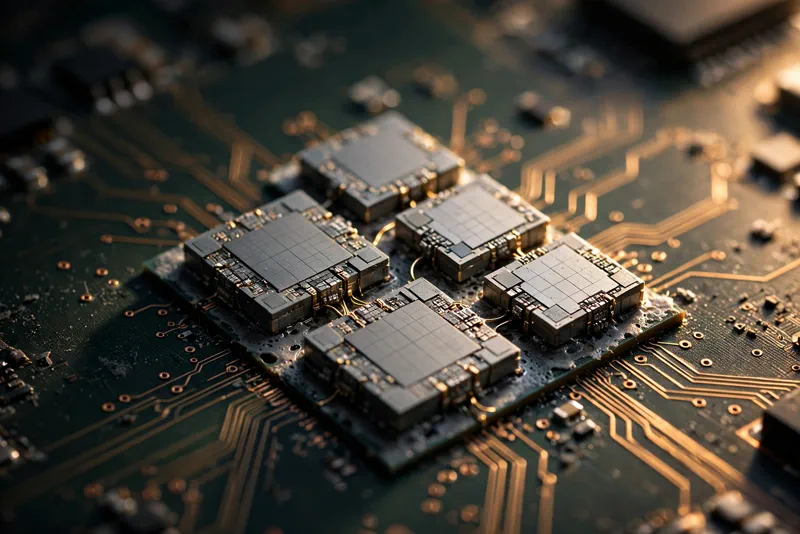
More chips per rack, more power drawn, but if Microsoft’s math holds, more work squeezed out of every watt.
The chip is designed for the workloads Microsoft says are growing fastest: AI agents working through multi-step jobs, models chewing through long documents, and conversational experiences that cannot afford to lag.
“We believe we have built the best product for these workloads,” said Rani Borkar, who leads Microsoft’s data center hardware group. “We will deploy Maia at gigawatt scale starting next year, and that is how we are backing up that confidence.”
Why power is the real story here
Step back from the silicon for a second, because the interesting part of this story is not really about chip architecture. It is about electricity.
Power supply has quietly become the single biggest constraint on AI expansion. Google just struck a $1 billion nuclear deal to keep its AI data centers fed. Microsoft itself has been chasing power agreements for years. In that world, a chip that extracts 40% more work from the same megawatt is not a marginal improvement. It is money.
“We need new architectures that give us better performance and better use of the power we have,” said Alistair Speirs, a general manager at Microsoft. “Power translates pretty directly into operational cost for a data center.”
That is the quiet revolution happening in 2026. The AI race is no longer just about who has the smartest model. It is about who can run AI cheapest per watt, because the companies that crack that equation get to keep billions that would otherwise go to their suppliers.
Nvidia is not exactly losing sleep, but it is watching
Let us be fair to the other side of this story. Microsoft and Nvidia are still, publicly, partners. Just last week, Nadella and Nvidia CEO Jensen Huang shared a stage in San Francisco to launch Windows PCs built on Nvidia chips. Nadella has said Microsoft will be among the first cloud providers to deploy next-generation systems based on Nvidia’s Vera Rubin chips and AMD’s Helios. Nobody is burning any bridges.

And this is not Microsoft’s first swing. Maia 100 arrived back in 2023, and Maia 200 was announced in January of this year. That generation is already doing production work: Microsoft 365 Copilot, GitHub Copilot, Microsoft Foundry, Microsoft’s own AI models, and even OpenAI models running on Azure. On the July earnings call, Nadella said Maia 200 delivered 30% better performance per dollar than the latest-generation hardware in Microsoft’s fleet.
So Maia 300 is not a moonshot. It is the third step in a march Microsoft started years ago, and the previous steps worked. That is what makes this announcement different from the usual corporate chip bravado. Microsoft is not announcing a prototype it hopes will work someday. It is announcing scale: a million chips, gigawatt deployments, primary inference system, starting 2027.
What this means for regular people
If you are not buying data center racks, why should you care? Two reasons.
First, this is about the cost of the AI you use every day. Cheaper inference means Microsoft can afford to run Copilot more aggressively without raising prices or throttling usage. The economics of AI assistants live or die on exactly this kind of infrastructure math.
Second, this is the clearest signal yet that the AI boom is entering its second act. Act one was about who could build the biggest model. Act two is about who can run AI at scale without going broke. Google, Amazon, and Microsoft are all racing to replace somebody else’s chips with their own, because the company that owns the infrastructure owns the margin.
Microsoft just placed the biggest bet in its history that it can be that company. Nvidia, presumably, is taking notes.
Sources
Fact check: announcement details from GeekWire and The Tech Portal. Related reading: Microsoft and Nvidia’s Surface Laptop launch, SpaceX’s $40 billion Nvidia chip bet, and Google’s nuclear deal for AI power.